
Can the West Mimic China's Economic Strategy Without Losing Its Identity?
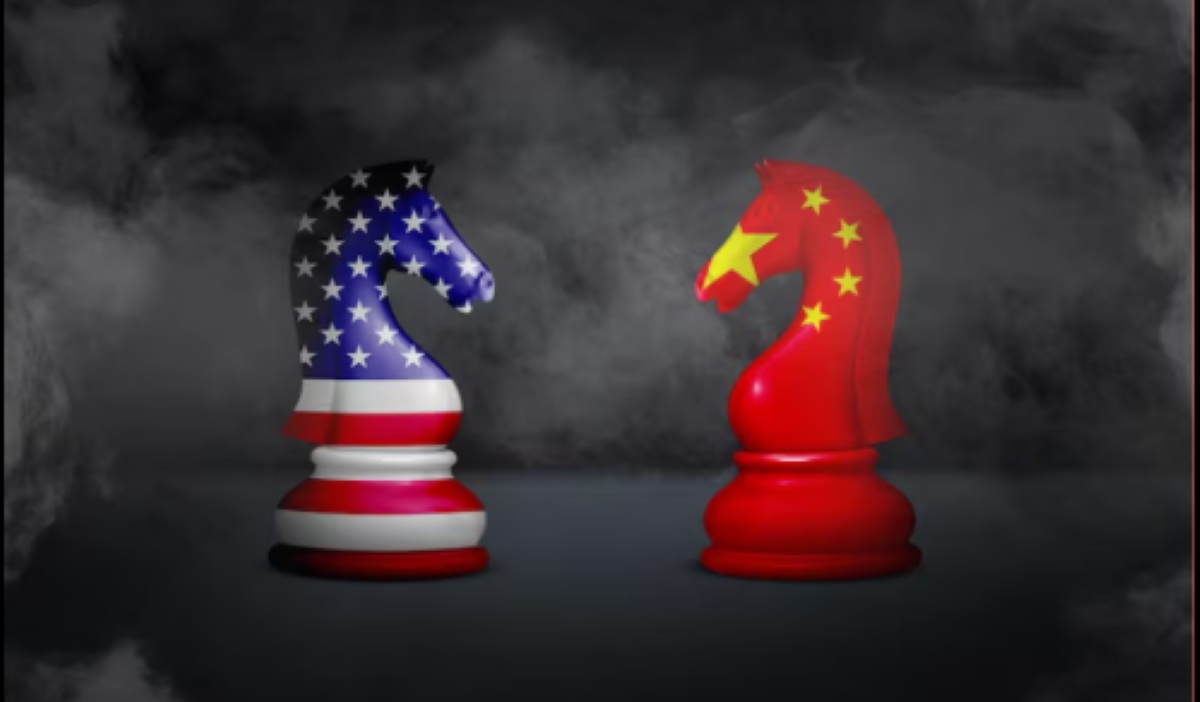
For decades, China viewed the United States as its economic teacher. However, the global financial crisis of 2008-2009 fundamentally altered that perspective. During a visit to Washington in 2008, as the American financial system was reeling, Wang Qishan, then China’s Vice Premier, reportedly delivered a sharp message to US Treasury Secretary Hank Paulson. “You were my teacher. But now I am in my teacher’s domain, and look at your system, Hank. We aren’t sure we should be learning from you anymore.” The remark, recounted by Bob Davis and Lingling Wei in their 2020 book Superpower Showdown, marked a significant turning point. China began to question whether the Western economic model was still worth emulating. Now, the question has reversed. After China demonstrated its ability and willingness to use its dominance in rare earth minerals and global supply chains as tools of economic pressure, some economists and policymakers in the West are asking: is there something America and its allies can learn from China? Chad Bown, a senior fellow at the Peterson Institute for International Economics, believes the answer is yes. Bown, who served as chief economist at the US State Department during the Joe Biden administration, and Financial Times columnist Soumaya Keynes have published a book titled How to Win a Trade War. In it, they argue that market-oriented democracies need to borrow some of the instruments China has used to protect itself from a state-directed economic model. These instruments include industrial policy, strategic stockpiling, and the use of export controls as an economic weapon. “The West has no choice if it wants autonomy in some of these sectors where China has already achieved market dominance that it has now shown a willingness to weaponize,” Bown said. Yet the issue is not simply whether the West should imitate China. The more complex question is whether democratic nations can adopt some of China’s strategies at a reasonable cost and with minimal side effects. If not, Bown warns, the process will become extremely messy. China’s industrial policy helped fuel its rise in electric vehicles, batteries, and solar panels. Through state direction, resources were channelled into sectors deemed strategic. However, this model also created problems. China’s production grew far beyond its domestic consumption capacity. As a result, cheap goods flooded global markets, triggering defensive reactions from the United States, the European Union, India, and several developing economies that had previously been more open to Chinese exports. Domestically, an excessive focus on industrial investment also left Chinese households too weak to serve as a pillar of consumption. In other words, production success was not always matched by strong domestic demand. This is the complicated side of the Chinese model. It can create industrial advantage but also generates overcapacity, trade tensions, and dependence on foreign markets. One of the most important lessons for the West comes from rare earth minerals. These minerals are essential components for various strategic products, from laptops and chips to fighter jets. China has shown that dominance in such a sector can be used as a bargaining chip in economic conflicts. This use of supply chain power has led some in the West to view China not just as a trading partner, but also as a strategic risk. At this point, Bown and Keynes are not calling for a total imitation of the Chinese model. Instead, they offer ways for democracies to use these high-cost, high-risk instruments more cautiously, without destroying the rules-based open trading order they wish to preserve. The first step discussed is strategic stockpiling. In the context of global supply chains, stockpiles can serve as a protective tool during a crisis. However, determining when a government should build up reserves and when it should release them is no simple matter. Therefore, Bown and Keynes suggest having explicit, pre-established triggers. Rather than trying to domesticate entire supply chains, governments also need to identify the truly vital chokepoints. In the semiconductor industry, for instance, attention could be directed at raw silicon, wafers, or the chip assembly stage, which are the most vulnerable nodes. The second instrument is subsidies. In Bown and Keynes’s view, subsidies must be used selectively. They liken it to baking a cake: if the ingredients or measurements are wrong, the result will be a mess. Therefore, subsidies should be narrowly targeted, time-limited, and directed at foundational technologies with genuine security implications. Advanced semiconductors are one of the clearest examples. Overly broad subsidies can create domestic inefficiencies. Moreover, a subsidy and investment incentive war can also cause friction with allies, as friendly nations compete with one another for strategic projects. The most complicated instrument is export controls. This policy restricts an adversary’s access to cutting-edge technology, such as advanced artificial intelligence chips. The problem is that export controls can backfire. When a country is cut off from Western technology, it may actually accelerate the development of domestic alternatives. In the long run, this can reduce the West’s own bargaining power. For this reason, the effectiveness of export controls depends heavily on coordination with allies. If the United States restricts exports but another country does not, the policy’s impact is greatly diminished.