
Can Short-Sightedness Improve, and What Factors Affect It?
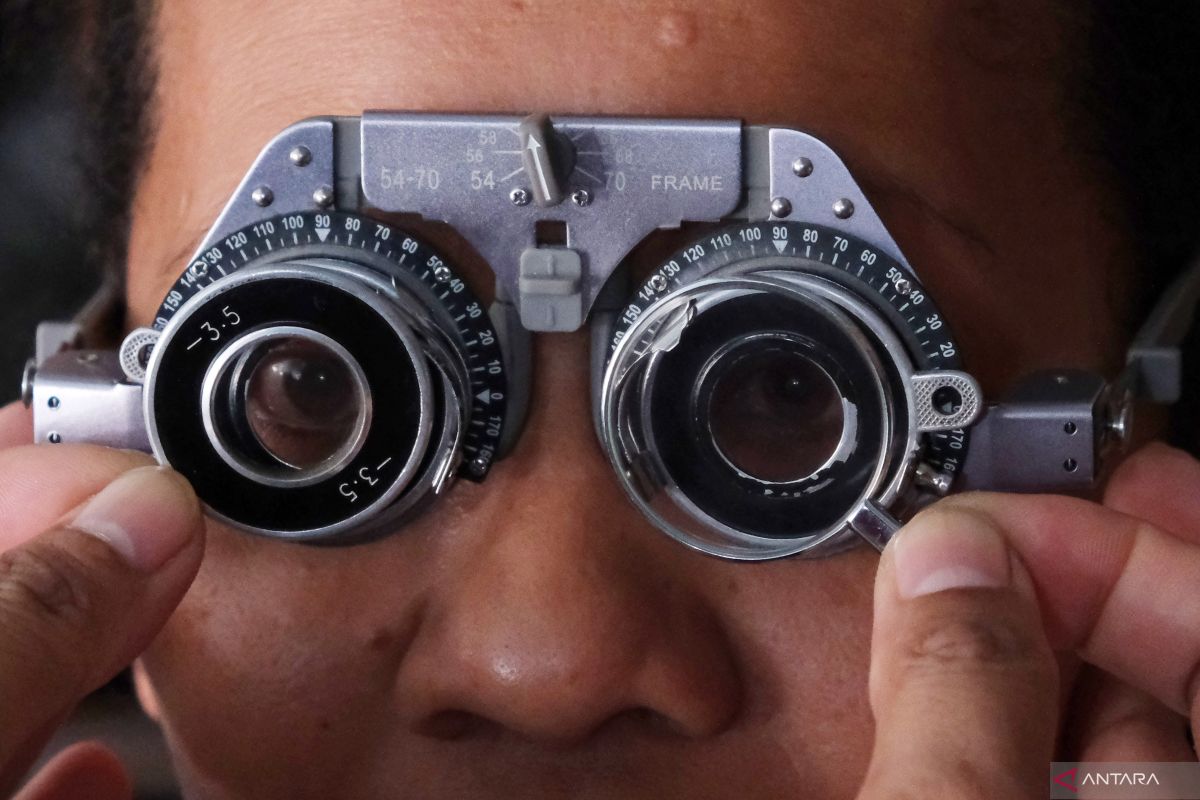
Jakarta (ANTARA) - Myopia, or short-sightedness, is a condition in which light entering the eye focuses in front of the retina rather than directly on it. It is generally caused by an eyeball that is too long or a cornea that is too curved. A common question is whether short-sightedness can improve naturally.
The answer is yes, but this is relatively rare among young adults and is usually caused by physical changes to the structure of the eyeball or by certain medical conditions.
The prescription strength for glasses or contact lenses can decrease for several reasons:
Physical changes in the eye with age (presbyopia): From around the age of 40, the eye’s lens naturally begins to lose flexibility. This ageing process reduces the eye’s ability to focus on nearby objects. In people with mild short-sightedness, the change in focus can sometimes create a ‘neutralising’ effect, making near vision feel better and the prescription seem weaker.
Early-stage cataracts (nuclear sclerosis): One of the main reasons for a substantial reduction in short-sightedness among older people is cataracts. In the early stages of nuclear sclerosis, the lens hardens and its refractive index changes. This can temporarily alter the way light is focused, a phenomenon often called ‘second sight’, making the prescription seem weaker before vision deteriorates further as the lens becomes cloudy.
Refractive changes caused by medical conditions (such as diabetes): Significant fluctuations in blood sugar levels can affect the amount of water in the eye’s lens. Changes in the lens’s swelling or contraction can temporarily alter the eye’s refraction, making short-sightedness appear to improve or fluctuate.
Eye muscle fatigue (pseudomyopia): Some people experience pseudomyopia, or ‘false’ short-sightedness, when the eye’s focusing muscles become overstrained after prolonged use of a computer or gadget screen. Once the muscles relax after a rest, the false short-sightedness disappears, so a repeat examination may show a weaker prescription.
Effects of medical procedures and surgery: Short-sightedness can, of course, be reduced permanently or eliminated through refractive surgery such as LASIK, ReLEx SMILE or implantation of an artificial lens (ICL). These procedures directly reshape the cornea or replace the eye’s lens so that light focuses correctly on the retina.
Short-sightedness cannot be reduced simply by taking vitamins or supplements or doing eye exercises. If your prescription suddenly becomes weaker without surgery, it is strongly advisable to have a comprehensive refraction and eye-health examination with an ophthalmologist.
This is necessary to establish whether the change is a natural process or an early sign of another medical condition, such as cataracts or a metabolic disorder, according to ResearchGate and other sources.
Source: jawawa.id (https://jawawa.id/newsitem/can-short-sightedness-improve-and-what-factors-affect-it-1793757077)
Originally published by Antara (Indonesian) (https://www.antaranews.com/berita/5830375/apakah-mata-minus-dapat-berkurang-dan-apa-yang-mempengaruhi), translated from Indonesian