
Can Russia's Fuel Crisis Help End the War in Ukraine?
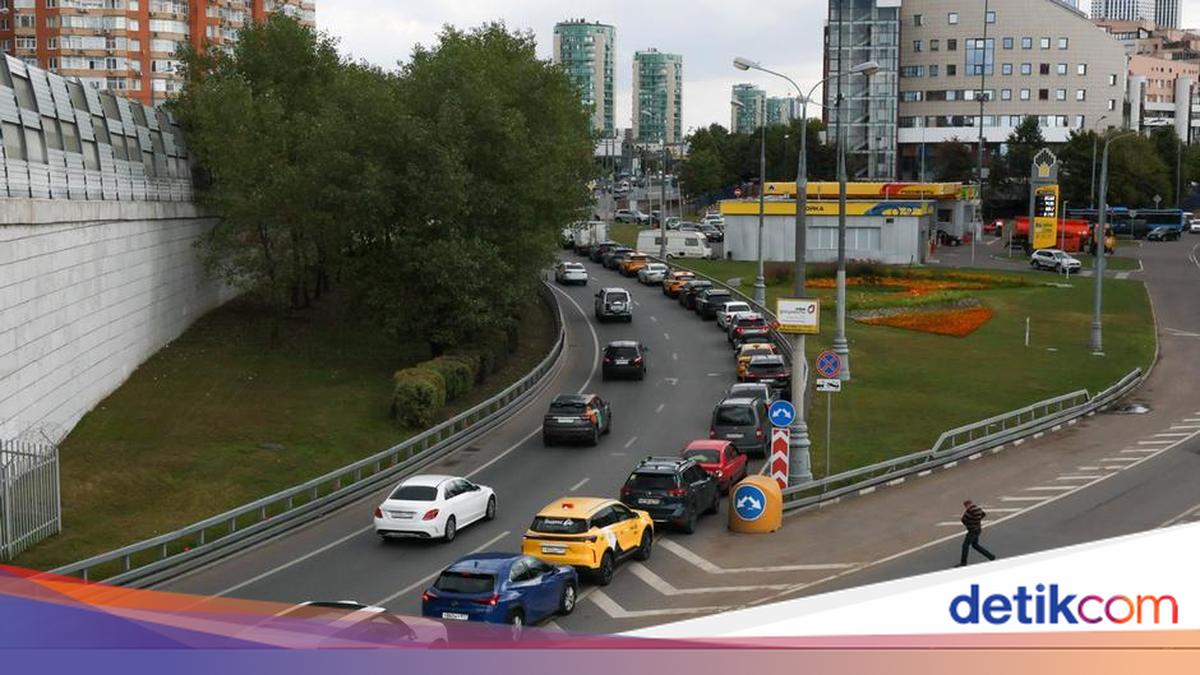
Ukrainian attacks on oil refineries have triggered a new fuel crisis in Russia.
Reuters news agency reported that at least 30 regions are now affected. Unlike the previous wave of shortages that lasted from late May to mid-July, this crisis is also being felt in Moscow and its surrounding areas, as seen in social media posts.
Networks of Gazprom Neft and Tatneft petrol stations have restricted fuel sales in the Russian capital.
“It cannot be said that there is no fuel at all. But there is clearly a crisis,” said Oleg Grigorenko, editor-in-chief of the independent Russian media portal 7x7, which has been labelled a “foreign agent” by the Russian government.
“This is not just a personal problem when, for example, you leave the city and do not know whether you can return. It is also an economic problem,” he added.
Grigorenko reported that in several regions, taxi drivers, courier services and the construction industry are already losing business because many of their supply chains depend on fuel. “The logistics of private construction companies are heavily dependent on petrol,” Grigorenko explained.
Local media also reported that residents in the Krasnodar region of southern Russia had to queue for hours at petrol stations. The local government blamed the situation on increased fuel demand during the holiday period.
However, many residents described this summer as a disaster. Property agent Igor Zakharchenko from Sochi, a city on the Black Sea coast, wrote on Instagram.
“With its calm atmosphere and relaxed pace of life, Sochi now reminds me of the period before the Olympics, when there were not many cars on the road and the number of tourists and residents was far smaller. But the problem is that there is no petrol in Sochi.”
Fuel quality declines
First deputy chairman of the Russian parliament’s energy committee, Igor Ananskikh, told broadcaster RTVI that petrol supplies were expected to return to normal within two to three weeks.
However, economist Nikolai Korzhenevsky assessed that this was unlikely to happen. Korzhenevsky left Russia in protest against the war in Ukraine and now lives abroad.
In an interview with DW, he highlighted the decline in fuel quality in Russia. According to him, several acquaintances sent photos of vehicle dashboards displaying error messages, indicating engine damage caused by impurities in the fuel.
“Cars cannot start and have to be taken to a workshop. The same people also say that workshops have waiting lists of several months, even in Moscow,” Korzhenevsky said.
“After that, you still have to wait months for replacement parts. Clearly, some vehicles cannot use that petrol in their tanks.”
Korzhenevsky views the problems in Russia’s oil and gas industry as an early sign of a larger and prolonged crisis.
Bloomberg reported that Russian oil exports during the war have fallen more sharply than before. The country’s oil production is also declining.
“In 2019, Russia produced 11.5 million barrels of oil per day,” Korzhenevsky said. “Now the figure is less than 9 million barrels. If this trend continues and oil processing problems worsen, production could fall to 8 million barrels. That condition would create a situation heading towards a full economic and systemic crisis,” he said.
He does not see a quick way out. He even believes Russia could head towards a situation similar to Venezuela, with national income continuing to decline in the long term.
Relying on imports deemed unrealistic
The Russian government has proposed imports from India, China or other countries to address the fuel shortage. However, Russian business journalist Vyacheslav Shiryaev believes this step would be difficult to implement.
With Russia now increasingly isolated, it is impossible to secure supplies of 200,000 tonnes of fuel per day, which is the estimated daily petrol and diesel requirement of Russia, he told DW. Shiryaev, who openly opposes the war in Ukraine, is also on the Russian government’s list of “foreign agents”.
Another Russian economist on that list is Igor Lipsits. He told DW that damaged refineries cannot be restored quickly and will remain vulnerable to further air strikes.
According to Lipsits, this is the reason the government has begun restricting fuel consumption. Public service vehicles, including ambulances and rescue workers, police and fire engines, are given priority for refuelling. Security personnel and officials receive similar treatment.
“This happens in front of people who have been waiting for hours and causes a great deal of frustration,” said Lipsits, a Kremlin critic who left his teaching post at the Higher School of Economics in Moscow due to increasing political pressure. He now also lives in exile in Europe.
For Lipsits, the current developments in Russia strongly remind him of the collapse of the Soviet Union.
“There used to be a special supply system for the elite, with their own shops and warehouses, where they could buy whatever they wanted without much difficulty, without queuing, and at relatively low prices. That made Russian citizens very angry,” he said. “When Boris Yeltsin announced he would abolish those closed distribution centres, the public supported him enthusiastically. Now we are in a similar situation.”
Lipsits said a closed system for fuel distribution is developing in Russia. That condition will ultimately make the ability to drive a car a luxury.
The key to ending the war?
Economist Shiryaev believes Ukrainian attacks on Russian targets that have both military and civilian functions could cripple the Russian economy and accelerate the end of the war.
He argues the war could end within weeks if Western countries helped Ukraine increase the intensity of its attacks two or threefold.
“Ukraine can create disorganisation and chaos inside Russia, which leads to a complete loss of control,” Shiryaev said.
He also believes fuel shortages could play an important role in weakening the stability of President Vladimir Putin’s government.
“If there is no diesel, Russia’s 6,000-kilometre railway network will stop,” he said. “That could also cripple hundreds of factories and businesses. Without diesel, tens of thousands of lorries cannot operate, food does not reach shops, and farmers cannot harvest their crops.”
Shiryaev said such conditions could limit Putin’s plans to continue the war.
“If Ukraine destroys the entire oil processing infrastructure, Putin will find that when he gives an order, the order is not carried out,” the economist predicted. Ultimately, all activity will grind to a halt due to fuel shortages.