
Can rain help reduce air pollution levels?
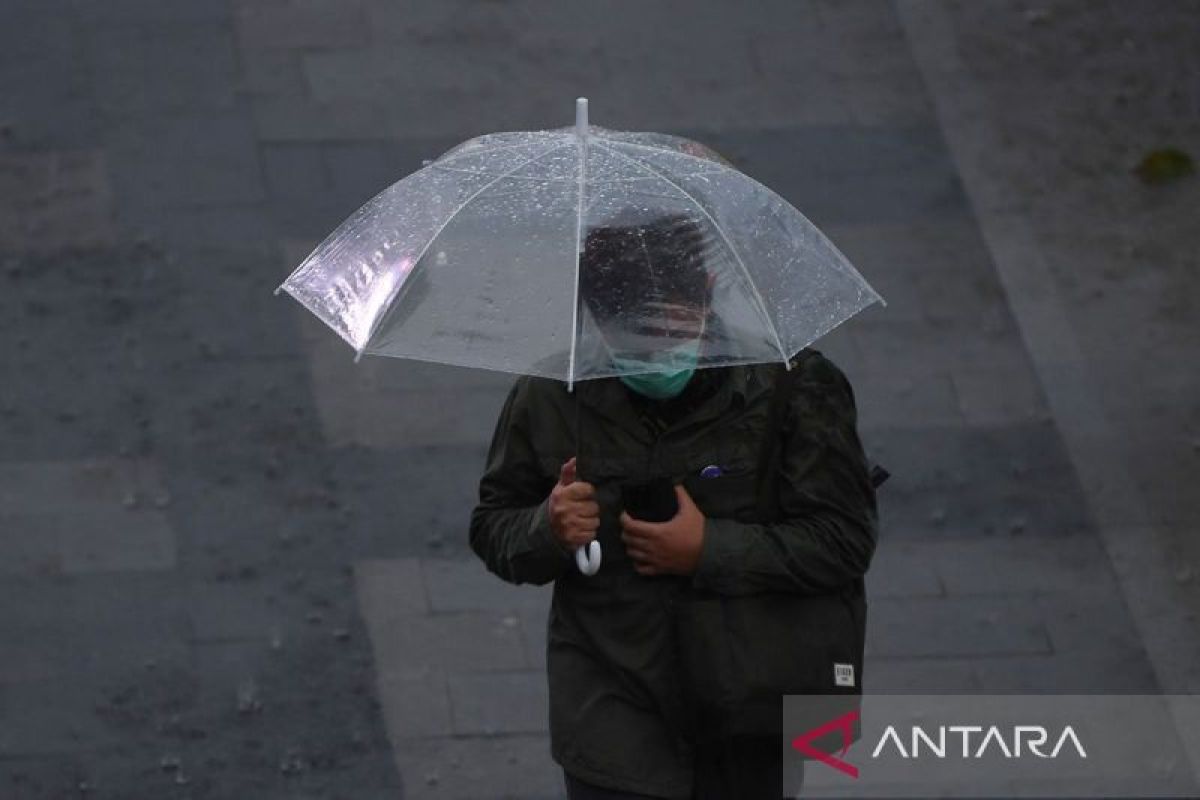
Jakarta (ANTARA) - Rain often brings changes to the atmospheric atmosphere. After heavy rain, the air usually feels cooler and fresher. Skies that previously appeared hazy or dusty may also appear clearer.
This condition is not merely a sensation. Rain can indeed help reduce some pollutants in the air, particularly small particles such as PM2.5. However, this does not mean that every time it rains, the air automatically becomes clean.
One way rain helps clean the air is through a process known as wet scavenging, or the removal of pollutants by precipitation. As raindrops fall through the atmosphere, some particles floating in the air can adhere to or be carried by these droplets. The particles then fall to the ground along with the rainwater.
This process primarily affects particulate matter (PM), including the extremely small PM2.5. A study observing the relationship between rainfall and PM2.5 found that average PM2.5 concentrations dropped by approximately 20.99 per cent one hour after rain began compared to the hour before. The research also found that the reduction effect was more noticeable as rainfall intensity increased.
Nevertheless, there are limits. Rain does not eliminate all types of pollutants from the atmosphere. Some pollutants are in gaseous form, such as nitrogen dioxide (NO2), sulphur dioxide (SO2), and carbon monoxide (CO), which behave differently in the atmosphere.
Furthermore, air quality is not solely determined by whether it rains or not. Emission sources such as motor vehicles, industry, fuel combustion, waste burning, and even forest fires can continue to produce pollutants after the rain has stopped.
The WHO notes that particulates, including PM2.5, are among the primary components of air pollution that impact health. Exposure to air pollution is also linked to cardiovascular and respiratory diseases.
Why does the air feel fresher after rain? Several factors can make the air feel more comfortable after rainfall. In addition to some particulates being carried away by rainwater, atmospheric conditions during rain can also help reduce pollutant concentrations near the surface. Rain is usually accompanied by changes in wind, temperature, and humidity. If there is sufficient air movement, pollutants can be dispersed, lowering their concentration in a single location.
Interestingly, the relationship between rain and pollution is not as simple as “rain falls, pollution drops.” Research published in the journal Atmospheric Environment in 202 moving towards 2025 found that light rain under certain conditions can actually increase aerosol concentrations. In that study, rain acts as a cleanser when pollution levels are high, but can have a different effect when the atmosphere is already very clean. This means that rainfall intensity, particle size, atmospheric conditions, and pre-rain pollution levels all influence the final outcome. This is why air quality cannot be assessed solely based on the presence or absence of rain.
Is it safe to be active outdoors after rain? It is not always necessary to wait for rain to ensure the air is safe, but it is also inaccurate to view rain as a “perfect natural air cleanser.” The most practical method is to check the air quality index or information in your respective area. If PM2.5 concentrations remain high after rain, especially in areas with large emission sources, the public still needs to be mindful of outdoor activities.
The WHO establishes air quality guidelines based on various pollutants because exposure to particulates and other pollutants still poses health risks even as concentrations fluctuate.
In conclusion, while rain can help lower levels of certain air pollutants, particularly particulates that can be carried by water droplets, the effect is temporary and does not apply equally to all types of pollutants or all weather conditions. In other words, rain can help “wash” some pollution from the air, but it does not mean the air is guaranteed to be pollution-free after it rains.