
Can New US Sanctions Cripple Iran's Shadow Economic Network?
United States Treasury Secretary Scott Bessent has announced a new phase of Washington’s economic campaign against Tehran. This time, the US is not only targeting Iranian institutions already under sanctions, but also the international networks used by Tehran to keep money and goods moving.
On 24 August 2026, Bessent said the US would target “five pillars supporting Iran’s economy”: digital assets, technology, gold, aviation, and shipping. He also warned foreign parties helping Iran move money illegally.
“Any entity that facilitates money laundering for Iran will be removed from the US dollar-based financial system,” Bessent stressed. “The countdown starts now.”
This approach represents an effort to tighten secondary sanctions by pressuring companies, financial intermediaries, and trading partners outside Iran, rather than simply adding restrictions to an already heavily sanctioned economy.
The US announced measures against around 60 individuals, entities, and vessels. However, Washington did not target major Chinese banks. This reflects the limits of how far the US is willing to enforce sanctions against Iran’s largest remaining trading partner.
For years, Iran has relied on networks outside the formal banking system to move money. Currency exchange houses, gold, cryptocurrency, shell companies, and opaque shipping networks have helped Iran evade sanctions.
The latest US strategy appears designed to make those methods more difficult by raising costs for foreign intermediaries, and it comes at a vulnerable time for Iran.
Iranian oil exports have fallen sharply as the US disrupts Iranian oil shipments. Deliveries to China, Iran’s main oil customer, fell to around 534,000 barrels per day in August 2026 from 823,000 in July 2026 and from a peak of around 1.58 million barrels earlier this year.
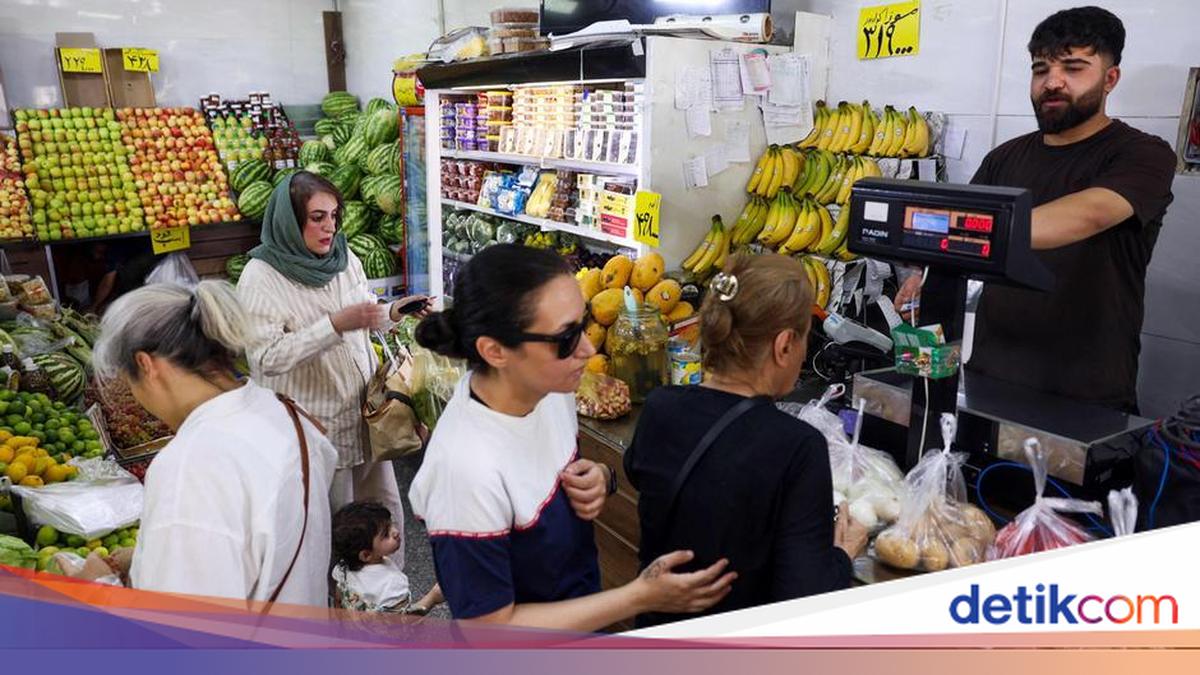
According to official data cited by Reuters, food prices inside Iran were reported to have risen by around 128% year-on-year in July 2026.
The Iranian currency has lost so much value that many transactions, including property and car sales, are now conducted in US dollars. Advertisements are sometimes even listed with prices in dollars.
The pressure is increasingly visible in everyday businesses. A building materials seller in Tehran told DW that inflation has become so severe that storing goods in a warehouse is sometimes more profitable than selling them.
“If I keep something in the warehouse for a month, its price may rise more than the profit I would get if I sold it today,” he said.
He also runs a stone-cutting business and said fulfilling old contracts is becoming increasingly difficult because replacement materials can be far more expensive a few weeks later. Raising prices is not an easy solution either.
“If I raise prices beyond a certain point, no one can afford to buy,” he added.
The restrictions are also disrupting how private companies pay suppliers, import raw materials, and retain workers.
An Iranian citizen working at a trading company told DW that more than 70% of its employees have been laid off in the past six months. The company imports raw materials for various personal care products and previously made payment transfers through exchange houses.
“Now not a single currency exchange house is willing to work with us,” the employee said.
The impact is also spreading to Iranian entrepreneurs abroad. An Iranian businessman who moved to Dubai told DW that he previously owned several cosmetics and hygiene product brands in Iran. Import restrictions and difficulties obtaining raw materials eventually pushed him to relocate.
Initially, the situation in Dubai was much easier to manage. But since the war, that has changed, he said.
“Currently, having an Iranian passport makes almost every transaction more difficult,” he told DW.
He said Iranian entrepreneurs are increasingly unsure whether banks will keep their accounts or whether residency rules could be tightened.
“In an environment where there is no stability and the outlook is unclear, you cannot really run a business,” he said.
Alireza Salavati, a political economy analyst based in London, is sceptical that the new US measures will produce a fundamental strategic shift. Iran is already sanctioned in almost all major sectors, he told DW. Further restrictions may be more about expanding enforcement of existing networks than creating an entirely new form of economic pressure.
“The main impact is likely to be psychological, exacerbating inflation expectations,” Salavati said.
Salavati also warned that economic pressure could weaken middle-income and professional groups that have traditionally been a space for more moderate politics. Rather than producing rapid political change, he said, this pressure could deepen polarisation and push the state to reduce already limited subsidies and social assistance.
There is another paradox worth noting. The more the United States restricts formal financial channels, the stronger the incentive to develop informal ones. Iran’s sanctions economy has already created complex intermediary networks, cryptocurrency transfers, shell companies, cash transactions, and unofficial currency markets. Closing one channel may simply make transactions more expensive without necessarily stopping them.
“The broader consequences are likely to be erosive rather than transformative,” Salavati said.