
Can LGBT Individuals Be Criminalised in Indonesia? A Law Professor Explains
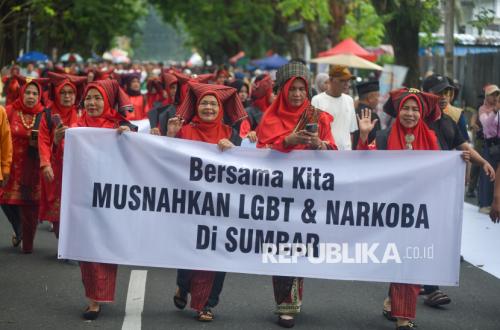
Various groups, particularly those from religious backgrounds, have voiced concerns about the normalisation of lesbian, gay, bisexual, and transgender (LGBT) behaviour. Some countries outside Indonesia have even legalised same-sex marriage.
Can LGBT individuals in Indonesia be subject to criminal penalties? According to Professor Heru Susetyo, a professor of law and social welfare at the University of Indonesia’s Faculty of Law, it is quite difficult to criminalise LGBT under the country’s positive law.
“Actually, it is rather difficult. That means, if they do not commit a crime, they cannot be punished. So, just because someone is LGBT, gay, lesbian, or transgender, they cannot actually be criminalised,” Prof Heru said when contacted by Republika on Wednesday (24/6/2026).
From a criminal law perspective, Heru explained, a person can only be legally processed if they commit a criminal act stipulated in legislation. Therefore, a person’s status as an LGBT individual cannot serve as the basis for criminalisation.
However, there is an exception, such as the law applicable in Aceh. That region has special authority in implementing Islamic Sharia through qanun. In that territory, Heru clarified, homosexual behaviour can be sanctioned according to the applicable rules.
He added that campaign activities or the promotion of LGBT normalisation can be a subject of moral debate within society. However, according to him, this does not automatically become a criminal act because there is no national legal rule that defines it as a crime.
“Only in Aceh is it possible, not in the whole of Indonesia. Perhaps what can be stopped is the campaign, but not criminalised. Just stopped, because there are campaigns that invite people to become LGBT,” he said.
Heru assessed that if there is a desire to make LGBT behaviour a criminal act, then changes must be made to the prevailing laws and regulations. However, he cautioned that such a step could potentially have major consequences, both nationally and internationally.
“Indonesia will be reviled, reviled by the whole world, and we will be boycotted and all sorts of things. And this is unless they (LGBT individuals) truly commit a crime, for example, pornography, sexual assault, rape, sodomy—those can be criminalised,” he explained.
According to Heru, law enforcement officials also have limitations in handling activities related to LGBT behaviour if no criminal elements are found. He cited the example of gay party cases that have occurred several times in the country.
“A gay party in Jakarta, for instance, was only raided by the police, but they will not be imprisoned. At most, it is just disbanded. Disbanded, apologise, return to parents. Done,” he said.
Therefore, Heru stressed that within Indonesia’s positive legal system, the focus of criminalisation must remain on acts that fulfil the elements of a criminal offence, not on a person’s sexual disorientation.
“So, a gay party can be disbanded, but cannot be criminalised. It is the same as people committing adultery. Men or women committing adultery are caught, but not imprisoned. They just get scolded,” he concluded.
Previously, a number of organisations under the banner of the “Civil Society Network” rejected the urging of the Indonesian Ulema Council (MUI), which wants LGBT or LGBT plus Queer (LGBTQ) individuals and those campaigning for their normalisation in Indonesia to be criminalised. The Civil Society Network reportedly consists of 37 organisations.