
Can Land Routes Offset the Impact of the Sea Blockade on Iran?
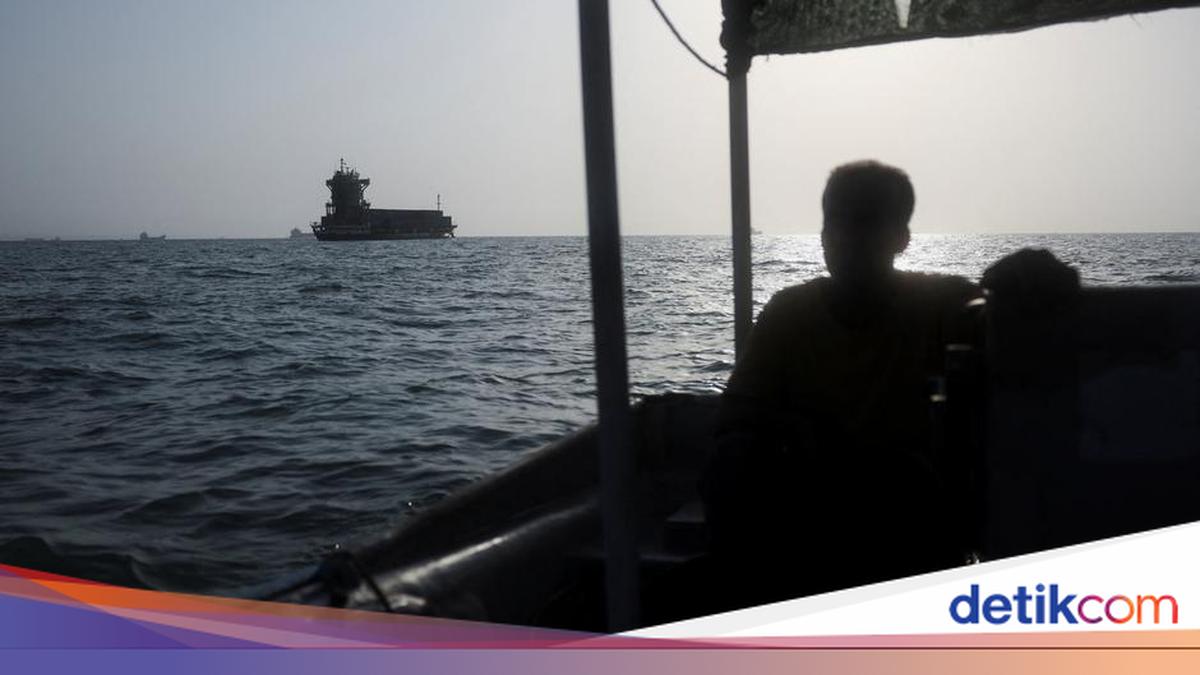
A US-led maritime blockade targeting Iran’s ports has seriously disrupted trade through the country’s southern ports. Yet the situation has simultaneously accelerated a strategy Tehran has actually been discussing for years: shifting more trade activity towards northern ports, the railway network and land corridors.
Iran’s Economy Minister Ali Madanizadeh, visiting Moscow for talks with Russian officials, said Iran needs to activate its northern borders and move the bulk of import and export activity away from the maritime routes in the country’s south.
The idea is simple. Iran has seven land neighbours, access to the Caspian Sea, and a number of routes connecting it to Russia, Central Asia, Turkey, Iraq, Pakistan and the Caucasus region. In theory, this position gives Tehran more options than countries dependent on a single gateway by sea.
The question is whether these routes have sufficient capacity to replace the volume of trade that has hitherto been carried by sea.
Northern routes still have room to grow
Alireza Salavati, a political economy analyst based in London, told DW that Iran in fact still has untapped capacity.
“Iran has more room for manoeuvre than its dependence on the southern ports might suggest,” he said.
Iranian authorities stated in late 2025 that the country’s northern ports have a nominal capacity of more than 30 million tonnes per year, but less than a third of this has been used. This means there is still room to increase shipments of wheat, foodstuffs and general cargo via the Caspian Sea.
Turkey also offers another route towards Europe. Rail freight between Iran and Turkey depends partly on rail ferries crossing Lake Van. In 2024, this route carried around 477,000 tonnes of goods.
To the north-east, Sarakhs and Incheh Borun connect Iran via Turkmenistan to Central Asia, Russia and potentially as far as China. Meanwhile, in the north-west, Astara forms part of the International North-South Transport Corridor linking Iran with Azerbaijan and Russia, said Salavati.
The Astara cargo terminal is designed to handle 3.5 to 4 million tonnes of goods per year. Yet in the first five months of 2026, the terminal handled only around 345,000 tonnes. The still-unfinished Rasht-Astara railway line also remains one of the main bottlenecks.
For certain types of goods, these routes are significant. Wheat from Russia and Kazakhstan, medicines, industrial raw materials and regional trade are easier to shift to land routes than crude oil.
Volume is the main constraint
Jafar Ghaderi, a member of the Iranian Parliament’s Economic Commission, recently said that 83% of what he described as Iran’s 210 million tonnes of imports move through the southern maritime border. The figure shows just how large the volume of goods that would need to be diverted is.
“Every time we face a naval blockade, we face a problem,” he said. “In reality, how much capacity do our eastern, western and northern corridors have?”
The cost difference is also enormous. Majidreza Hariri, chairman of the Iran-China Chamber of Commerce, said the cost of shipping one container from China to Iran via the southern ports is around 3,000 US dollars, or roughly 2,580 euros. If the same container is transported overland, the cost can reach around 12,000 US dollars.
With around two million containers entering through the south every year, Hariri estimated that a prolonged diversion to land routes could add around 18 billion US dollars to Iran’s trade costs. Salavati said physical capacity calculations help explain the problem.
A ship carrying 50,000 tonnes requires around 2,000 lorry journeys if each lorry carries 25 tonnes. Those lorries are then unavailable for domestic distribution, while longer journeys increase fuel, insurance, warehousing and border-crossing costs.
Low-value goods are particularly vulnerable to these conditions, because transport costs take a larger share of their final price.
Energy is far harder to divert
Umud Shokri, an energy strategist and senior visiting fellow at George Mason University, said Iranian officials in fact often discuss two different types of alternative.
The first is the use of alternative shipping routes to avoid the Strait of Hormuz. The second is diverting trade to Pakistan, Iraq, Turkey, the Caspian Sea region, and the ports of Jask and Chabahar.
However, none of these options can fully replace energy exports via the southern routes.
A large crude oil tanker can carry around 1.5 to 2 million barrels of oil. Moving the same volume by road would require thousands of tanker lorries.
Railways are more efficient, but still cannot match the cost, speed or scale of sea transport.
Pakistan can help carry imports through Karachi, Port Qasim and Gwadar. Iraq can support regional trade and limited fuel shipments. The Caspian Sea route can connect Iran with Russia, Kazakhstan and Azerbaijan.
Yet none of these routes can replace large-scale crude oil deliveries to buyers in Asia.
“So this plan is realistic as a strategy to increase resilience, but not as a replacement strategy,” Shokri told DW.
The Jask pipeline shows both potential and limitations
The Goreh-Jask pipeline was built specifically to reduce Iran’s dependence on the Strait of Hormuz by transporting crude oil to the Gulf of Oman.
This gives Jask greater strategic significance than most land corridors.
However, according to Shokri, the capacity actually usable so far remains far below the project’s initial ambitions.
The lesson is broader: building a pipeline network is not the same as creating a genuinely functioning export system. Storage, terminals, buyers, insurance, security and financial transaction settlement mechanisms must all work together.
Fixed infrastructure also creates new vulnerabilities when war is under way.
A survival strategy, not a way out
Land corridors can help Iran sustain part of its economic activity.
These routes can carry food, medicines, industrial raw materials and some regional exports. The corridors can also strengthen Iran’s economic ties with Russia, Central Asia, Turkey, Pakistan and Iraq.
If investment continues, the blockade could even accelerate infrastructure development that Tehran previously viewed as a long-term opportunity.
However, these routes come with consequences: higher costs, limited capacity, and new political dependence on the countries that form part of the trade routes.
For Iran, this means the blockade could leave a long-term structural impact by pushing trade away from the south and making northern connections and land routes increasingly important.
But that does not mean Iran can replace maritime trade. Iran can indeed shift part of its trade from sea to land, but land routes cannot replace the entire volume of trade normally carried by sea.
Land corridors can reduce vulnerability, spread risk and buy Iran time to endure. However, they cannot match the scale of the ports on the Persian Gulf or the seaborne energy exports that have hitherto been one of the main pillars of Iran’s economy.
Source: jawawa.id (https://jawawa.id/newsitem/can-land-routes-offset-the-impact-of-the-sea-blockade-on-iran-1789451635)
Originally published by detikcom (https://news.detik.com/dw/d-8663374/bisakah-jalur-darat-mengimbangi-dampak-blokade-laut-terhadap-iran), translated from Indonesian