
Can Land Burnt by Forest and Land Fires Be Used for Farming? Here Are the Conditions
Jakarta, CNBC Indonesia — The government is opening up the possibility of using land affected by forest and land fires for agricultural and plantation activities. However, such use cannot be undertaken arbitrarily: the land’s legal status and suitability for its designated function must be taken into account.
Deputy Coordinating Minister for Food Affairs Hanif Faisol Nurofiq said land affected by fires within state forest areas must be restored through rehabilitation using forestry plants. Land outside forest areas, meanwhile, may be managed in line with policies set by the Ministry of Agriculture and local governments.
This is in line with President Prabowo Subianto’s directive that food and energy programmes must not be developed at the expense of forest areas.
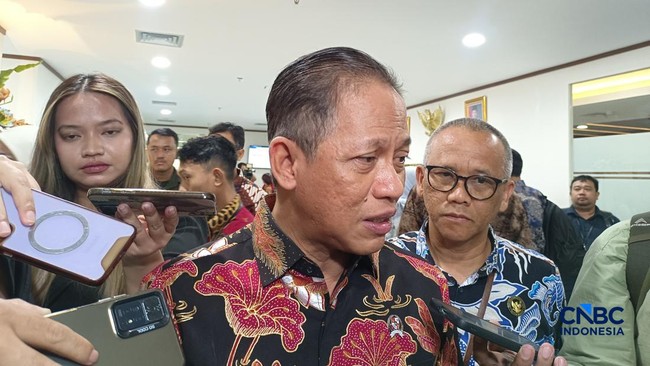
“Presidential Instruction No. 11 of 2026 calls for land affected by fires to be rehabilitated. Following a fire, the Ministry of Environment and the Ministry of Forestry will, of course, take steps to re-record the land so that rehabilitation can be carried out. Its function must be restored: if it is a forest area, it must be rehabilitated using forestry plants,” Hanif told reporters at his office in Jakarta on Friday (6 November 2026).
“But if it is outside a forest area, it will naturally need to be aligned with the policies of the Ministry of Agriculture and local governments,” he added.
Therefore, land affected by forest and land fires cannot automatically be converted into farmland or plantations. The government must first carry out a reassessment and establish the area’s status and function.
Could It Be Used for Sugarcane Plantations?
Asked about the possibility of using land affected by fires for sugarcane plantations, Hanif said not all areas have the right characteristics for the crop.
He said sugarcane requires particular climate conditions: rainfall during the planting period and dry weather as the harvest approaches. These conditions are found only in certain parts of Indonesia, including Lampung, Java and Nusa Tenggara.
“Sugarcane requires particular land characteristics; not every area is suitable. Kalimantan, for example, is not suitable. It is more suited to Java, where the climate means there is rain when the crop is planted and a dry season when it is about to be harvested. Those conditions are found only in certain locations, such as Lampung, Java and Nusa Tenggara,” he said.
For that reason, using land affected by fires for sugarcane plantations must take account of its suitability, as well as its status and ecological function.
Hanif stressed that if the land is part of a state forest area, the government must restore it as forest rather than convert it for plantations.
“Not all land can be planted with sugarcane. The use, restoration or rehabilitation of burnt land must therefore be determined, first, by its suitability and function. If it is state forest, it must be restored. The President has directed us not to disturb forests any further; that was a few weeks ago, though I have forgotten the date,” he concluded.
Source: jawawa.id (https://jawawa.id/newsitem/can-land-burnt-by-forest-and-land-fires-be-used-for-farming-here-are-the-conditions-1793955064)
Originally published by CNBC Indonesia (https://www.cnbcindonesia.com/news/20261106131523-4-782974/lahan-bekas-karhutla-untuk-pertanian-ini-syaratnya), translated from Indonesian