
Can Iran Retaliate Against Countries Joining the US Economic War?
The United States Department of State has told Al Jazeera that Washington is taking “concrete steps to end” the long-standing threat from Iran by cutting off Iran’s remaining funding sources and implementing follow-up measures quickly after the latest sanctions are imposed.
US President Donald Trump, as quoted by Al Jazeera on Wednesday (26/8), said all mines had been cleared and detonated from international waters in the strait. He also said Tehran had been warned that any ship laying new mines would be destroyed.
Meanwhile, Iran has threatened to retaliate against any country joining the US ‘economic war’ against Tehran. The threat was made as diplomatic efforts to end the months-long war stalled and shipping through the Strait of Hormuz declined sharply.
Secretary of Iran’s Supreme National Security Council Mohsen Rezaei delivered the warning on Saturday (22/8) through state television IRIB. The threat came ahead of the United States’ plan to announce new sanctions against Iran on Monday.
Rezaei called on all countries, including Iran’s neighbours, not to join in implementing America’s economic policies.
“Any country that joins in imposing economic restrictions on us will be considered an enemy,” Rezaei said. He also warned of ‘seismic’ retaliation.
Rezaei even warned Iran’s neighbouring countries that if they joined the economic war launched by US President Donald Trump, “not a single drop of oil” would leave the Gulf region, including through alternative export routes outside the Strait of Hormuz.
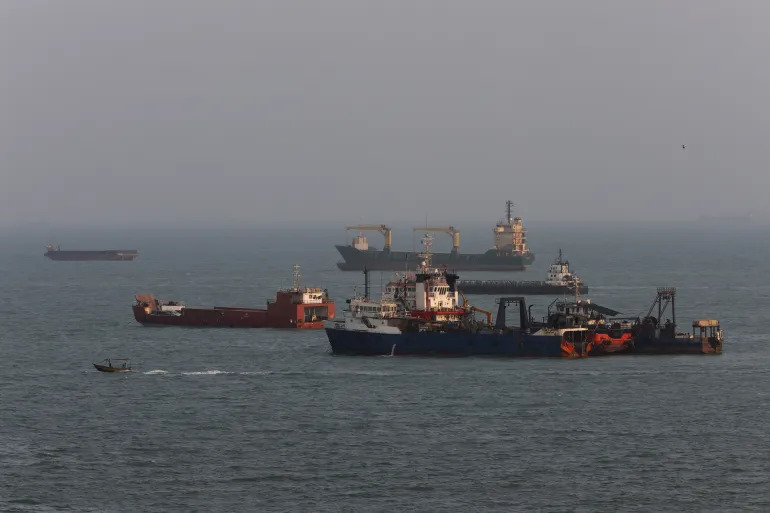
The Strait of Hormuz is a strategic route that in normal times carries around one-fifth of the world’s oil and gas exports. Iran has imposed a blockade on the strait in response to the US war, while also using it as a bargaining tool in negotiations with Washington. The US has also imposed a naval blockade on Iranian ports, affecting the country’s international trade.
Rezaei explained that Iran’s response would be carried out in three stages. The first stage is to hold talks with countries cooperating with the US to ease tensions.
“Of course, first we will negotiate with them. We will hold talks and tell them to step aside and distance themselves from the United States.”
However, if those countries do not change their stance, Iran threatens to attack their interests.
“But if they do not act, we will attack. We will target that country’s interests,” he said.
Iran researcher at the Clingendael Institute, Hamidreza Azizi, assessed that Tehran is seeking to build an early deterrent effect by signalling that attack preparations alone could trigger an Iranian response.
Azizi said two elements are beginning to emerge in Iran’s offensive doctrine: pre-emptive action to prevent threats and disproportionate retaliation to raise the cost of any attack that occurs.
According to Azizi, Iran’s warning to Gulf states joining Trump’s economic war is essentially an ultimatum. Iran’s military and security apparatus, he said, is also increasingly preparing for the next escalation.
Iran’s threat came days after Trump announced plans to carry out the “most devastating economic operation” against Iran. Trump also promised “enormous economic consequences” for any country providing Iran with “assistance in any form”.
US Treasury Secretary Scott Bessent then reinforced the pressure by saying, “You are with us or against us.” He also asked China to cooperate because the country buys more than 80% of Iran’s oil shipments.
On Sunday (23/8), Iranian President Masoud Pezeshkian said his country was facing a full economic, military and security war with the US.
“The enemy has assessed that if Iran falls, Iran will become Venezuela,” Pezeshkian said in a televised speech.
“Not only has that not happened, but Iran has become a power that amazes the world with its resistance, solidarity and unity.”
Gulf states face a difficult position as they are both neighbours of Iran and allies of the US. It is unclear whether these countries will join Washington in increasing economic pressure on Tehran.
Iranian attacks on several Gulf states have affected the region’s economy, which is highly dependent on the Strait of Hormuz for exports, including oil and gas.
Although Gulf states have condemned Iranian attacks on their territory, analysts assess that countries close to Washington remain aware of the importance of maintaining political relations with Tehran due to geographical proximity.
The United Arab Emirates restored diplomatic relations with Iran in 2022, but imposed a trade embargo last week after accusing Tehran of launching missile attacks. Iran denies responsibility for the attacks.
Saudi Arabia and Iran also agreed to normalise relations in 2023 through a deal mediated by Beijing. The move was seen as reflecting both countries’ calculation that relations with Iran are safer than permanent confrontation.
Professor of international relations at Lancaster University, Simon Mabon, said Gulf states cannot change their geographical position.
“Ultimately, Gulf states cannot change geography. They have to live and work side by side with Iran,” Mabon said.
According to Mabon, Gulf states do not want instability resulting from the collapse of the Islamic Republic of Iran. Several Gulf states may push for attacks that…