
Can Insurance Replace Money Lost When Hackers Breach Bank Accounts?
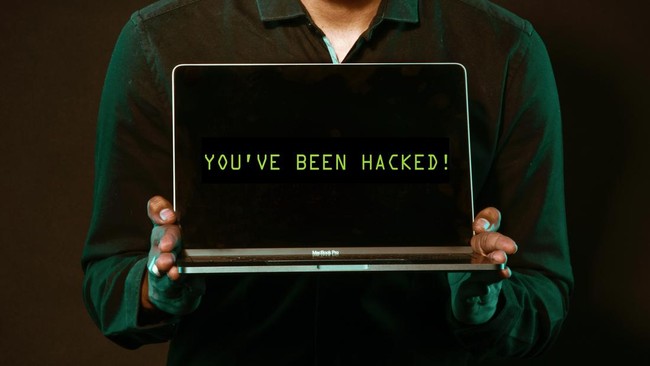
Storing money in banks has become increasingly convenient as all transactions can now be done from the palm of your hand. Transfers, bill payments, shopping, investments, and managing savings can all be performed via mobile phone. However, this convenience comes with new risks. Cybercrime is no longer just about stealing personal data. If perpetrators manage to take over a victim’s account, phone number, device, or credentials, the impact can be directly felt on their bank accounts and financial assets.
Data from the National Cyber and Crypto Agency (BSSN) recorded 1.52 billion cyber attacks throughout the first half of 2026. Meanwhile, the Financial Services Authority (OJK) and the Indonesia Anti-Scam Centre (IASC) noted approximately 608,000 reports of online fraud from November 2024 to June 2026, with total losses reaching Rp7.5 trillion. For a public increasingly dependent on digital services, safeguarding financial security is no longer sufficient with just strong passwords or two-factor authentication. Personal cyber insurance is becoming relevant as an additional layer of financial protection.
In 2023, a case of a customer’s account being breached demonstrated how a digital attack can drain savings. A customer from Malang named Irwan Gema reportedly lost around Rp549 million after opening a file sent via WhatsApp. After the file was opened, his phone malfunctioned or went blank, and two transactions he did not authorise occurred, one for Rp500 million and another for Rp49.9 million. The perpetrator left only Rp90,000 in the victim’s savings balance. This case highlights that cyber attacks do not always appear as complex hacker operations. Perpetrators can use phishing, fake files or applications, malware, OTP theft, SIM swaps, and social engineering. Another case that went viral in 2025 showed that cyber criminals can even take over authentication channels through phone numbers, SMS OTPs, or email without directly controlling the victim’s phone.
This is where the public needs to understand the difference between digital security and financial risk transfer. Antivirus software, password managers, two-factor authentication, and the habit of not clicking on random links are preventive measures. Meanwhile, cyber insurance works as a layer of protection when the insured risk actually occurs. Personal cyber insurance products available in Indonesia show that their coverage can extend beyond just theft of money. For example, a Personal Lines cyber insurance product from a national private insurance company provides benefits such as: theft of funds due to unauthorised access to accounts, credit/debit cards, or mobile wallets; phishing or email spoofing; identity theft; online transactions or shopping that result in losses; data recovery and malware decontamination; hardware replacement under certain conditions; and cyber extortion. This is important because losses from cybercrime often do not stop at the account balance. Victims may need IT experts to recover devices, deal with identity theft, conduct identity monitoring, or even incur legal costs.
The personal cyber insurance market in Indonesia is beginning to develop, and product models are increasingly diverse. For instance, MSIG Indonesia, in partnership with Jenius by SMBC Indonesia, recently launched a Personal Lines Cyber Insurance product that protects customers’ digital financial transactions from various cybercrime risks. Premiums start from Rp70,000 per year with coverage of up to Rp50 million per policy period. Chubb Indonesia, together with Bank DBS Indonesia, offers Cyber Guard with premiums starting from Rp60,000 for protection of up to Rp10 million and Rp150,000 for protection of up to Rp50 million. Its coverage includes unauthorised transactions, account takeover due to phishing, spyware, malware, and social engineering, subject to policy terms and conditions. Previously, BCAinsurance also offered Personal Cyber Insurance with premiums starting from Rp8,750. The product is designed to protect against risks from internet payment transactions, online shopping, and administrative costs due to online identity theft.
The availability of these cyber insurance products shows that personal cyber insurance is already available in Indonesia, although distribution and benefits vary widely. The key to needing such protection is not wealth but the extent of an individual’s dependence on digital activities. The greater the dependence, the more relevant cyber insurance becomes. Groups that should consider it include active mobile banking users, those who keep emergency funds in digital accounts, users of e-wallets and payment cards, freelancers and digital workers, and individuals with numerous digital accounts. The assumption that one is safe because they never click on strange links is outdated, as cybercrime methods continue to evolve. Phishing remains a primary method, but perpetrators also use malware, SIM swaps, credential theft, social engineering, and even taking over devices or authentication channels.