
Can India Become a Semiconductor Hub After Taiwan?
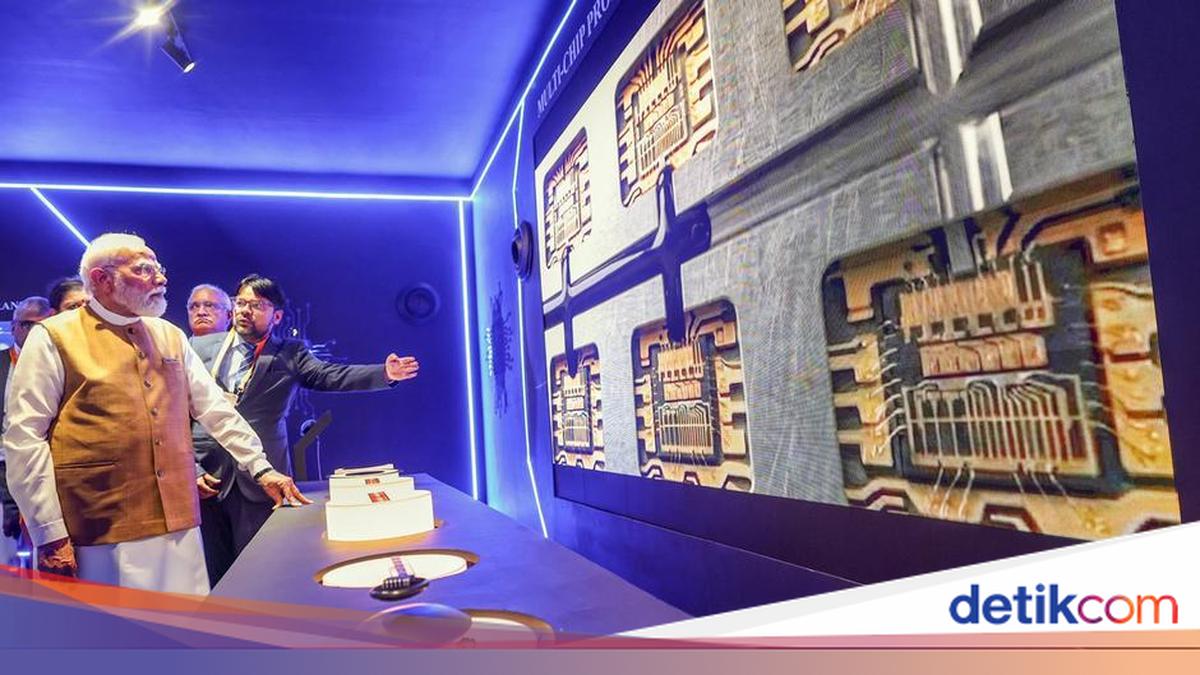
More than 90% of the world’s most advanced semiconductor chips are made in Taiwan, a place at the centre of ongoing rivalry between the United States and China. Any disruption to Taiwan’s chip industry is likely to shake the global economy. Modern semiconductors are used to make a range of products, from smartphones and electric vehicles to aircraft and military systems. During the Covid-19 pandemic, chip shortages forced automotive manufacturers to halt production, demonstrating the world’s dependence on a handful of producers in East Asia. As a result, various countries are racing to build more resilient semiconductor supply chains. The US, Japan, South Korea, and the European Union have launched multi-billion-dollar programmes to attract chip manufacturers. Now, India is undertaking its largest-ever effort to become part of that network and enter the global stage as a new power in the future electronics industry. Last week, the Indian government approved a $13.2 billion semiconductor programme named Semicon 2.0. This programme continues the $9 billion India Semiconductor Mission launched in 2021, aiming to build the entire semiconductor chip industry ecosystem, from chip design and fabrication to advanced packaging, speciality material development, equipment production, and workforce training. Thousands of engineers working for companies like Nvidia, AMD, Qualcomm, and Texas Instruments have designed some of the world’s most advanced semiconductor chips from research centres in Bengaluru, Hyderabad, and Noida. However, analysts warn that India still lags in large-scale manufacturing, the sector that provides both economic value and strategic importance in the semiconductor industry. V Kamakoti, Director of the Indian Institute of Technology in Madras, said India already has the expertise to design advanced semiconductor chips. He noted that Indian engineers working in domestic and multinational companies have successfully designed and produced complex chips, but the bigger challenge is manufacturing them. So far, India’s progress has focused more on chip packaging and testing rather than the chip manufacturing process itself. Kamakoti said the next step is to build a domestic manufacturing ecosystem so that design capabilities can be realised into large-scale production. Micron Technology, a US memory chip manufacturer, along with Kaynes Semicon and CG Semi, two Indian semiconductor assembly and packaging companies, have started commercial production in the first phase of India’s semiconductor programme. India’s Minister of Electronics and Information Technology, Ashwini Vaishnaw, said the next phase aims to bring more stages of the semiconductor value chain to India. Amitesh Kumar Sinha, Chief Executive of the India Semiconductor Mission, said convincing global companies is no longer as difficult as it used to be, referring to 12 approved fabrication and packaging projects, three of which have already entered commercial production. The Indian government targets a domestic semiconductor market worth $100 billion to $110 billion by 2030 and wants to meet up to three-quarters of India’s electronics industry needs through domestically designed and manufactured chips. Kamakoti argued that India should first prove its ability to produce mature and reliable 28-nanometre chips on a large scale before attempting to manufacture the most advanced 3-nanometre processors used in high-end smartphones and AI. He said 28 nm chips would meet most of India’s needs, and once that succeeds, the country can gradually move to more advanced technologies. India’s ambitions are also driven by factors beyond its control. Amid rising geopolitical tensions and the rapid development of AI, many companies are reviewing their supply chains, while demand for semiconductors is expected to rise sharply in the coming decade. Sambit Sahu, a semiconductor industry veteran with over 30 years of experience at Qualcomm and Intel, said India needs to build capabilities across the entire semiconductor value chain, from chip design and intellectual property development to fabrication and manufacturing. He said the rapid growth of AI will continue to drive semiconductor demand for years to come, opening opportunities for India. Building a semiconductor manufacturing ecosystem will be costly and face technical challenges, but with sustained investment and supportive policies, India has the potential to become an important manufacturing hub within the next decade. However, not everyone is convinced India can quickly catch up in manufacturing. A senior semiconductor industry executive who declined to be named said that for the foreseeable future, India is likely to remain stronger in chip design than in fabrication. The executive noted that India has built world-class capabilities in chip design, but manufacturing is a different challenge, and in the short term, the biggest opportunities lie in packaging, testing, and manufacturing mature-technology chips.