
Can France’s Socialist Camp Win Over Young Voters?
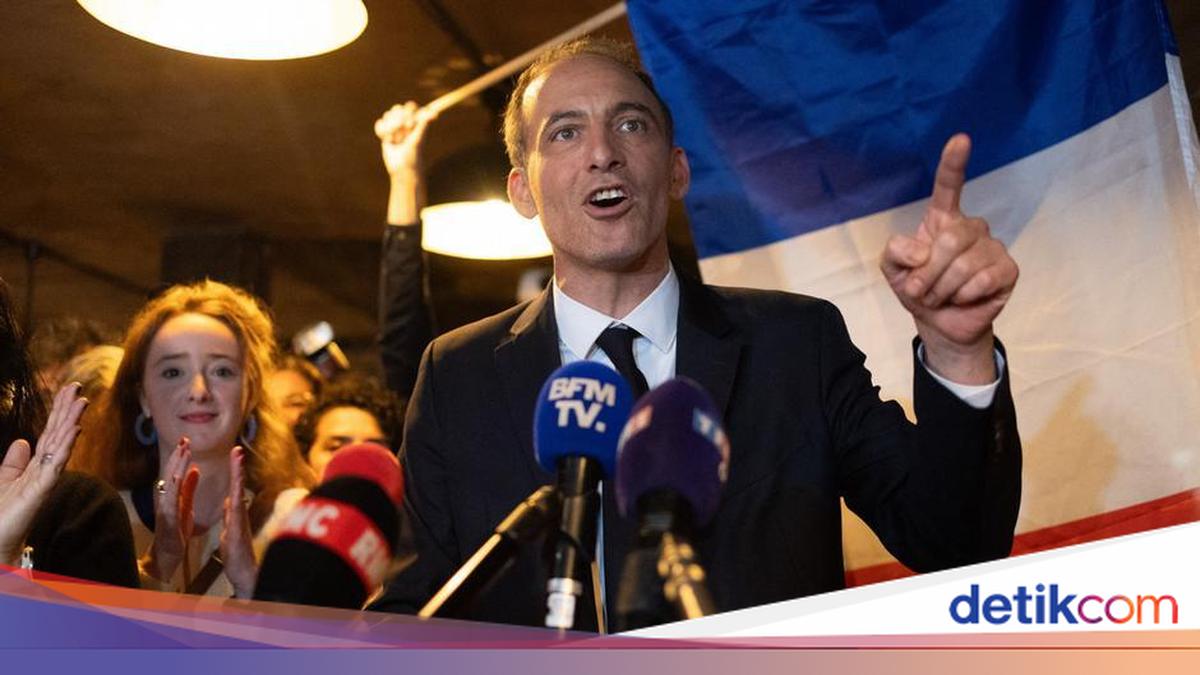
Belleville, a historically working-class neighbourhood in Paris, has undergone gentrification in recent years. It was here that Raphaël Glucksmann, a French Socialist Party member of the European Parliament, celebrated his victory in the party’s presidential primary on Sunday (18 October).
The vote was expected to go to a second round. However, Glucksmann, 46, the son of philosopher and essayist André Glucksmann, won comfortably in the first round with 66 per cent of the vote. He will therefore be the Socialist Party’s candidate in the 2027 French presidential election.
As he left the Cantine de Belleville restaurant, an unidentified person threw flour at him. The following morning, he urged Jean-Luc Mélenchon, the French left-wing populist who is his rival, to condemn the attack, which he said had been carried out by Mélenchon’s supporters. It has not been confirmed, however, whether the perpetrator was in fact a supporter of La France Insoumise (LFI), the party led by Mélenchon.
The incident highlights an issue likely to shadow Glucksmann’s candidacy in the coming weeks: how can he win support from Mélenchon’s voters if he refuses to work with their candidate?
Glucksmann’s rapid rise
Where do you stand on Mélenchon? That question dominated much of the primary campaign. Socialist Party leader Olivier Faure wanted to keep open the possibility of co-operation with LFI. Glucksmann, however, called for a clear break with the radical left. His decisive victory therefore also reflected support for distinguishing the Socialists from that camp.
Other candidates in the primary questioned Glucksmann’s political experience. Ségolène Royal, a former presidential candidate, likened his bid for the Élysée Palace to an “apprentice” seeking to run a company. She argued that Glucksmann had no experience in government, or even in leading a local authority.
Despite his decisive primary win, Glucksmann is starting from a difficult position. A poll by Toluna Harris Interactive published on Monday (19 October) estimated that he would receive 10–11 per cent of the vote, depending on which candidates stood.
Mélenchon, meanwhile, was projected to win 18 per cent, giving him a much stronger chance of reaching the second round. The survey was conducted before Glucksmann won the primary, and therefore does not account for the possibility that support for him may rise now that he has been selected as the candidate.
The French Socialist Party is relying on a man who is not even a party member to lead it out of political irrelevance. Raphaël Glucksmann belongs to a small centre-left party called Place Publique. In the last presidential election, in 2022, Socialist candidate Anne Hidalgo won just 1.75 per cent of the national vote.
Mélenchon’s appeal to young voters
Glucksmann faces an uphill task in winning support, particularly among young people in France. In an Ipsos poll in September, which treated Glucksmann as the social-democratic candidate and Édouard Philippe as the sole candidate from the centre, Mélenchon had the support of 41 per cent of voters under 25. Marine Le Pen, a far-right nationalist, was backed by 20 per cent of this age group. Young French voters are politically divided, but Mélenchon still dominates the left.
The 75-year-old politician is currently campaigning alongside students whose protests have attracted international attention. At a rally near Clermont-Ferrand, in central France, on Sunday, he expressed solidarity with the student movement. He also renewed his calls to lower the minimum voting age to 16 and abolish Parcoursup, France’s national university admissions system.
In an analysis published by the Fondation Jean-Jaurès, a think tank close to the Socialist Party, political scientist Antoine Bristielle distinguishes between LFI’s loyal core voters and the broader left. He says Mélenchon’s most committed supporters are generally young, educated and urban. Many also face significant financial pressures: four in ten in this group live in households with a net monthly income below €2,000.
Bristielle estimates that slightly fewer than a third of the left-wing voters in his study care more about the left winning than about loyalty to a particular party. Nearly half of this group are under 35. They are considering voting for the Socialist Party, the Greens or LFI. Wealth redistribution and an active role for government matter to them, but most prefer politicians willing to compromise.
Glucksmann’s effort to win over young voters
The trend seen recently in Germany—in which young women are more likely to vote left while young men lean more to the right—does not apply in France. Political scientists Anja Durovic, Nonna Mayer and Noémie Piolat found that in the 2024 European and legislative elections, young French women were not significantly more likely than men of the same age to vote for the left, or less likely to vote for the far right. It is not yet known whether the pattern will be repeated in the 2027 presidential election.
Glucksmann says he would ease the tax burden on earned income by cutting France’s CSG social security levy, while raising taxes on inheritances worth more than €2 million (about US$2.25 million). He also presents himself as a strong supporter of European integration, whereas Mélenchon has described the European Union as a neoliberal institution. Glucksmann’s political profile combines demands for social policies with a foreign-policy stance that could appeal to voters from the camp of current President Emmanuel Macron.
France’s policy towards Ukraine is one such issue. Glucksmann supports robust assistance for Kyiv. Manon Aubry, an LFI member of the European Parliament, said her party supports military assistance only under certain conditions: it must first be subject to democratic debate, must not enable attacks deep inside Russian territory, and must not weaken France’s own defence capability. In 2024, LFI MPs voted against the French-Ukrainian security agreement.
Tensions between the left-wing parties were again apparent after the flour attack in Belleville. LFI MP Sébastien Delogu posted a message of “support” on X for the taxi driver who had to clean the vehicle.
Glucksmann will need to win over many voters from Mélenchon’s camp if he is to have a chance of winning the presidential election. That is likely to be much harder than simply distancing himself from Mélenchon.