
Can Data Centre Testing Really Cause a Power Cut?
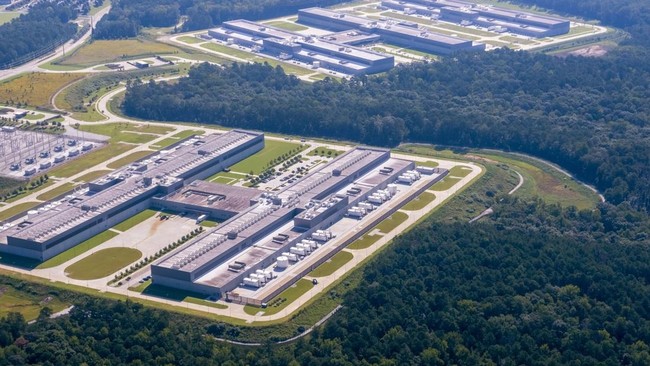
Jakarta, CNBC Indonesia — Information circulating in online media has claimed that a data centre stress test caused a power cut in Batam for two days, on 12–13 October 2026. But is that true?
So far, there has been no official confirmation of the claim.
Hendra Kusuma, chairman of the Indonesian Data Centre Providers Association (IDPRO), explained that large-scale data centre load testing can potentially disrupt electricity systems if it is not properly planned, coordinated and controlled.
“However, that does not mean every data centre stress test will cause a city-wide power cut,” Hendra told CNBC Indonesia on Thursday (15 October 2026).
He explained that load-bank testing is part of the commissioning process, the testing phase before a facility begins full operations. Its purpose is to ensure that the electrical system, uninterruptible power supply (UPS), backup generators and cooling system can operate reliably under a range of conditions.
Hendra added that the capacity of a data centre does not, by itself, determine the risk of disruption to the electricity network. Outages are generally triggered by sudden changes in load, the characteristics of the local electricity system and the availability of backup power.
“On an electricity system with relatively limited capacity and interconnection, a large change in load does require particular attention. In certain circumstances, a disruption can spread into a power cut if there is an imbalance in power supply, voltage or frequency fluctuations, or protection mechanisms fail to contain the impact,” he said.
Nevertheless, Hendra stressed that verified technical evidence is still needed to establish whether Batam’s power cut early last week was actually triggered by a data centre stress test. Preliminary findings from state electricity company PLN have indicated that the disruption was caused by a wild animal.
“IDPRO therefore does not want to speculate or link the outage to the activities of a particular data centre without sufficient evidence,” he said.
Key considerations in data centre development
Hendra also outlined several critical requirements for the construction and testing of large-scale data centres to prevent disruption to the public electricity network:
Coordinating load tests: Tests that could affect the network must be carefully coordinated with the electricity provider. This includes arrangements for testing stages, the scale of load changes and the readiness of the electricity system.
In-depth technical assessments: Studies should assess the impact of adding large loads, including power-flow analysis, voltage and frequency stability, protection-system coordination, and simulations of potential disruption scenarios.
Developing electricity infrastructure: Generation capacity, transmission and distribution networks, and system reserves must be prepared in step with rising energy demand from data centres.
Robust operating procedures: Data centre developers and electricity system operators need reliable communication and operational coordination, particularly during commissioning and tests with significant potential impacts.
“IDPRO’s principle is clear: data centres must be built and operated to high reliability standards. This is not only to protect their own operations, but also to ensure they do not pose risks that could harm the electricity system and the public,” Hendra concluded.