
Cambodia Studies Waste Management in Gianyar
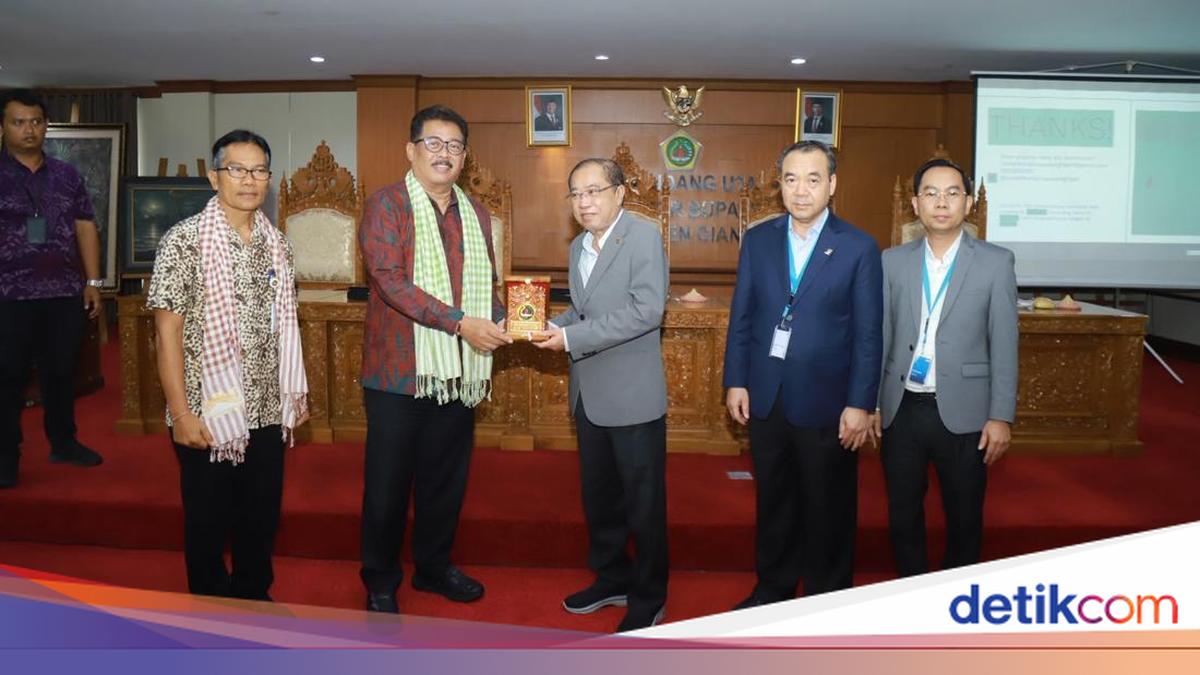
A delegation from Cambodia has visited the Gianyar Regency Government to study its waste management practices. “We received a study visit on waste management from the Cambodian Government delegation,” said Gianyar Deputy Regent Anak Agung Gde Mayun in a statement on Friday (12/6/2026).
Mayun explained that various policies and implementations of waste management adopted by the Gianyar administration were presented to the Cambodian delegation. He noted that the Gianyar Regency Government is not only striving to create a clean and healthy environment but also to ensure environmental cleanliness is sustainable.
The delegation was briefed on source-based waste management strategies and the role of the community in waste reduction. “As well as the synergy between the government, traditional villages, and various stakeholders in preserving the environment,” Mayun said.
Mayun stated that the concept of source-based waste management was a key focus of the learning session for the Cambodian delegation. Under this concept, waste is handled at the community level, so the remaining waste can be categorised as residue — the type of waste that can only be destroyed or processed with special infrastructure and can no longer be managed independently by the community.
“Through source-based waste reduction and handling, each component can carry out its role and obligations so that the volume of waste taken to the Temesi landfill can continue to decrease, leaving only residue,” he said.
Mayun noted that waste became the most extensively presented learning material for several reasons. Population growth, increased community activity, lifestyle changes, and evolving consumption patterns were cited as reasons for presenting the waste material to the Cambodian delegation. The waste issue becomes particularly complex when the availability of land for waste disposal becomes increasingly limited due to population growth, making the construction of infrastructure such as final processing sites difficult.
“As the number and activity of residents increase, along with lifestyle changes and community consumption patterns, waste generation becomes ever greater, both in quantity and variety,” he said.
Secretary of State at the Ministry of Interior, His Excellency Oum Mara, said the main objective of the visit was to study various innovations, programmes, and experiences in waste management. The approach that directly involves the community was one of the most interesting aspects to learn. “We are very interested in seeing how the community plays an active role in managing waste, including the implementation of compost house technology that has been running well,” said Oum Mara.
Oum Mara stated that this visit would not be the first and last. Cambodia and Gianyar will continue to foster relations through subsequent visits. “We hope the cooperation established through this visit can continue in the future through various forms of knowledge and experience exchange in the field of environmental management,” he said.