
Cambodia Crackdown Displaces Online Scam Hubs to Sri Lanka, Near Indonesia
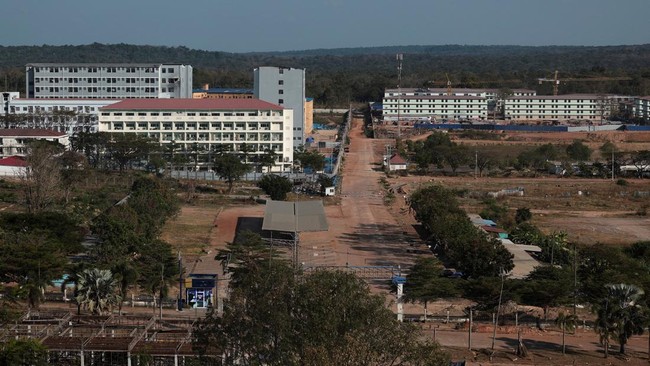
The crackdown on massive online scam hubs in Cambodia has not immediately eradicated cybercrime practices in Indonesia’s neighbouring region. According to a Bloomberg report, several online scam gangs have instead moved to beachfront resorts and office buildings in Sri Lanka.
Several factors are believed to have driven the decision of these scam mafia syndicates to move to Sri Lanka. These include free travel visas, the availability of buildings suitable for new headquarters, relatively strong telecommunications networks, and the ease of informal money transfer systems within the country.
Investigators stated that Sri Lanka has become a strategic location for online scammers. However, Sri Lankan authorities are not remaining idle as their country becomes a new base for these operations.
Sri Lankan authorities have formed a new cybercrime unit and have arrested more than 1,000 perpetrators throughout 2026. Most arrests were made in the capital, Colombo, according to the Straits Times, citing a Bloomberg report on Wednesday (10/6/2026).
“The police, together with immigration authorities and the central bank, are coordinating to control this,” said Assistant Police Chief Fredrick Wootler.
Nevertheless, local authorities still face challenges in prosecuting perpetrators. This is because many actors are using tourist visas, making it difficult to impose sanctions in accordance with the country’s applicable laws.
Police Raid Buildings and Apartments
When officers raided a property on the west coast last April, they discovered more than 150 foreign nationals allegedly running online scam operations. A few days later, police raided an apartment building near Colombo and arrested 120 foreign nationals.
As Sri Lankan authorities began to tighten pressure, some perpetrators acted quickly. They moved from large headquarters to hotel rooms, apartment buildings, and office buildings that could be rented for short periods.
“This is happening in a way that is, unfortunately, even harder for us to monitor,” said Erin West, founder of the anti-scam non-profit organisation Operation Shamrock. “They can truly operate in any environment.”
A report by a US congressional committee in July 20lar5 warned that online scam networks appear to be moving to jurisdictions with weak law enforcement capabilities but strong digital infrastructure. Some suspected hubs in Sri Lanka may be occupied by fugitives from scam centres in Southeast Asia.
The rise of Sri Lanka reflects a broader pattern of scam operations emerging far beyond their traditional strongholds in places such as the United Arab Emirates, Timor-Leste, Fiji, and parts of Africa, raising concerns that transnational gangs are becoming increasingly globalised.
Under the Spotlight of China
China is one of the nations closely monitoring the phenomenon of online scam syndicates. Pressure from China played a part in prompting Cambodia to take decisive action in early 2026.
The Chinese Embassy in Sri Lanka issued a statement in mid-March stating that they are “closely following” reports of the arrest of suspected scammers, including Chinese nationals. “Cases like these cause immense losses,” the statement said. The Chinese Embassy identified Sri Lanka’s advanced telecommunications infrastructure, advantageous geographical location, and the “kindness and hospitality of its people” as factors contributing to the increase in scam operations.
There is also a long history of Chinese workers living and working in Sri Lanka, partly due to Beijing’s Belt and Road infrastructure projects, which could potentially facilitate scammers blending into the diaspora. “It is not uncommon to see entire apartment complexes, shopping centres, and sometimes even residential areas inhabited by Chinese citizens,” said Sanjana Hattotuwa, an independent researcher who has spent over two decades writing about Sri Lanka.
Sri Lankan authorities should look to other countries, including Vietnam and the Philippines, to prevent scammers from gaining control, said Julia Dickson, a researcher at the Centre for Strategic and International Studies (CSIS). “The point is, do officials truly want to take action, or are they gaining significant profits as seen in Cambodia?” she asked.
Sri Lanka ranks 107th out of 182 countries and territories in Transparency International’s 2025 Corruption Perceptions Index, positioned just above Algeria, Bosnia and Herzegovina, and Laos.
Representatives from Sri Lanka’s Ministry of Foreign Affairs, Foreign Labour, and Tourism did not immediately respond to requests for comment.
Sri Lanka currently allows foreign nationals to enter without visa fees from dozens of countries, including China, and has approved plans to increase this to 40 countries to boost tourism. Visitor arrivals increased again in May after slowing down in March and April, likely due to prolonged conflict in the Middle East.
It is too early to determine if human trafficking is occurring within the scam operations in Sri Lanka, said Stephanie Baroud, a criminal intelligence analyst in the human trafficking and migrant smuggling unit at Interpol in Lyon, France. “This is not yet something that has been acknowledged or reported,” she said. However, she added that loose visa policies could be a driving factor for human trafficking.
Sri Lanka also lacks a legal framework capable of handling online scam operations, while easy access to SIM cards and widespread connectivity have made it an attractive base for scam networks, according to Hattotuwa. The country’s informal money transfer system, Undiyal, could also provide a black market channel to move scam proceeds, including cryptocurrencies, beyond the reach of regulators.
Source: jawawa.id (https://jawawa.id/newsitem/cambodia-crackdown-displaces-online-scam-hubs-to-sri-lanka-near-indonesia-1781088796)
Originally published by CNBC Indonesia (https://www.cnbcindonesia.com/tech/20260610141209-37-741694/kamboja-tumbang-muncul-markas-penipuan-online-baru-di-dekat-ri), translated from Indonesian