
Calls Grow for VAT on Sanitary Pads to Be Zero-Rated
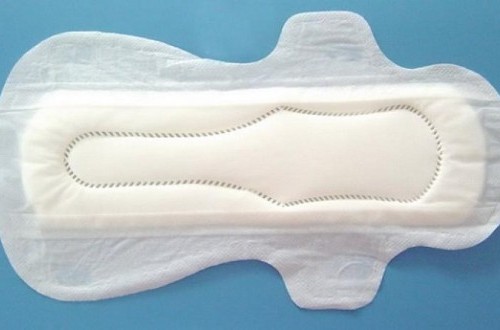
JAKARTA — Debate over tax on sanitary pads flared on social media in late October 2026, as the products remain subject to value-added tax (VAT) despite being an unavoidable basic necessity for women during menstruation. Calls have emerged for the tax to be reduced to zero.
“The controversy over tax on sanitary pads, which resurfaced on social media at the end of October 2026, in fact points to a more fundamental issue than simply the size of the rate,” said Achmad Nur Hidayat, an economist and public policy expert at UPN Veteran Jakarta, in a statement received by Republika on Thursday (29 October 2026).
Sanitary pads are still classified as taxable goods and have not been granted a VAT exemption by the Directorate General of Taxes (DJP) at the Ministry of Finance. Under Finance Minister Regulation (PMK) No. 131 of 2024, non-luxury goods such as sanitary pads are subject to a nominal VAT rate of 12 per cent, with the taxable base set at 11/12 of the selling price. This makes the effective burden 11 per cent.
This is not a new tax introduced in October 2026, nor does it mean the Government classifies sanitary pads as luxury goods. Achmad said the tax is in accordance with the rules, but sanitary pads have yet to receive fiscal recognition as a basic necessity deserving special protection.
“Tax policy should not stop at asking whether a levy complies with the rules. The far more important question is whether those rules reflect fairness for the people who bear the burden,” he said.
Achmad said that, in public economics, tax fairness cannot be measured solely by uniformity of rates. The same tax can create different social burdens when imposed on people with different economic means and needs.
Demand for sanitary pads is relatively inelastic because it is tied to a recurring biological need. When prices rise, women cannot simply stop menstruating. They may instead change pads less frequently, use products that are less suitable, or cut back on other spending.
“Therefore, the economic burden of sanitary pads is not merely a matter of consumer preference. There is a health need that must be met, regardless of a person’s ability to pay,” he said.
He said the DJP is correct that VAT on sanitary pads is not a tax specifically targeted at women. However, neutrality in the wording of the law does not always produce neutrality in economic impact. Achmad said a rule may apply generally while its consequences are concentrated on a particular group. In this case, people who menstruate face an expense that is not incurred by the entire population.
“VAT on sanitary pads should be reduced to zero. Not because the state does not need revenue, but because unavoidable biological needs should not be treated in the same way as discretionary consumption,” he said.
Source: jawawa.id (https://jawawa.id/newsitem/calls-grow-for-vat-on-sanitary-pads-to-be-zero-rated-1793256758)
Originally published by Republika (https://ekonomi.republika.co.id/berita/tnno5e423/pajak-pembalut-didesak-untuk-dinolkan), translated from Indonesian