
Calls for Talks with Russia Grow as Ukraine Tires of War
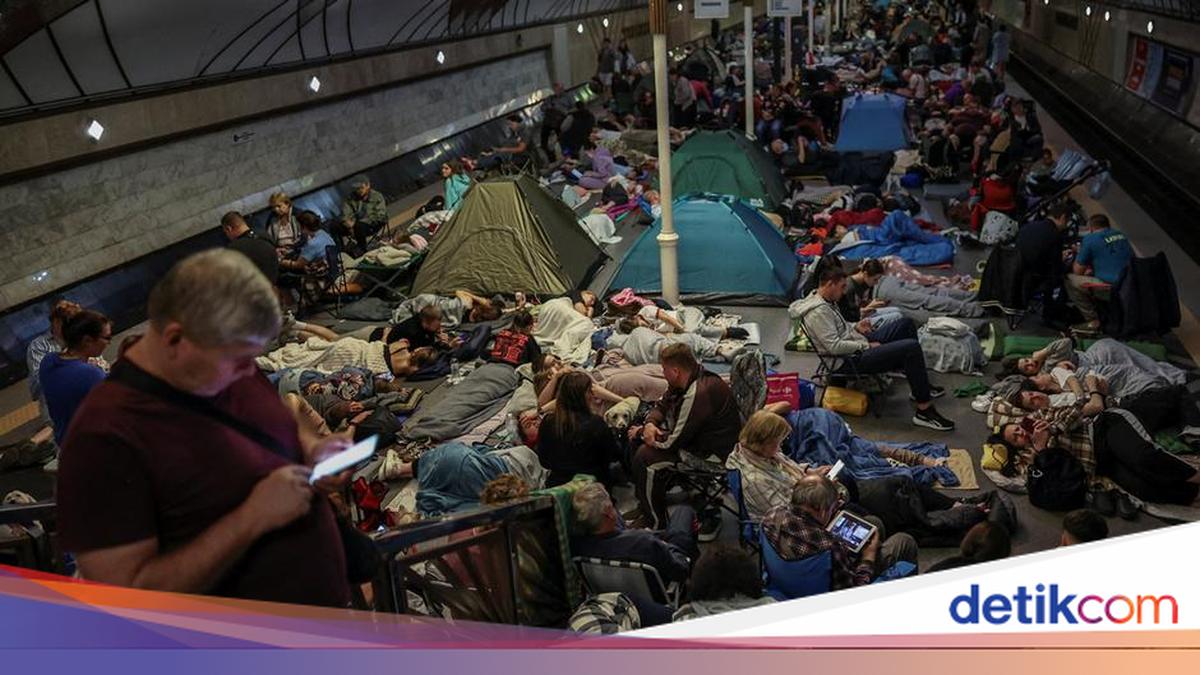
Three prominent Ukrainian politicians have called for the war to be ended through negotiations with Russia. One is Oleksii Honcharenko, a member of parliament from the European Solidarity party, who wrote on social media: “The reality today is that we are losing the war. We have lost countless lives. We lack money not only to fund the war, but even to keep the country running.”
Honcharenko proposed that Kyiv negotiate with Moscow over neutrality and abandoning its bid for NATO membership, the lifting of sanctions, the status of the Russian language and Church in Ukraine, and Donbas. “In my view, dying together with the whole country for NATO membership is absurd,” he said.
Danylo Hetmantsev, a member of the ruling Servant of the People party and chair of parliament’s finance committee, wrote on social media that “activating negotiations and peace must be our top priority”. He said the final peace terms should be approved in a referendum.
Kharkiv Mayor Ihor Terekhov, meanwhile, criticised the political logic that treats war as the only option. However, he also stressed that peace must be based on defensive capability and concrete guarantees from partner countries.
What do the president and opposition say?
President Volodymyr Zelensky quickly issued a warning. He reminded lawmakers that they shared responsibility for maintaining domestic unity and must not spread panic. “However difficult things may be for us, we must not submit to Putin and Russia, because that would destroy Ukraine,” the Ukrainian president said.
The opposition faction in parliament, European Solidarity, subsequently expelled Honcharenko. “His position on ending the war and Ukraine’s future security architecture differs from that of European Solidarity and its ideological principles,” the faction said.
It said its non-negotiable values included a strong army, Ukrainian as the official language, an independent national Ukrainian Orthodox Church, and membership of the European Union and NATO.
A test ahead of elections?
Oleksii Haran, a professor at the Kyiv-Mohyla Academy, said the timing of the calls for peace was no coincidence. “A difficult winter is coming, society is tired, and everyone is talking about negotiations—both Ukrainian officials and US President Donald Trump,” the political scientist told DW.
Some politicians, he said, were already rushing to reap the “harvest” ahead of the next elections. Haran also did not rule out that the calls were a “political probe” to gauge public reaction.
Ihor Tskhalenko, a political scientist at Ukraine’s Centre for Analysis and Strategy, viewed the politicians’ statements primarily in the context of possible negotiations in Abu Dhabi. A technical trilateral meeting there is reportedly expected to discuss a sectoral ceasefire and the activation of Trump’s peace plan.
Tskhalenko said some of the politicians had good relations with the US president’s team. Trump has an interest in securing quick results before the congressional elections on 3 November. “All this is primarily intended to organise a meeting of this kind and bring Russia to the negotiating table,” he said.
At the same time, the politicians’ statements are being used to test how far the public is prepared to accept compromises.
What do Ukrainians think?
According to a mid-September survey by the Kyiv International Institute of Sociology (KIIS), 75 per cent of Ukrainians support negotiations with Russia to end the war, while 21 per cent oppose them. KIIS stressed that the question concerned the possibility of negotiations, not concessions.
Some 69 per cent support an immediate ceasefire along the current front line, provided Ukraine does not recognise occupied territory as Russian, continues to strengthen its armed forces, and pursues closer ties with the EU and NATO.
About 62 per cent said they were prepared to endure the war for as long as necessary; in Kyiv, the figure rose to 72 per cent. Some 79 per cent believed Ukraine would win, although the share who were certain of victory had fallen from 60 to 47 per cent since late July.
“Statements by some politicians do not reflect the views of the majority of Ukrainians,” said Anton Hrushetskyi of KIIS. However, some members of the public are prepared to accept capitulation. About a year ago, around 20 per cent of respondents supported Russia’s peace plan, which included the withdrawal of Ukrainian forces from Donbas and demilitarisation.
“But that is a minority,” the sociologist stressed. Most people are pragmatic: they are open to difficult compromises, but not to capitulation.
Is Russia ready to negotiate?
Russian President Vladimir Putin recently dismissed proposals to halt mutual attacks on energy facilities and civilian vessels as “nonsense”. “Russia’s unwillingness is a fundamental fact,” political scientist Tskhalenko said.
In his view, the idea that the public is divided into “pro-war” and “pro-peace” camps is artificial. “There is no large group that wants an eternal war. Ukraine’s position will be limited to the line of contact and security guarantees, which is already a concession in itself; greater concessions are impossible.”
Professor Haran also said Ukraine’s current position was a bitter compromise. “We are now talking about freezing the conflict. That alone is a very large concession,” he said. Most Ukrainians may be willing to accept this, but there is no majority in favour of withdrawing troops from Donbas or recognising occupied territory as Russian.
Such statements, he argued, are counterproductive. “The problem is not negotiations and compromise, but that Putin wants to lead us into a difficult winter so that we surrender. What Honcharenko and others are saying now only emboldens Putin,” Haran warned.
Could a strategy of exhaustion work?
Moscow is relying on massive attacks on Ukraine’s energy sector, data centres, warehouses and bridges in the capital Kyiv, as well as the metal industry, to achieve its aims, political scientist Tskhalenko explained. “In this way, they want to strengthen the layer of society calling for the war to end at any cost. Once public resistance weakens, they want to demand greater concessions from the Ukrainian government.”
Anton Hrushetskyi cautioned that the mood among people on the street was increasingly different from what appeared on social media, where many bots operate and emotions are being intensely manipulated.
“Ordinary people are much calmer, even when faced with difficult questions. The compromises Ukrainians are willing to accept must not amount to unilateral concessions resembling Ukraine’s capitulation. Ukrainians want to keep fighting for a genuine peace.”
Source: jawawa.id (https://jawawa.id/newsitem/calls-for-talks-with-russia-grow-as-ukraine-tires-of-war-1791535919)
Originally published by detikcom (https://news.detik.com/dw/d-8699530/desakan-berunding-dengan-rusia-menguat-ukraina-kelelahan-berperang), translated from Indonesian