
Cakung records highest dengue cases in East Jakarta
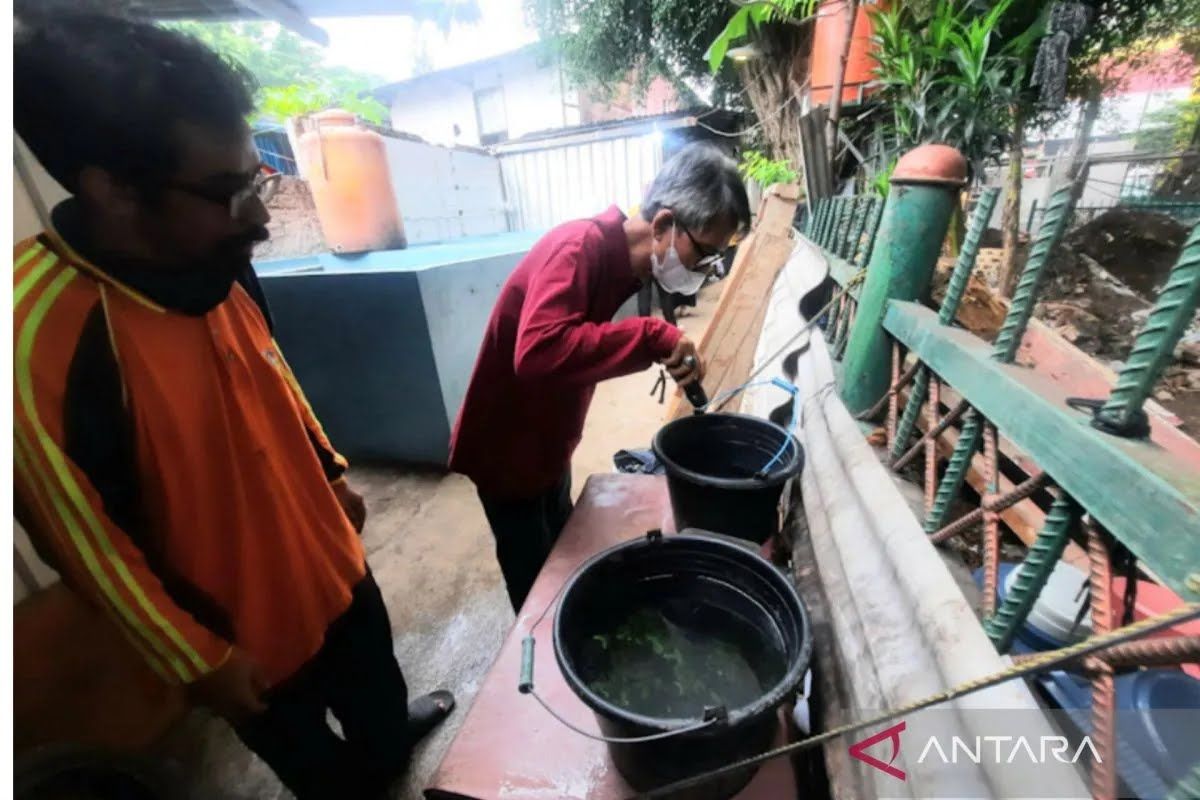
The East Jakarta Health Sub-agency has revealed that Cakung District has the highest number of dengue hemorrhagic fever (DBD) cases in East Jakarta, reaching 360 cases from January to June 2026. “The area with the highest dengue infection cases currently is Cakung District with 360 cases, based on the accumulation from January to 11 June 2026,” said Head of the East Jakarta Health Sub-agency Arief Wahyudhy. Arief mentioned that the trend of DBD cases in 2026 experienced an increase from January to March. Then, the number of cases began to decline in April through May. “In 2025, the increase occurred from the beginning of the year and the peak of cases happened in July 2025, whereas in 2026 it increased from January to March and experienced a decline in April to May,” he said. Besides Cakung, several other sub-districts also recorded high case numbers. In second place is Matraman with 259 cases, Ciracas 217 cases, Kramat Jati 198 cases, Duren Sawit 195 cases, and Pulogadung 194 cases. This is followed by Cipayung with 147 cases, Pasar Rebo 138 cases, Jatinegara 130 cases, and Makasar 113 cases. “Meanwhile, the highest morbidity rate per 100,000 population (Incident rate) is in Matraman District at 141.68 per 100,000 population with a total of 259 cases,” Arief stated. The high number of DBD cases is influenced by several factors, such as environmental conditions that still provide many breeding grounds for the Aedes Aegypti mosquito. Additionally, climate change, especially during the rainy season and transitional periods, as well as high population density and mobility contribute to the spread. Arief hopes that all village heads, sub-district heads, and the community will remain committed to mosquito nest eradication efforts. This is considering that the 3M Plus Mosquito Nest Eradication (PSN) is not solely the government’s responsibility, but that of the entire community.