
Cak Imin: Islamic Socialism Is a Path to Changing the Fate of Poverty
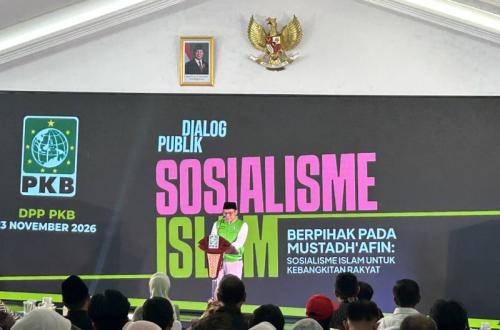
Abdul Muhaimin Iskandar, known as Cak Imin, chairman of the National Awakening Party (PKB), has stressed that poverty in Indonesia must not be allowed to become a destiny. He said Islamic socialism offers a path towards achieving social justice and strengthening people’s self-reliance.
Speaking at a public dialogue on Islamic socialism at PKB’s central headquarters in Jakarta on Friday, Cak Imin said development approaches had reached an impasse over the past 25 years. He said the previous decade had strayed far from the spirit of socialism, focusing too heavily on infrastructure and economic growth without addressing the roots of poverty.
“We do not want poverty in this country to keep being left as destiny. We want fairer structural change by tackling the root causes, such as land ownership and access to finance and capital,” he said.
Agrarian reform as a second reform
Cak Imin said the House of Representatives had recently passed a law after a difficult struggle. Activists have described it as the success of a second reform: the Agrarian Reform Law.
“The law is so significant that there are high hopes it will make access to land more open to poor communities,” he said. He added that President Prabowo had established the Agrarian Reform Agency (BRAN) about a month earlier. “When I meet activists from the Consortium for Agrarian Reform (KPA), they call this the second reform,” he continued.
He said the problems facing farming families who own less than half a hectare of land had gone unresolved for 30 years. Even the land-certification programme during the Jokowi era had not addressed the challenge. “We hope this new law will truly change the situation, so land can return to farmers and the people, and farmers can have stronger bargaining power,” he said.
Warning of online lending traps and structural problems
The Coordinating Minister for Community Empowerment also highlighted fundamental changes affecting unemployment and workers. Whereas people once dealt with loan sharks, he said, the challenge today was even greater: online loans.
“People in front of us, beside us, behind us and even our neighbours are almost all trapped in substantial online debt. This is a structural problem that requires serious attention, as improving people’s access to income remains a shared task,” he said.
Cak Imin stressed that Islamic socialism was neither communism nor an extreme left-wing ideology. Rather, it represented noble values rooted in the teachings of the Qur’an and the Sunnah, intended to ensure that political policies serve the people.
He said the idea had been revived after lengthy discussions with party cadres in the regions. Normative terms such as “justice” and “equality” often lose their meaning in society. Islamic socialism, he said, encourages Muslims to revive the social injunctions of Islam, which are often neglected when religious practice is confined to ritual observance.
Cak Imin said the idea had deep roots in the history of the national movement, from the tradition of santri merchants and Nahdlatut Tujjar, to Sarekat Islam, H.O.S. Tjokroaminoto’s thinking on Islam and socialism, and the 2017 National Conference of NU Religious Scholars’ decision on banning land monopolies.
“People are tired of hearing the word justice. So we must do more than promise justice. We must show who benefits and who bears the burden, then change things together. Islam has never been neutral in the face of injustice,” he said.
Source: jawawa.id (https://jawawa.id/newsitem/cak-imin-islamic-socialism-is-a-path-to-changing-the-fate-of-poverty-1794592278)
Originally published by Republika (https://news.republika.co.id/berita/togaln6230000/cak-imin-sosialisme-islam-jalan-ubah-takdir-kemiskinan), translated from Indonesian