
Cak Imin Assures Chronic Disease Patients Remain Protected by JKN Services
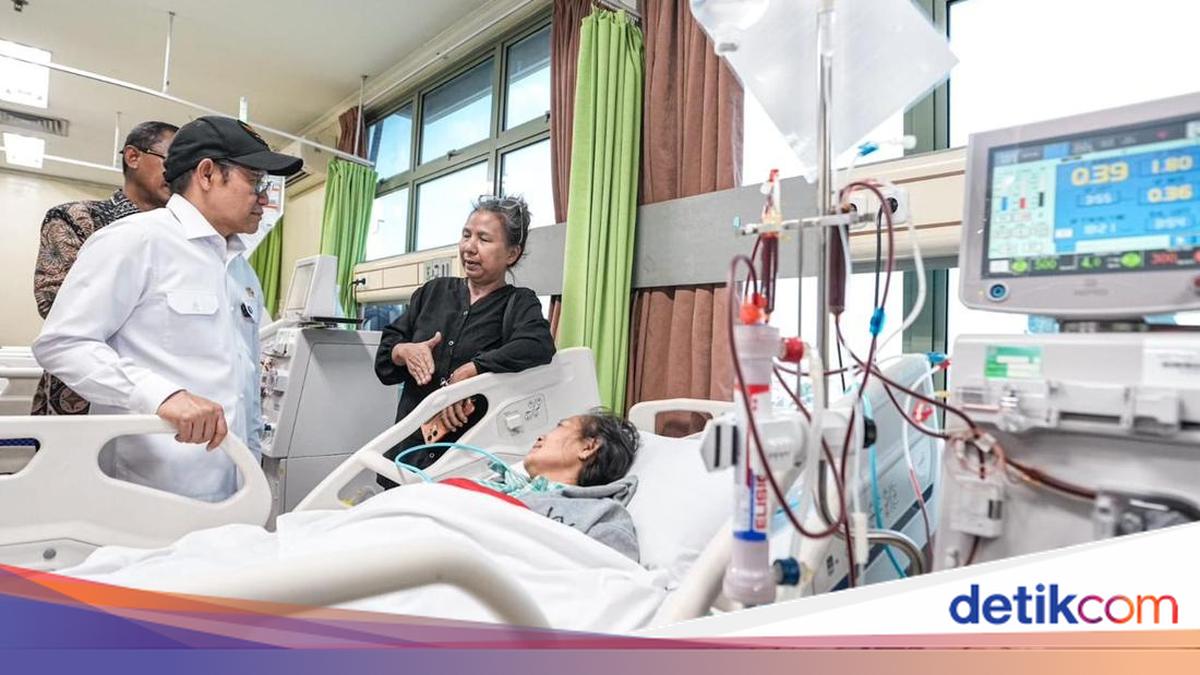
The Coordinating Minister for Community Empowerment, A. Muhaimin Iskandar (Cak Imin), visited dialysis patients at RSUD Cengkareng and the BPJS Kesehatan office in Jakarta yesterday.
During his visit, Muhaimin emphasised the government’s commitment to ensuring that patients with chronic diseases remain protected under the National Health Insurance (JKN) scheme. He also encouraged patients to continue receiving protection and sustainable access to healthcare services.
“Essentially, we, the government, want to ensure that the form of service, especially catastrophic services, particularly dialysis, runs smoothly without any delays in implementation. Because any delay will have fatal consequences for all parties,” Muhaimin stated in his remarks on Thursday (2/7/2026).
Muhaimin explained that the National Health Insurance (JKN) programme is a form of mutual cooperation among all Indonesian people to guarantee access to healthcare services. Through this mechanism, participants support one another so that those in need of high-cost medical services can receive treatment without being burdened by medical expenses.
He explained that every year, the government allocates a budget of Rp48.6 trillion to fund participants of the National Health Insurance Contribution Recipients (PBI JKN), supplemented by approximately Rp4 trillion from regional governments. From this total funding, around Rp22.2 trillion is used to finance services for catastrophic diseases such as kidney failure, heart disease, cancer, and various other chronic illnesses.
The government is also preparing an additional budget support of Rp20 trillion to maintain the sustainability of the JKN Programme and to improve the quality of service for all participants.
“Most importantly, we will strive as much as possible to increase membership through the earnest participation of the entire community,” Muhaimin explained.
During his visit to RSUD Cengkareng, Muhaimin also ensured that services to patients were running optimally. He engaged in dialogue with healthcare workers and patients to gain a direct overview of service implementation in the field and to gather various inputs for policy refinement.
Through strengthened coordination across ministries and agencies, the Coordinating Ministry for Community Empowerment is committed to ensuring that all social protection policies align with efforts to improve public welfare. The government will also continue to ensure that chronic disease patients, particularly those from poor and vulnerable groups, obtain their right to high-quality, sustainable, and unobstructed healthcare services through the National Health Insurance Programme.