
Cabinet Secretary Teddy Urges Public to Support WFH Policy for Energy Savings
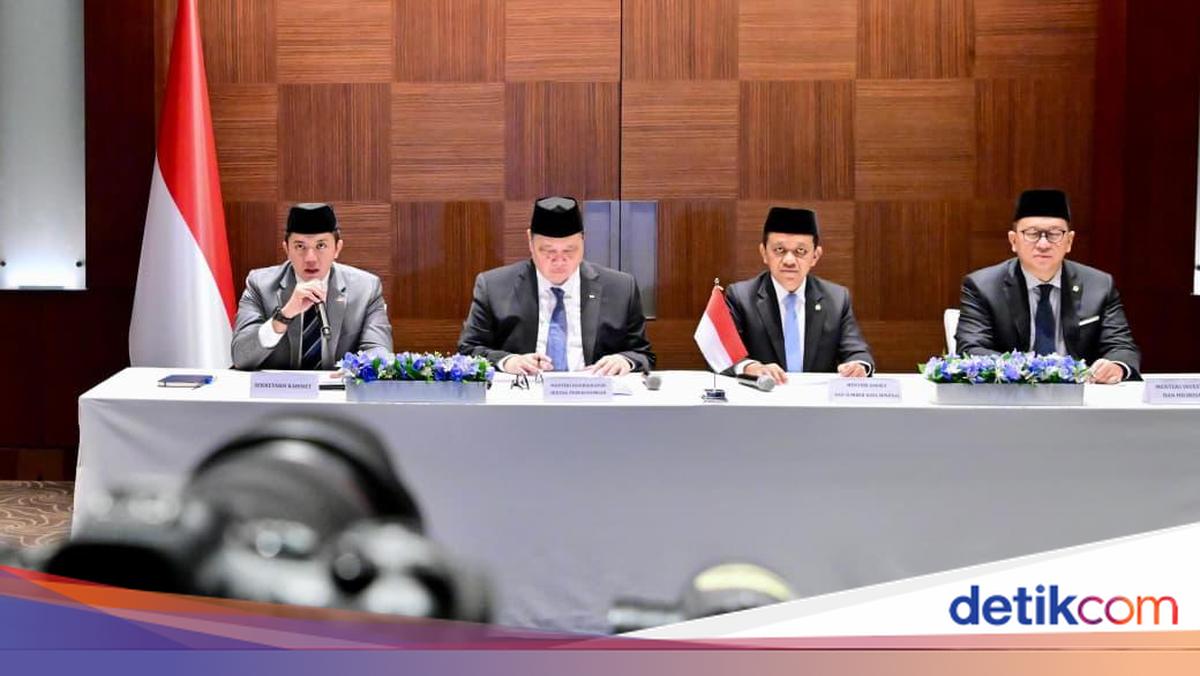
Cabinet Secretary Teddy Indra Wijaya has urged the public to support the work culture transformation policy to save fuel oil (BBM) amid the escalation in the Middle East. He hopes that the entire society remains productive.
“The government invites the entire society and the business world to continue participating in supporting these work culture transformation steps. Let us remain calm and remain productive,” said Teddy during a press conference viewed on the Cabinet Secretariat’s YouTube, Tuesday (31/3/2026).
Teddy stated that the policy is dynamic. The government will continue to make adjustments following the latest developments.
“And what is conveyed is dynamic; if there are changes, they will be conveyed by the government quickly,” he said.
Previously, Coordinating Minister for the Economy Airlangga Hartarto, in his presentation, emphasised that this policy is a direct follow-up to President Prabowo’s directives to strengthen national economic resilience amid global uncertainties. Airlangga explained that the government has launched the Eight Pillars of National Work Culture Transformation as an adaptive and preventive step.
“This policy programme is called the Eight Pillars of National Work Culture Transformation, and it will be supplemented with energy policies,” Airlangga revealed.
One of the main policies pursued is the implementation of national work culture transformation, including flexible work schemes such as work from home (WFH) for civil servants and similar appeals to the private sector, while considering the characteristics of each sector.
“The work culture transformation policy that encourages more efficient, productive, and digital-based work behaviour changes,” he explained.
In addition, the government is promoting mobility efficiency, the use of public transport, and energy savings in government environments, the business world, and society. In the energy sector, the government is preparing strategic policies to increase energy independence, including the implementation of B50 biodiesel, which is expected to reduce dependence on fossil energy.
Meanwhile, in the fiscal aspect, the government is also sharpening state expenditure through budget refocusing to more productive sectors that directly impact society.
“The potential priority and budget refocusing for ministries and agencies is in the range of Rp121.2 trillion to Rp130.2 trillion,” said Airlangga.
Airlangga also emphasised that all these policies are part of a structural transformation towards a more resilient national economy. The government invites all elements of society and the business world to remain productive and actively participate in supporting the implementation of these policies, which will take effect from 1 April 2026 and be evaluated in the next two months.
“All these policies are part of a structural transformation towards a more efficient, productive, and resilient economy,” he concluded.