
Cabinet Secretary Teddy Details Seven Diplomatic Achievements of Prabowo from BRICS to Rp2.43 Trillion Investments
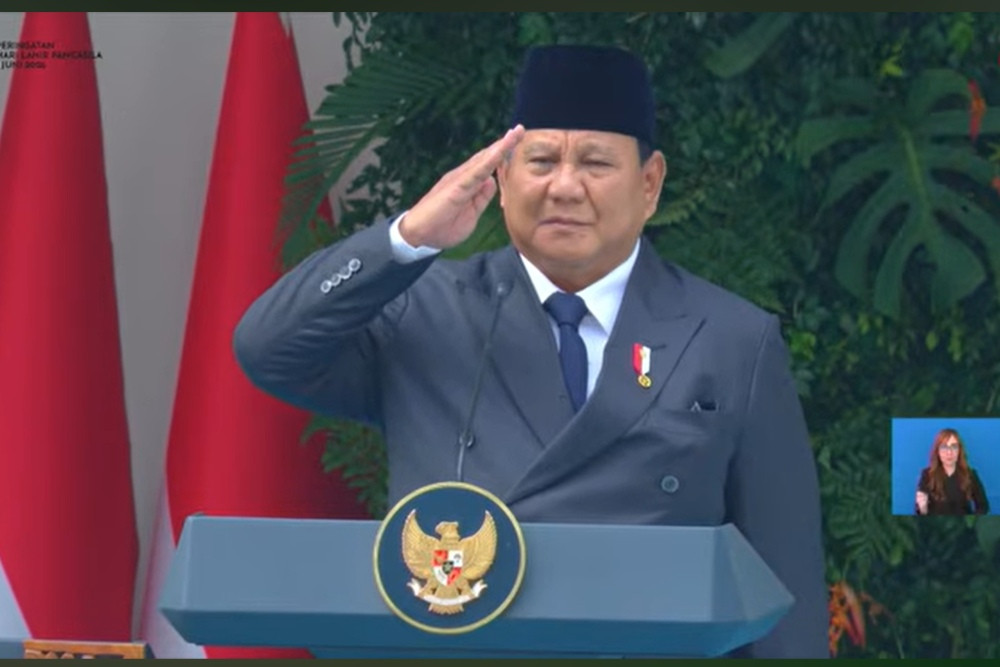
Bisnis.com, JAKARTA — Cabinet Secretary Teddy Indra Wijaya has responded to criticism regarding the frequency of President Prabowo Subianto’s foreign visits, asserting that diplomacy should be measured by tangible results benefiting the public, not merely the number of trips or ceremonial aspects. Through a statement posted on the Cabinet Secretariat’s official Instagram account on Monday (1 June 2026), Teddy noted that criticism and input towards the government are important. However, he stressed that Indonesia’s diplomatic achievements over the past 18 months must not be overlooked. ‘When discussing diplomacy, it’s about results. Real benefits for the nation. Criticism and input are important. There is always room for criticism and input. But do not obscure the facts of those working,’ Teddy said. Specifically, Teddy addressed feedback previously given by former Deputy Foreign Minister Dino Patti Djalal. He expressed appreciation for the criticism but felt the need to clarify certain points. Regarding the cost of the President’s foreign trips, Teddy affirmed that any expenses exceeding the national budget are personally covered by President Prabowo. Teddy also refuted claims that the President’s entourage during foreign visits is too large, stating that the delegation size has been halved compared to the previous administration. ‘Previously, a single foreign trip could involve over 120 people. Now, under President Prabowo, it’s a maximum of 50-60,’ he said. On international visit schedules, Teddy explained that global geopolitical dynamics make diplomacy difficult to plan far in advance, with both annual agendas and urgent national or international needs. He noted the high frequency of the President’s meetings with world leaders in the past 18 months is tied to global crises and conflicts, from Ukraine to Middle East tensions. According to Teddy, personal relationships between leaders are crucial in modern diplomacy as strategic assets when Indonesia needs international support. ‘Therefore, personal and emotional closeness between leaders, whether publicly covered by media or private, is diplomacy,’ he said. Seven Diplomatic Achievements of Prabowo In his explanation, Teddy outlined several tangible results of Prabowo’s government diplomacy. First, Indonesia’s accession to BRICS, which he said strengthens national economic resilience amid global uncertainty, including energy and food supply security. Second, a zero-tariff agreement with the European Union, the result of over a decade of negotiations. Third, Rp2.43 trillion in investments over 18 months, including US$33.89 billion (Rp575 trillion) in business commitments from visits to Japan and South Korea. Fourth, strengthening military equipment through cooperation with France, the US, Russia, China, the UK, and other European nations. Fifth, smooth Hajj operations, including the Indonesian Hajj Camp in Saudi Arabia, which he called a significant diplomatic achievement. Sixth, active involvement in the Palestine issue through air logistics aid, hospital ship operations, and scholarships for Palestinian students in Indonesia. Seventh, successful repatriation of Indonesian citizens detained by Israeli authorities at sea. ‘What matters most to us is the concrete results. That is our priority,’ Teddy said. Investment Partner Diversification Amid scrutiny of the President’s foreign trips, analysts have noted the government’s efforts to expand foreign investment sources beyond traditional Asian partners. Currently, foreign investment in Indonesia is dominated by Singapore, China, and Hong Kong. In Q1 2026, Singapore contributed US$4.6 billion, followed by Hong Kong at US$2.7 billion and China at US$2.2 billion. Chinese investments primarily flow into infrastructure, mineral downstreaming, and natural resource processing industries. In this context, Prabowo’s state visits to Japan, South Korea, and France are seen as part of a strategy to diversify investment partners towards Europe and East Asia. From Japan and South Korea, the government announced business commitments of US$33.89 billion (Rp575 trillion) covering energy, digital economy, future industries, and mineral downstreaming projects. Meanwhile, the recent visit to France yielded new commercial agreements worth US$3.5 billion (Rp61 trillion), including cooperation in energy, trade, defence, education, and critical minerals development. The establishment of the France-Indonesia High Level Business Council aims to oversee implementation of memoranda of understanding and investments agreed upon by both nations. ‘What I mentioned earlier are concrete results from the past 18 months. All these are diplomacy conducted by President Prabowo in various ways, whether publicised or not, because what matters most to us is the concrete results. That is our priority,’ Teddy added.