
Cabinet Reshuffle: Business Leaders Call for Policy Certainty
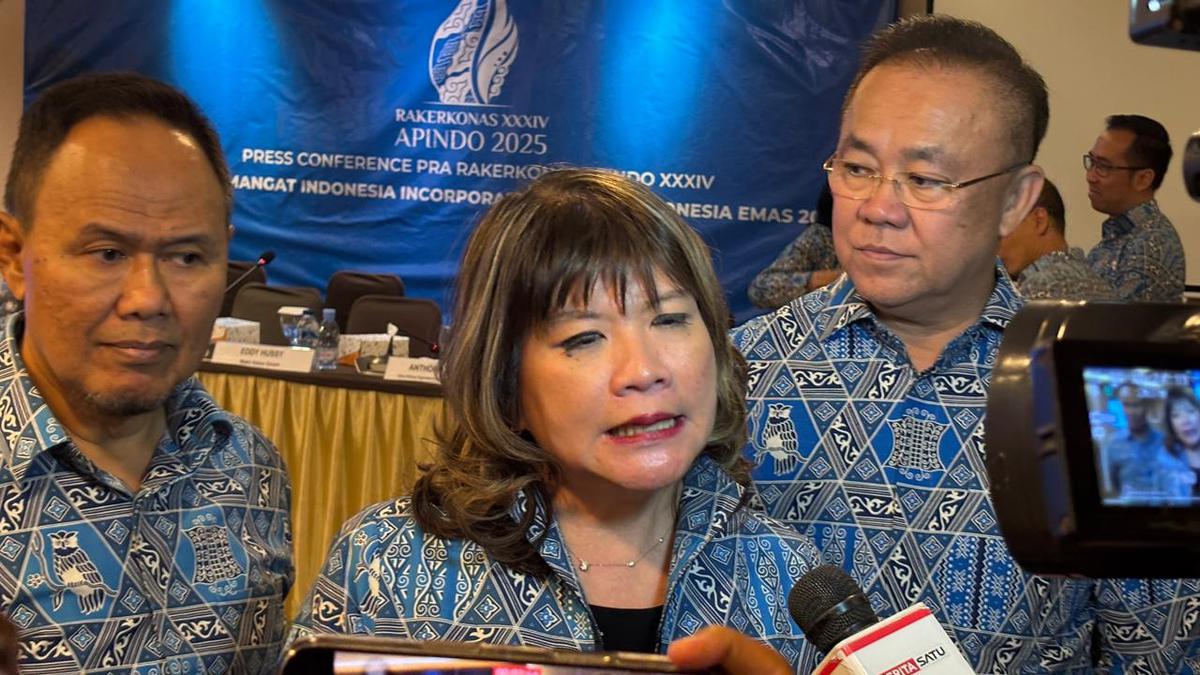
The Chairperson of the Indonesian Employers Association (Apindo), Shinta W. Kamdani, has called on the government to ensure policy certainty and the continuity of economic programmes following the reshuffle of the Red and White Cabinet.
Shinta stated that the business community requires regulatory stability and effective government coordination, as decisions regarding investment, production expansion, and job creation are made with medium-to-long-term horizons. “For business actors and investors, certainty is vital because various business decisions—whether investment, capacity expansion, or job creation—are made with medium and long-term horizons,” Shinta said on Thursday.
Shinta noted that changes in officials must be accompanied by a swift transition to avoid hindering the implementation of ongoing economic agendas. She added that the government needs to strengthen cross-ministerial coordination, as business issues encompass investment, industry, trade, energy, fiscal matters, and labour.
Apindo requested that new ministers maintain several key economic agendas, particularly domestic purchasing power and demand, which serve as the pillars of growth. The business community also requires policies that strengthen industrial competitiveness through the certain supply and pricing of energy, raw materials, logistics, financing, and trade.
Shinta remarked that the simplification of regulations and licensing must also be a priority, as frequent policy changes can increase business costs and risks. “The business world needs predictable policies and consistent implementation. Frequent policy changes or inconsistent implementation can increase the costs and risks of doing business,” she said.
Regarding investment, Shinta stated that the prospects for business expansion are determined more by economic fundamentals and policy quality than by changes in officials. While investment realisation in the first semester of 2026 reached approximately Rp 1,010.6 trillion, growing by 7.2% year-on-year, the sustainability of investment still requires regulatory certainty, macroeconomic stability, and the resolution of implementation hurdles.
For the industrial sector, Apindo hopes the Minister of Industry will strengthen competitiveness and deepen industrial structures through the certainty of raw materials, competitive energy, technological modernisation, financing, labour productivity, and logistical efficiency.
Regarding the Coordinating Minister for Downstreaming and Energy Transition, Shinta requested that the role direct downstreaming efforts to create longer domestic value chains. The energy transition agenda must also consider energy security, affordability for industry and the public, and a clear roadmap for long-term investment.
Shinta noted that while the business community has room to maintain growth through the end of 2026 and into 2027, entrepreneurs still face global uncertainties, including geopolitics, interest rates, exchange rates, and energy prices.
According to Apindo’s 2026 Mid-Year Business Outlook survey, 37.1% of companies expect business conditions to improve in 2027, 42.2% expect them to remain relatively the same, and 20.7% anticipate a decline. “Ultimately, the business world needs one fundamental thing: policy certainty and execution certainty. Changes in officials should not halt momentum,” Shinta concluded.