
C909 Marks 10 Years of Commercial Service, Boosting China's Regional Aviation
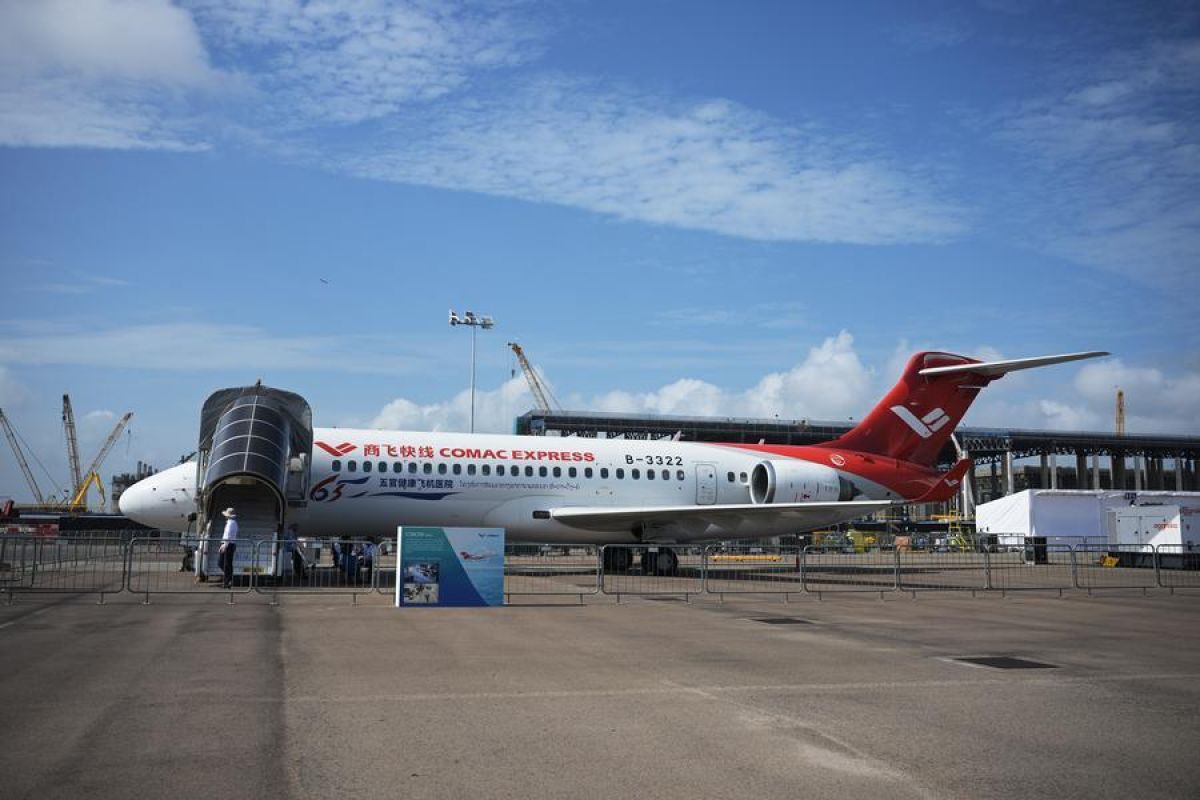
The domestically developed Chinese regional jet, the C909, has marked 10 years of commercial operation, becoming a mainstay of the country’s regional aviation market and extending its reach overseas. The C909, previously known as the ARJ21, made its maiden commercial flight on 28 June 2016. Since then, the aircraft has carried more than 37 million passenger trips, according to the Commercial Aircraft Corporation of China, Ltd. (COMAC). COMAC revealed that 186 C909 aircraft have been delivered to more than 10 customers. The jet accounts for approximately 70 per cent of China’s domestic regional jet fleet, operating on over 860 routes and serving more than 180 cities, with over 500 flights daily. Recent developments indicate a broader role for the aircraft. On 22 June, the first C909 business jet began commercial operations on a flight from Shanghai to Beijing. The aircraft can be configured with 12 to 29 seats and customised with rest areas, meeting rooms, reception areas, and dining spaces. A day later, a Chengdu Airlines C909 landed at Bayanbulak Airport in Hejing County, Xinjiang Uighur Autonomous Region, at an altitude of over 2,500 metres, inaugurating the Urumqi-Hejing-Kashgar route. This is the second high-altitude route operated by the C909. Yang Yang, deputy director of COMAC’s Marketing and Sales Committee, said the C909 has become the main aircraft in China’s regional aviation market, supporting routes in border areas, feeder services, and short-haul international routes. The aircraft has helped improve the supply of regional jets and flights while better optimising the utilisation of China’s civil aviation network, Yang said. When the first C909 completed its maiden commercial flight in 2016, Chengdu Airlines was the sole operator, with just one C909 in its fleet. Today, the airline operates 31 of the jets. ‘The C909 has demonstrated strong performance, especially after we deployed it on regional routes in Xinjiang and other areas, where it has delivered significant economic and social benefits,’ said Huang Liying, chief accountant at Chengdu Airlines. In several regions, including Xinjiang, Inner Mongolia Autonomous Region, and Heilongjiang Province, 70 C909 aircraft have been operated on more than 460 routes, recording over 10 million passenger trips. In Xinjiang, the Turpan-Altay route has cut travel time to about one hour and 10 minutes, compared with nearly 12 hours by train via Urumqi or almost eight hours by car. Zhu Tao, senior marketing manager at Xinjiang Airport Group, said the C909 has improved travel conditions for people in remote areas, making air travel more affordable and accessible while helping to boost tourism demand. The C909 has also expanded its reach overseas since commencing operations in Indonesia in April 2023. It now operates in several markets, including Indonesia, Laos, and Vietnam, serving 28 cities abroad and recording over 1 million passenger trips. COMAC has also developed specialised versions of the aircraft, with variants for business aviation, cargo transport, emergency command, and medical services already delivered. At the Singapore Airshow 2026, Shanxi Victory General Aviation signed an order for six C909 firefighting aircraft, including three firm orders and three letters of intent. The C909 has a capacity of 78 to 97 passengers with a range of 2,225 to 3,700 kilometres. It is designed to operate at airports with short and narrow runways and performs well in high-temperature, high-altitude, and crosswind conditions. ‘The C909 is highly adaptable and operates stably in various types of airports,’ said Chen Qingqiang, one of the first captains to fly the modified C909 variant. As a pioneer in China’s commercial aircraft sector, the C909 achieved a ‘zero-to-one’ breakthrough in the commercial operation of domestically developed jet aircraft while helping to chart a full life-cycle development path for homegrown commercial aircraft, Chen said. The aircraft’s 10 years of operation coincide with the rapid growth of China’s aviation market. Data from the Civil Aviation Administration of China (CAAC) shows that the country has added approximately 40 million air passengers annually over the past two years, bringing its total air transport user population to 470 million, an increase of 160 million from 2019. China now has the largest air transport user population in the world. China’s civil aviation airports served nearly 1.53 billion passenger trips in 2025, a 4.8 per cent year-on-year increase, according to the CAAC’s 2025 civil aviation industry statistical bulletin.