
Buya Anwar Abbas: Yiwu’s Business Philosophy Can Help Develop Muhammadiyah’s Business Community
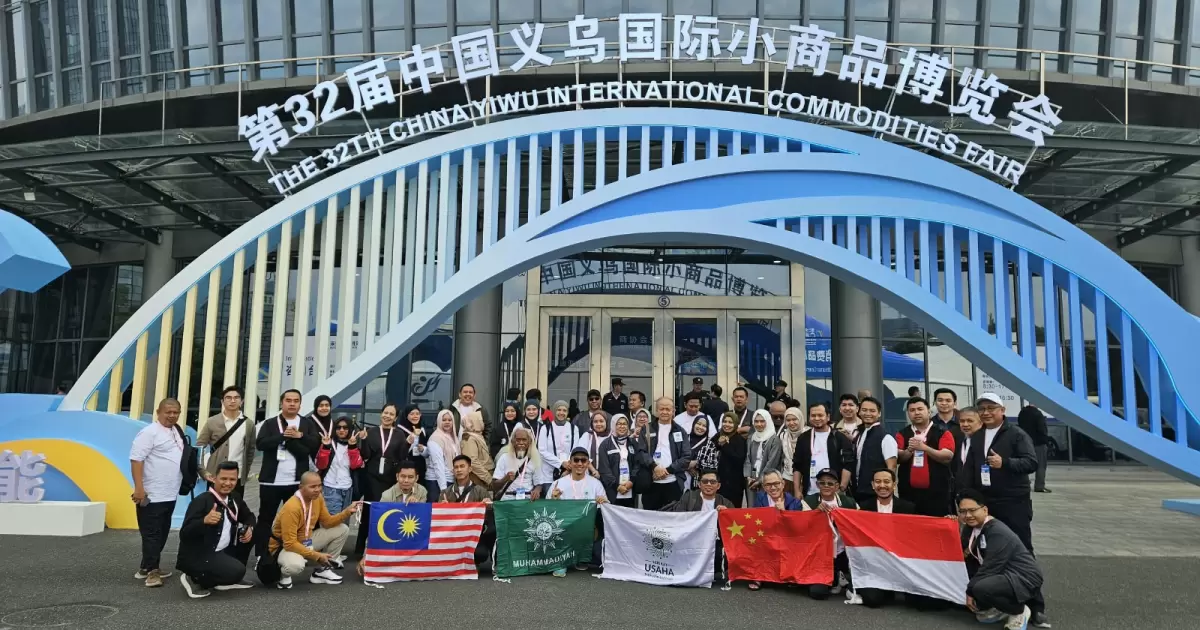
Jakarta — Indonesian Ulema Council (MUI) Deputy Chairman Buya Anwar Abbas says the philosophy and work ethic of entrepreneurs in Yiwu, China, could offer valuable lessons to Serikat Usaha Muhammadiyah (SUMU) as it develops its business community.
Anwar says Yiwu’s transformation from a poor agricultural area into one of the world’s largest wholesale trading centres was driven by a strong trading spirit, adaptability and the way its people viewed economic opportunities.
Anwar, who is also chairman of Muhammadiyah’s central leadership, explained that Yiwu is a county-level city under the jurisdiction of Jinhua in Zhejiang Province, eastern China.
Although it has no coastline and was once known for unfavourable agricultural conditions, Yiwu has developed into an international commodities trading centre.
Yiwu’s major transformation began after Xie Gaohua was appointed regional secretary in April 1982. A policy allowing residents to trade legally was a key step in driving the area’s economic growth.
From then on, a development strategy centred on trade helped Yiwu grow into a wholesale market hub with trading networks reaching countries around the world.
Anwar said there were at least four philosophies and attitudes among Yiwu’s residents that Indonesian businesspeople could learn from.
First is the spirit of Ji Mao Huan Tang, or “trading chicken feathers for sweets”. The philosophy grew out of the efforts of Yiwu residents to make a living despite limited natural resources. They made sweets to exchange for chicken feathers, which they then processed into feather dusters and handicrafts for resale.
The remaining feathers were used as organic fertiliser to improve farmland. This door-to-door trading tradition fostered an entrepreneurial mindset characterised by resilience, patience, creativity and the ability to persevere despite limited capital.
Second, entrepreneurs do not focus solely on making large profits. Yiwu’s businesspeople believe that an enterprise has economic value as long as it generates income. They then reinvest that money to develop their businesses and expand trade.
This principle demonstrates the importance of sustaining a business through careful capital management and ongoing reinvestment.
Third, they are alert to changes in global markets. Yiwu’s traders are known for reading consumer needs and responding quickly to shifting trends. Their ability to do so is supported by a manufacturing ecosystem and supply chain that can produce a wide range of goods to meet market demand.
This support enables businesses to tailor products to consumer needs, including demand from international markets.
Fourth, they are pragmatic and focused on consumer needs. Yiwu’s entrepreneurs tend to prioritise meeting market demand and do not treat cultural differences as a barrier to doing business. They produce a wide range of goods, from Christmas decorations to Muslim prayer items, according to what consumers want.
In their view, fulfilling orders is part of professional business activity, requiring an ability to understand the market and maintain product quality.
Asked about these philosophies and perspectives, SUMU Secretary-General Ghufron Mustaqim said Yiwu’s entrepreneurial spirit and work ethic were worth studying, while taking into account the values underpinning Muhammadiyah’s business movement.
Anwar stressed that emulating Yiwu’s business success did not mean adopting all its practices without consideration. “If something is good, we take it; if it is not, we leave it,” he said.
He added that the purpose of developing a business should not stop at achieving material profit. For Muslim entrepreneurs, economic activity should also be directed towards seeking blessings from Allah.
“What we seek in economic and business life is not only profit, but also blessings from Allah,” he said.
Yiwu’s experience can therefore serve as a learning resource for SUMU and Muslim entrepreneurs seeking to build businesses that are resilient, innovative and responsive to market needs while remaining grounded in Islamic principles.
For Anwar, ideal business success should be measured not only by the scale of profits and trading networks, but also by the value it creates and the blessings it brings to society.
Source: jawawa.id (https://jawawa.id/newsitem/buya-anwar-abbas-yiwus-business-philosophy-can-help-develop-muhammadiyahs-business-community-1792777825)
Originally published by mui.or.id (https://mui.or.id/public/index.php/baca/berita/buya-anwar-abbas-filosofi-bisnis-yiwu-china-bisa-jadi-pelajaran-kembangkan-dunia-usaha), translated from Indonesian