
Buton Asphalt Research Enters Downstreaming Phase, Industry Prepares for Production and Distribution
The utilisation of Buton asphalt (asbuton) requires processing technology capable of efficiently separating bitumen from minerals for industrial-scale application. Hydrothermal technology research is now entering the downstreaming phase to expand the use of domestic asphalt resources.
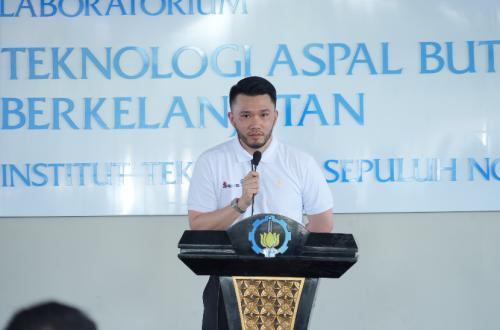
The Sepuluh Nopember Institute of Technology (ITS) operated the Sustainable Buton Asphalt Technology Laboratory on Wednesday (30/9). This facility is used for the research and development of asbuton processing technology, specifically the hydrothermal-based extraction process.
This technology was developed to optimise the separation of bitumen from asbuton minerals. ITS stated that the resulting extraction efficiency can exceed 95 per cent.
ITS Rector Bambang Pramujati stated that the operation of the laboratory is a continuation of research conducted by ITS researchers from the upstream to the downstream stages. The results of this research are expected to be applied to support infrastructure development needs.
“The trust given is tangible proof that the series of upstream to downstream research by ITS researchers holds great strategic value for accelerating national development,” said Bambang in a statement received on Friday (2/10/2026).
The asbuton processing technology was developed by Susianto, a lecturer from the ITS Chemical Engineering Department, who has been researching asbuton separation since 2006. Using a transport phenomena approach, the research optimises mass and heat transfer within the asbuton extraction process.
The next stage involves moving this technology from the laboratory to production scale. Aspindo Group has expressed readiness to support further testing and production development, while also providing a distribution network should the technology enter the commercialisation phase.
Aspindo Group CEO Bobby Hartawan Wijera stated that collaboration between universities and industry is essential to bring research results towards wider-scale utilisation. According to him, the extraction efficiency level is a crucial factor in developing asbuton for industrial needs.
“This innovation from the ITS laboratory is an extraordinary turning point for the national asphalt industry. An extraction efficiency of over 95 per cent is the breakthrough we need to ensure asbuton becomes a mainstay in its own country,” said Bobby.
In addition to supporting testing and production development, Aspindo Group is preparing a distribution network to anticipate the downstreaming of this technology. Logistics infrastructure is required so that asbuton products can reach development needs across various regions of Indonesia.
“We have prepared a mature logistics ecosystem, ranging from storage terminals to land and sea transport fleets. Aspindo Group’s commitment is to ensure that the results of this high-tech asbuton downstreaming can be distributed smoothly, efficiently, and evenly to support the acceleration of infrastructure development throughout Indonesia,” he added.
Aspindo Group currently possesses a network of four asphalt terminals and approximately 200 tanker trucks. Sea-based distribution is supported by two specialised asphalt tankers, including one vessel with a capacity of more than 150 asphalt drums.
The transition of asbuton research into the downstreaming phase still requires further testing before the technology is widely applied at a production scale. Technological readiness, production capacity, and distribution networks will determine the ability of asbuton to increase the use of domestic asphalt resources for national infrastructure needs.
Source: jawawa.id (https://jawawa.id/newsitem/buton-asphalt-research-enters-downstreaming-phase-industry-prepares-for-production-and-distribution-1790927905)
Originally published by Republika (https://ekonomi.republika.co.id/berita/tm97gu416/riset-aspal-buton-masuk-hilirisasi-industri-siapkan-produksi-dan-distribusi), translated from Indonesian