
Businesses Mitigate Risk from Rupiah Weakness
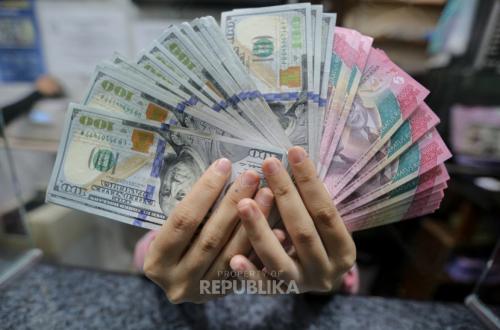
JAKARTA — Deputy Coordinating Minister for Economic Affairs Dradjad Hari Wibowo said pressure on the rupiah caused by domestic political dynamics should not be a source of excessive concern. He expects turbulence in financial markets to be temporary and believes businesses can absorb it through risk management.
Dradjad said political developments could cause market fluctuations, but their effects usually did not last long unless there was major turmoil, such as the 1998 Asian financial crisis.
“When there are political developments, market fluctuations are normal. But they usually do not last very long, unless the political situation is like it was during the Asian crisis in 1998 — that is different,” Dradjad said after a media briefing at the Coordinating Ministry for Economic Affairs’ office in Lapangan Banteng, Central Jakarta, on Thursday (12 November 2026).
He hopes the current pressure on financial markets will not persist. In his experience, markets usually begin to recover after responding to political developments for a few days. “Hopefully it will only be a few days. Like the other day, it was only a few days, and then things started to recover,” he said.
Dradjad nevertheless stressed the importance of educating investors and stakeholders so that they are not easily swayed by rumours during market turbulence. He also urged market participants to take economic fundamentals into account when making investment decisions.
Asked whether a possible change of vice-president could affect the rupiah, Dradjad declined to comment further. He said he was attending in his capacity as an official responsible for economic affairs. “Let’s deal with that later, one thing at a time. And please note that I am not here in a political capacity; my role here is economic,” he said.
Rupiah weakness could affect businesses in different ways. Companies reliant on imported raw materials face higher purchasing costs, while exporters could receive more rupiah for their earnings.
Dradjad said businesses had so far been able to anticipate exchange-rate changes. Companies took the risk of rupiah fluctuations into account in their operations, although their tolerance levels varied.
“So far, they have accounted for the rupiah at certain levels. It differs from company to company. They have mitigated the risk. So far, none has been severely shaken. Their risk management can still absorb it,” he said.
Dradjad also urged companies listed on the Indonesia Stock Exchange (IDX) to use capital more efficiently to increase their value. The effort is part of the government’s capital-market reform agenda to make listed companies more attractive to investors.
He said the government wanted to boost company valuations by drawing on corporate governance reforms in Japan and South Korea. One focus is to encourage company directors to use capital more efficiently, thereby improving performance and increasing company value.
“In Japan, the reform was carried out through governance. At board level, directors of listed companies were among those asked to improve capital efficiency,” Dradjad said at the media briefing at the Coordinating Ministry for Economic Affairs’ office in Lapangan Banteng, Jakarta, on Thursday (12 November 2026).
He said greater capital efficiency would improve company performance, in turn raising corporate value and encouraging investors to commit capital.
To support the effort, the Coordinating Ministry for Economic Affairs has sought input from capital-market participants on the real-economy policies companies need. Proposals raised include taxation, import duties, green energy and policies across various real-economy sectors.
Dradjad said the proposals would be followed up through coordination meetings with relevant ministries and agencies. The ministry would also make greater use of the Debottlenecking Task Force to accelerate deregulation and reduce bureaucratic obstacles in the economy.
Source: jawawa.id (https://jawawa.id/newsitem/businesses-mitigate-risk-from-rupiah-weakness-1794477187)
Originally published by Republika (https://ekonomi.republika.co.id/berita/todt45423/pelaku-usaha-mitigasi-risiko-pelemahan-nilai-tukar-rupiah), translated from Indonesian