
Businesses Await Certainty on US Tariffs - Kompas.id
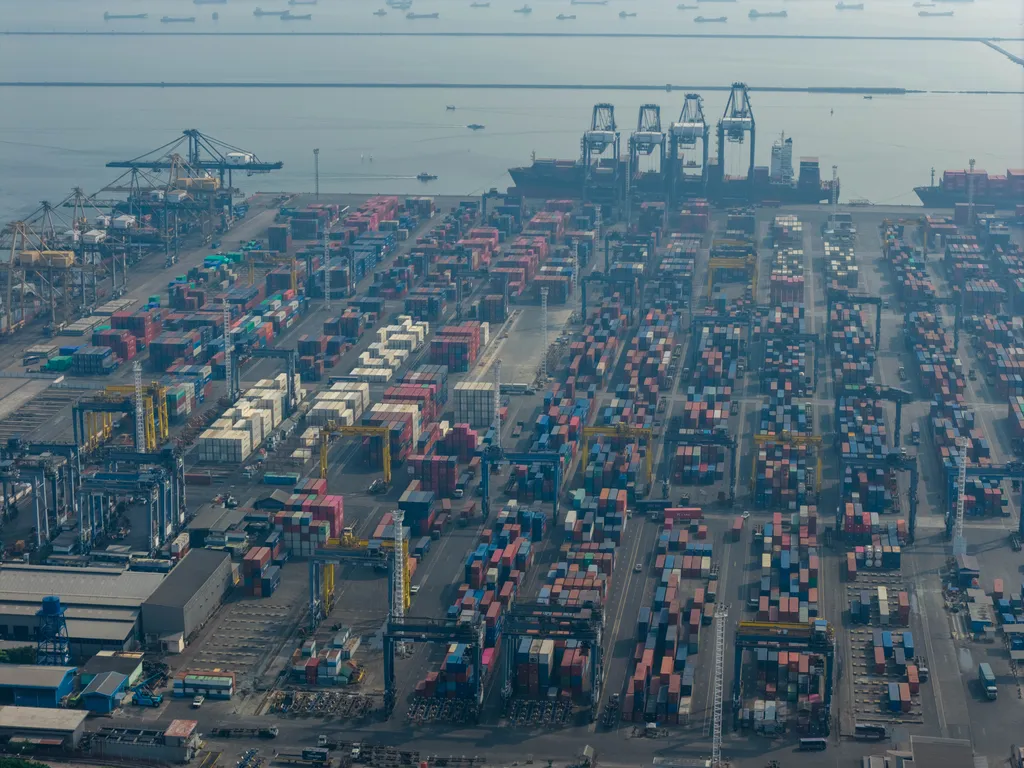
The export-oriented manufacturing sector is the most vulnerable industry group if US tariffs increase.
KOMPAS/AGUS SUSANTO
By Aguido Adri
28 Jul 2026 07:00 WIB · Ekonomi & Bisnis
JAKARTA, KOMPAS — The business community is wary of the uncertainty surrounding the United States’ tariff policies on Indonesian products following the expiration of the temporary tariff period. Although the final tariff rates are still pending legal and administrative processes in the US, business actors believe that the certainty of policy implementation is a more decisive factor for production, investment, and export decisions.
The Chairperson of the Indonesian Employers Association (Apindo), Shinta Kamdani, stated that the United States remains one of the strategic export markets for Indonesia. Therefore, the business community continues to monitor the developments in U.S. trade policies, which are currently entering a transitional period.
“The source of uncertainty at present is not only related to the magnitude of tariffs but also to the predictability of policies and the certainty of their implementation. This will affect production decisions, export contracts, and even medium-term investments,” Shinta stated to Kompas, through her written message, on Monday (27/7/2026).
The temporary rate of 10 percent, which will be in effect until around July 24, 2026, is a transitional policy. Subsequently, the implementation of the rate based on Article 301 of the US Trade Act of 1974 will be carried out gradually.
The projected rate of around 18 percent still depends on the completion of the legal process in the United States, including public consultations, the period for submitting feedback, and the finalization of the product exclusions list.
Apindo appreciates the government’s efforts to continue negotiations with the US government. The business community hopes that discussions regarding various product exemptions can soon provide certainty, thereby minimizing the impact on Indonesia’s export competitiveness.
Shinta assesses that the export-oriented manufacturing sector is the most vulnerable industrial group if US tariffs increase. Based on the structure of Indonesia’s non-oil and gas exports to the US in 2025, the five largest product groups include machinery and electrical equipment, knitted goods, footwear, non-knitted apparel, as well as vegetable and animal fats and oils.
However, the greatest attention is focused on labor-intensive industries such as textiles and textile products, finished clothing, and footwear, which have long made the US market one of the main export destinations.
Nevertheless, according to Shinta, the impact of the policy may not be uniform. Several commodities are still being discussed to obtain tariff exemptions through the product exclusion mechanism in the trade negotiation process between the two countries.
“Companies are currently not only considering the tariff rates but also the reliability of the supply chain, supply certainty, product quality, and the ability to meet international market standards. These factors remain advantages that Indonesia needs to continue to strengthen,” he said.
Apindo also reminds that prolonged uncertainty has the potential to suppress business decisions, especially in labor-intensive sectors that rely on export markets. Business actors are expected to be more cautious in formulating production plans, expanding capacity, and realizing new investments until there is certainty regarding the tariff structure.
For the textile, ready-made clothing, footwear, furniture, and several other manufacturing subsectors, access to export markets is directly related to the level of production capacity utilization and labor absorption.
On the other hand, Shinta assesses that Indonesia’s position in the investigation of Article 301 related to forced labor or labor exploitation is relatively better compared to many other countries. Based on government communications with the Office of the United States Trade Representative (USTR), Indonesia, along with five other trading partners, is subject to a 10 percent tariff, which is lower than the 12.5 percent tariff imposed on 54 other countries.
To address this uncertainty, Apindo urges the government to strengthen three main steps, namely maintaining the intensity of economic diplomacy to ensure that negotiations for product exemptions are completed promptly, accelerating structural reforms domestically, and expanding export market diversification through various international trade agreements.
“The ultimate goal is not merely to maintain exports, but to strengthen Indonesia’s position in global value chains so that the national industry has a stronger resilience against changes in global trade policies,” said Shinta.
Despite the overshadowing uncertainty, Apindo assesses that the trade prospects between Indonesia and the United States remain relatively stable. Indonesia’s export value to the United States throughout 2025 reached 30.96 billion US dollars, an increase of 16.65 percent compared to the previous year. Meanwhile, exports from January to May 2026 still grew by 5.13 percent year-on-year, amounting to 12.73 billion US dollars.
According to Shinta, it is still too early to conclude that the increase in tariffs will directly weaken the Indonesia-US trade balance, as the extent of the impact depends on the final outcome of the implementation of Article 301 and the resolution of discussions regarding various product exemptions.
In the medium term, Shinta sees that changes in the architecture of global trade actually open opportunities for Indonesia to strengthen its role as a regional production and investment base. These opportunities can only be utilized if accompanied by consistent domestic reforms, increased industrial competitiveness, and successful international trade negotiations.
Meanwhile, the Chairman of the Indonesian Furniture and Handicraft Industry Association (HIMKI), Abdul Sobur, stated that the addit
Source: jawawa.id (https://jawawa.id/newsitem/businesses-await-certainty-on-us-tariffs-kompas-id-1785246611)
Originally published by kompas.id (https://www.kompas.id/artikel/business-actors-await-certainty-on-tariffs)