
Businesses Await Certainty on US Tariffs
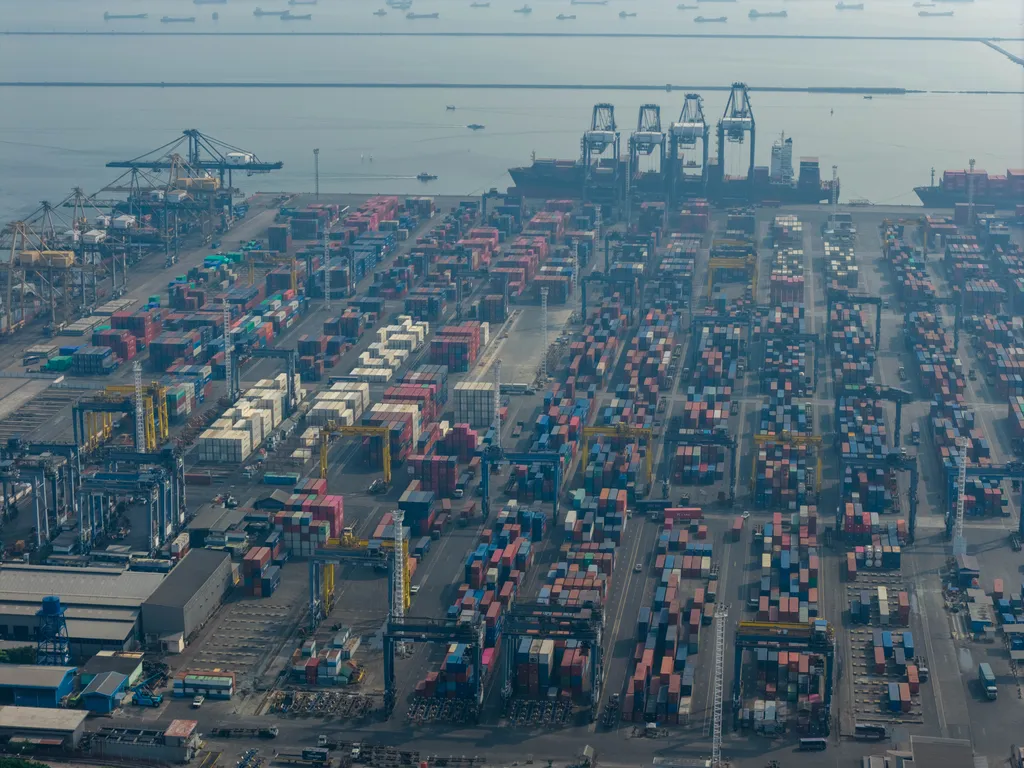
Export-oriented manufacturing is the group of industries most vulnerable should US tariffs increase.
JAKARTA, KOMPAS — The business community is wary of uncertainty over United States tariff policy on Indonesian products following the end of the temporary tariff period. Although the final tariff rate still awaits legal and administrative processes in the US, business players consider certainty of implementation to be the more decisive factor for production, investment and export decisions.
Chairwoman of the Indonesian Employers Association (Apindo) Shinta Kamdani said the US remains one of Indonesia’s strategic export markets. Businesses are therefore closely monitoring developments in US trade policy, which has now entered a transitional period.
“The current source of uncertainty is not only about the tariff rate, but also about policy predictability and certainty of implementation. This will influence production decisions, export contracts and medium-term investment,” Shinta told Kompas in a written statement on Monday (27/7/2026).
The temporary tariff of 10 per cent, which applied until around 24 July 2026, was a transitional policy. Thereafter, tariffs based on Section 301 of the US Trade Act of 1974 will be implemented in stages.
The projected tariff of around 18 per cent still depends on the completion of legal processes in the US, including public consultation, the comment period and finalisation of the product exclusions list.
Apindo appreciates the government’s continued negotiations with the US administration. Businesses hope discussions on various product exemptions can soon provide certainty so that the impact on Indonesian export competitiveness can be minimised.
Shinta views export-oriented manufacturing as the most vulnerable industry group should US tariffs rise. Based on the structure of Indonesia’s non-oil and gas exports to the US in 2025, the five largest product groups were machinery and electrical equipment, knitted goods, footwear, garments other than knitwear, and vegetable and animal fats and oils.
However, the greatest attention is on labour-intensive industries such as textiles and textile products (TPT), garments and footwear, which have long relied on the US market as one of their main export destinations.
Nevertheless, according to Shinta, the impact of the policy will not necessarily be uniform. A number of commodities are still being discussed to obtain tariff exemptions through the product exclusion mechanism in the two countries’ trade negotiations.
“Companies are currently considering not only the tariff rate, but also supply chain reliability, certainty of supply, product quality and the ability to meet international market standards. These factors remain advantages that Indonesia needs to keep strengthening,” she said.
Apindo also cautioned that prolonged uncertainty could weigh on business decisions, especially in labour-intensive sectors dependent on export markets. Businesses are expected to be more cautious in drawing up production plans, expanding capacity or realising new investments until there is certainty on the tariff structure.
For the textile, garment, footwear, furniture and several other manufacturing subsectors, access to export markets is directly linked to production capacity utilisation and employment absorption.
On the other hand, Shinta assessed that Indonesia’s position in the Section 301 investigation into forced labour is relatively better than many other countries. Based on government communication with the Office of the United States Trade Representative (USTR), Indonesia, together with five other trading partners, is subject to a 10 per cent tariff, lower than 54 other countries facing 12.5 per cent.
To address the uncertainty, Apindo is urging the government to strengthen three main steps: maintaining the intensity of economic diplomacy so negotiations on product exclusions conclude promptly, accelerating structural reform at home, and expanding export market diversification through various international trade agreements.
“The ultimate goal is not merely to sustain exports, but to strengthen Indonesia’s position in global value chains so that national industry has greater resilience against changes in global trade policy,” Shinta said.
Despite the shadow of uncertainty, Apindo considers Indonesia’s trade prospects with the US still reasonably secure. Indonesia’s exports to the US throughout 2025 reached US$30.96 billion, up 16.65 per cent from the previous year. Meanwhile, exports during January–May 2026 still grew 5.13 per cent year on year to US$12.73 billion.
According to Shinta, it is too early to conclude that higher tariffs will immediately weaken the Indonesia–US trade balance, as the scale of the impact depends on the final outcome of the Section 301 implementation and the resolution of discussions on various product exclusions.
In the medium term, Shinta sees the reshaping of global trade architecture as actually opening opportunities for Indonesia to strengthen its role as a regional production and investment base. That opportunity can only be seized if accompanied by consistent domestic reform, improved industrial competitiveness and successful international trade negotiations.
Meanwhile, Chairman of the Indonesian Furniture and Handicraft Industry Association (HIMKI) Abdul Sobur said the additional tariff effective from 24 July 2026 will affect export cost structures, particularly because the furniture industry has long operated on relatively thin margins. The additional tariff also cannot be passed on entirely to buyers, so exporters risk bearing part of the burden.
“In practice there will be renegotiations between exporters, importers, distributors and retailers over how the tariff burden is shared. As a result, Indonesian producers’ margins could come under pressure, especially companies dependent on a single buyer or operating in the middle and lower price segments,” Sobur said when contacted separately.
The policy forms part of the US implementation of Section 301 concerning a ban on imports of goods linked to forced labour practices. According to Sobur, on the tariff front Indonesia remains in a relatively better position, facing an additional 10 per cent tariff, the same as Malaysia, India, Cambodia and Bangladesh, while Vietnam and several other countries face 12.5 per cent.
Even so, he cautioned that the 2.5 percentage point differential does not automatically make Indonesia more competitive.
“Vietnam has advantages in production scale, productivity, supply chain integration, foreign investment and logistics efficiency. The tariff gap can easily disappear if Indonesia’s production and logistics costs are higher,” he said.
Therefore, according to Sobur, the tariff policy should serve as momentum to fix structural problems in national industry, from logistics efficiency and energy costs to regulatory certainty and industrial productivity.
Beyond facing US tariffs, HIMKI is also monitoring another ongoing USTR investigation into alleged structural excess capacity and production in manufacturing sectors. According to Sobur, this process differs from the tariff policy on alleged forced labour practices, which has already been decided.
HIMKI supports the government in continuing trade diplomacy so that Indonesian furniture and handicraft products receive competitive treatment.
Sobur proposed forming a joint task force with government and business to map potentially affected products, strengthen evidence of labour compliance and timber legality, expand export financing support through the Indonesia Eximbank (LPEI) and the banking sector, reduce national logistics costs and accelerate the opening of Indonesian marketing centres in key markets.
HIMKI expects Indonesian products’ competitiveness in the US market to come under pressure, particularly for mass-market furniture that competes on price. Buyers are expected to renegotiate prices, reduce purchase volumes or even shift some orders to other countries deemed more efficient.
However, Sobur believes Indonesian products with high added value still have a chance to retain their markets. Products made from legal and sustainable wood, rattan furniture, outdoor furniture, handicrafts, and items with distinctive designs and customisation services are considered harder to replace.
“Price competitiveness is indeed under pressure, but Indonesia’s competitiveness is not determined by price alone. Design, quality, delivery punctuality, sustainability certification and flexibility in fulfilling orders are becoming increasingly important factors,” he said.
According to HIMKI, if not anticipated through various mitigation measures, export growth of furniture and handicrafts to the United States in the second half of 2026 could stall. The impact would be felt not only in export value but also in factory utilisation and employment, given that the furniture industry is labour-intensive.
“The United States must remain a key market to defend. However, diversification must also be accelerated towards the European Union, Canada, the Middle East, Australia, Japan, South Korea, India and BRICS countries so that industry is not overly vulnerable to policy changes in a single country,” he said.
Secretary General of the Indonesian Footwear Association (Aprisindo) said that before 24 July 2026, all countries had been subject to a 10 per cent global tariff under Section 122, following a ruling by the US Supreme Court. Under the new policy, the 10 per cent tariff for Indonesia was maintained, with only the legal basis changing to the outcome of the Section 301 investigation.
According to Billie, this position keeps the competitiveness of the Indonesian footwear industry in the US market relatively secure. Indonesia faces a 10 per cent tariff, the same as India and Cambodia, which are also the footwear industry’s main competitors, while Vietnam, Thailand, China, the Philippines, Australia and New Zealand face 12.5 per cent.
Nevertheless, Billie believes the government should still strive for a lower tariff than competitor countries. Even a one percentage point difference in tariffs, he argued, could boost price competitiveness, increase the chances of winning orders from US buyers and maintain stability of export demand.
“Our experience in 2025, when every country faced the same 10 per cent for 90 days every three months, and when our rate was once at 19 per cent against competitors at 20 per cent, shows that a lower tariff relative to competitors has a positive impact on Indonesia’s competitiveness,” Billie said on Tuesday (28/7/2026).
Additionally, Aprisindo welcomed the exclusion of the Indonesian footwear industry from the labour exploitation investigation. This reflects the industry’s compliance with international labour standards and is an important asset for maintaining the trust of global buyers.
However, businesses’ attention has now turned to a second investigation by the US government concerning excess capacity production. Its outcome will determine whether additional tariffs apply to each country.
“Our hope is that the Indonesian government can convince the United States that the national footwear industry has different characteristics, so that the tariff resulting from this investigation can be set lower than competitor countries. If that can be achieved, Indonesia’s competitive position in the US market will be even stronger,” he said.
Even so, Billie cautioned that the direction of US tariff policy remains highly dynamic, so its impact on exports cannot yet be concluded. Aprisindo will monitor developments over the next one to two months through export realisations, order volumes and shifts in orders from international buyers.
Beyond external factors, Aprisindo believes the government also needs to strengthen industrial competitiveness through domestic deregulation. Businesses, Billie said, need faster disbursal of VAT refunds stalled since 2024, simplified licensing including environmental impact assessment (AMDAL) procedures, labour policies supportive of labour-intensive industries, and fiscal and non-fiscal incentives, including more competitive energy costs.
These steps are considered important to safeguard investment, enhance export competitiveness and sustain employment amid global trade uncertainty. Besides maintaining the US market, Aprisindo is also urging the government to expand export access through various free trade agreements (FTAs) and Comprehensive Economic Partnership Agreements (CEPAs) so the footwear industry has more diversified markets.
Quoting the USTR website, the 10 per cent tariff applies to countries meeting several criteria. First, they have enforced a ban on imports of goods produced through labour exploitation.
Second, they have committed to adopting and enforcing such a ban through a Reciprocal Trade Agreement (ART). Third, they have implemented a partial regime that effectively prevents the importation of certain goods produced through labour exploitation.
In addition, USTR has established product exclusions as follows: first, raw materials for which the tariff could cause domestic supply shortages; second, products that could cause widespread economic disruption if subject to the tariff; third, products that cannot be grown or produced in sufficient quantities or at reasonable prices in the United States or obtained from other sources.
Fourth, certain products from Argentina, Bangladesh, Cambodia, Ecuador, El Salvador, the European Union, Guatemala, Indonesia, Jordan, Malaysia, Switzerland, Taiwan or the United Kingdom that would encourage those economies to meet commitments related to the ban on forced labour imports or to adopt and effectively enforce such a ban.
Fifth, goods for which the tariff may not contribute substantially to the elimination of the actions, policies and practices found to be actionable in the investigation.
Source: jawawa.id (https://jawawa.id/newsitem/businesses-await-certainty-on-us-tariffs-1785203413)
Originally published by kompas.id (https://www.kompas.id/artikel/pelaku-usaha-menanti-kepastian-tarif-as), translated from Indonesian