
Business World Needs More IDR Stability Than Weak IDR - VOI
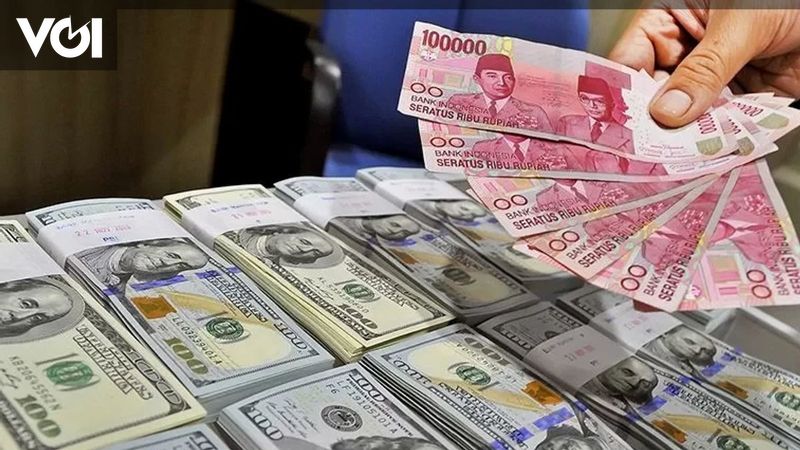
JAKARTA - The weakening of the rupiah exchange rate is not necessarily beneficial for the national manufacturing industry because most of the industrial raw material needs in Indonesia still depend on imports.
Head of Permata Bank Economist Josua Pardede, said in general, the weakening of the rupiah has the potential to put pressure on the manufacturing sector.
He added that this condition could trigger an increase in production costs due to import inflation, which ultimately drives up the price of goods and increases domestic inflation.
Josua assessed that the assumption that the weakening of the rupiah would benefit the economy through increased exports was not entirely correct, especially if you look at the current structure of Indonesia’s manufacturing industry.
“If we talk about the manufacturing industry which must first import raw materials, this will definitely be burdensome,” he said in a Journalist Training in Makassar, quoted on Sunday, May 24.
According to him, the weakening of the rupiah can indeed provide benefits for commodity exporters because income in US dollars becomes larger when converted into rupiah. However, this condition does not apply to the majority of manufacturing industries which still require raw materials and auxiliary goods from abroad.
He added that as a result, when the rupiah exchange rate against the US dollar weakens, the cost of importing raw materials increases and can suppress the profit margins of manufacturing companies.
Josua also highlighted that most of the raw material imports in Indonesia are used to meet domestic market needs, not entirely for export products, so that the depreciation of the rupiah actually risks increasing production costs and prices of goods in the country.
“The statement that Indonesia benefits from the weakness of the rupiah is misleading if we look at the structure of our economy,” he said.
He emphasized that the view that Indonesia is automatically benefiting from the weakening of the rupiah is not in line with the current conditions of the national economic structure.
In addition, Josua said the business world needs exchange rate stability rather than a too weak or too strong rupiah, and stability is considered important so that business actors can make business planning, including the procurement of imported raw materials, more certain.
Business actors, continued Josua, need certainty in calculating import needs for the next three to six months so that cost planning can be carried out more accurately.
He also emphasized that the main task of Bank Indonesia is not to determine the rupiah at a certain level, but to maintain exchange rate stability so that volatility does not disrupt economic activity and the national investment climate.
The English, Chinese, Japanese, Arabic, and French versions are automatically generated by the AI. So there may still be inaccuracies in translating, please always see Indonesian as our main language. (system supported by DigitalSiber.id)