
Business Sectors Still Under-Registered as Money Laundering Reporters
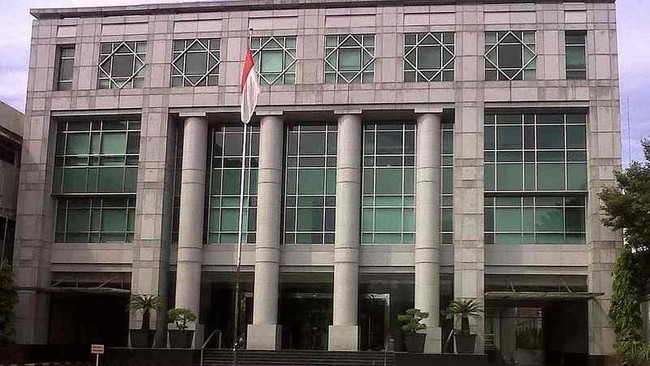
The Financial Transaction Reports and Analysis Centre (PPATK) has recorded that registration of a number of business sectors into the anti-money laundering reporting system (GOAML) remains low. The data was disclosed by PPATK following the completion of the 2026 National Risk Assessment (NRA) document, which covers money laundering offences, terrorism financing offences, and the prevention of financing of proliferation of weapons of mass destruction. “Registration of a number of reporting parties remains low,” as quoted from the PPATK report on Friday (28/8/2026).
Reporting parties with low registration rates include property agents at 11.89 percent, motor vehicle dealers at 11.38 percent, land deed officials at 45 percent, art and antiques dealers at 2.86 percent, and a number of other financial services subsectors below 50 percent. Registration of savings and loan cooperatives has only reached 12.8 percent of 21,193 units. The development of the cooperative ecosystem also requires an expansion of supervisory coverage so that institutional growth is accompanied by strengthened mitigation of money laundering risks.
On the other hand, PPATK also recorded a gap between the use of financial services and public understanding of these services of 14.05 points. “This condition can make the public more easily exploited as nominees or as recipients and conduits of illegal funds, or money mules,” according to PPATK. The archipelagic structure also creates vulnerabilities at small ports, unofficial sea routes, and remote coastal areas that can be used for smuggling.
PPATK also revealed that cross-border financial flows remain one of the areas requiring attention. During 2022-2025, there were 41,158 reports of cross-border cash carrying of currency and/or other payment instruments. The NRA findings show that transactions requiring attention are concentrated at a number of main international entry points, so risk-based supervision of cross-border flows needs to be continuously strengthened.
Customer data mapping also shows significant exposure to cross-border asset ownership. The data is in the form of Customer Information Files (CIF), so it does not represent the number of individuals nor indicate the existence of suspicious transactions. CIF is not a count of unique individuals nor evidence that all such data is linked to suspicious transactions, but it shows the magnitude of exposure that needs to be managed with the principle of knowing your customer and risk-based supervision.
A PESTEL analysis covering political, economic, social, technological, environmental, and legal factors identified 25 structural drivers of money laundering. The six mitigation strategies include: (i) strengthening the law; (ii) transparency of beneficial ownership in corporations, state-owned enterprises, and the private sector; (iii) improving governance of the informal economy, fiscal matters, and natural resources; (iv) supervision of the digital economy, cybercrime, and protection of vulnerable groups; (v) strengthening institutions, human resources, and cross-border cooperation; and (vi) controlling dormant accounts and misuse of duplicate national identity numbers.
The NRA also indicates structural trends that need to be monitored in cybercrime, financial crime in the natural resources and environment sectors, insurance and capital markets, human trafficking, taxation, and illicit arms trading.
Source: jawawa.id (https://jawawa.id/newsitem/business-sectors-still-under-registered-as-money-laundering-reporters-1787889040)
Originally published by CNBC Indonesia (https://www.cnbcindonesia.com/news/20260828090215-4-762996/deretan-sektor-usaha-ini-masih-minim-daftar-pelapor-pencucian-uang), translated from Indonesian