
Business Risks and Potential Disputes in River Revitalisation Projects
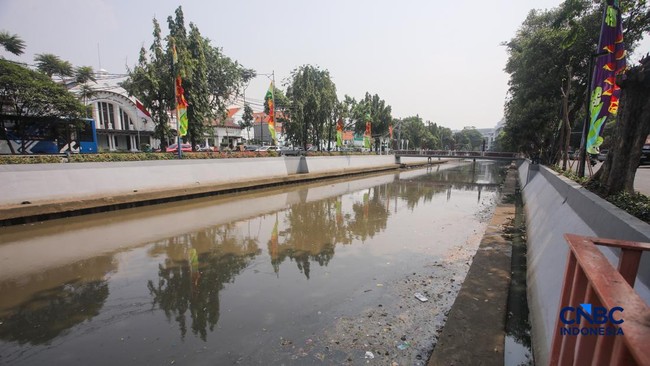
River revitalisation in the context of corporate social responsibility (CSR) programmes is no longer viewed solely as a social activity. It is also a project involving financial commitments, technical implementation, and a range of legal and business risks.
When a company engages contractors, experts, vendors and other parties, a project’s success depends not only on the availability of funds or completion of the work, but also on certainty in the legal relationships and the allocation of responsibilities among the parties.
This is where a cooperation agreement becomes important. It is not merely an administrative document, but an instrument for setting expectations, controlling the use of resources, allocating risks and providing a resolution mechanism if the project does not proceed as agreed.
River Revitalisation Is More Than a CSR Project: What Agreements Need to Cover
In river revitalisation projects involving company funds, contractors, experts and other stakeholders, a cooperation agreement is essential to ensure that each party understands its role and the extent of its responsibilities and risks.
The agreement should not only specify the parties’ identities, authority and legal standing, but also ensure that those carrying out the work have appropriate expertise and experience.
In the cooperation document under review, technical implementation of the revitalisation work is the responsibility of the implementing party. The agreement also provides for recommendations and assessments of vendors, as well as the involvement of experts and professional supervisors.
This approach matters because river revitalisation is not purely a construction project. It requires an understanding of the river’s environmental and technical conditions, as well as of the communities living and settled along its banks.
By engaging suitable experts, including those with relevant academic expertise, companies can reduce the risk of work that is unsuited to conditions on the ground and of potential harm to local communities or the surrounding environment.
At the same time, the Scope of Work and Work Plan need to be clearly defined, as they provide the basis for determining work targets, schedules, participants, funding and the limits of each party’s contribution.
From a business perspective, an agreement’s strength lies in its ability to anticipate risks before they turn into disputes. An agreement for river revitalisation should therefore go beyond setting out the work and payment terms. It should also cover monitoring and evaluation, audits and governance, occupational health and safety, permits and licences, insurance, responsibility for vendors, environmental and social risk mitigation, confidentiality, intellectual property, publication, regulatory compliance, and liability and compensation in the event of failure or negligence.
The document under review also sets out the term of the cooperation and the possibility of extending it, force majeure, the parties’ representations and warranties, default, governing law and dispute resolution, and termination procedures. These provisions are important because revitalisation projects use financial resources and also carry reputational risks for companies.
A contract that clearly divides roles, safeguards the use of funds, sets implementation standards, provides oversight mechanisms and establishes remedies when problems arise can enable CSR activities to be managed not just as social programmes, but as corporate investments with measurable targets, accountability and risk management.
In river revitalisation cooperation agreements, the parties negotiate a number of key issues, including the allocation of roles and responsibilities, the amount and arrangements for funding, the scope of work, payment procedures and tax provisions.
They also discuss the procurement and use of vendors, experts and professional supervisors, including liability in the event of failure or negligence in carrying out the work. Occupational health and safety, compliance with laws and regulations, permits, insurance, and the allocation of risks and responsibility for losses or third-party claims are also part of the negotiations.
Other issues include arrangements for monitoring and evaluating the work, the duration and termination of the cooperation, obligations after the project ends, force majeure, confidentiality, and the ownership and use of intellectual property and project outputs.
The parties also consider dispute-resolution mechanisms and governing law, including whether to use Indonesian law and dispute-resolution forums in Indonesia. Overall, these negotiations show that cooperation on river revitalisation is not limited to the project’s technical implementation. It also seeks to ensure clarity on funding, oversight, risk allocation, accountability and the sustainability of the project’s results.
Three Areas of Breach of Contract: Work, Time and Payment
In a river revitalisation project, the Scope of Work is one of the main benchmarks for determining whether contractual obligations have been fulfilled or could give rise to a breach of contract. The parties have agreed that the work will follow a Work Plan forming an integral part of the agreement. It covers, among other things, programmes or activities, work schedules, the parties involved, funding and each party’s contribution.
This means that a project’s success is measured not only by whether the work is carried out, but also by whether it is completed in line with the agreed plan, timeframe and obligations. To ensure accountability, the agreement also allows for monitoring, evaluation and inspection of the work’s progress and results.
From a business perspective, deviations from the scope and work plan pose a risk because they could affect the project’s objectives and lead to contractual consequences.
Time is also an important factor in assessing the fulfilment of contractual obligations. The agreement sets the term of the cooperation, while the stages and schedule for carrying out the work are specified in the Work Plan.
Accordingly, completing the work is not only a matter of achieving the final result, but also of meeting the agreed stages and schedule. The agreement specifically addresses circumstances in which all or part of the revitalisation work is not completed.
From a business standpoint, certainty over timing matters because delays or failure to complete the work can affect the effective use of resources, achievement of project targets and relations between the parties. A breach-of-contract risk therefore arises when work obligations cannot be fulfilled within the agreed timeframe, stages and completion requirements.
Payment is another key measure of compliance with the agreement. Funding arrangements are linked to payment stages and the required supporting documents for invoices or funding requests. If submitted documents are incomplete or incorrect, payment may be returned for correction, and the payment obligation only takes effect once the documents are complete and accurate.
In turn, all use of funds must be accounted for through reports containing transaction evidence and demonstrating consistency with the Work Plan. The agreement also specifically addresses the use of funds in ways that do not conform to the work plan or the relevant invoices or funding requests.
From a business perspective, contractual payment risks are not limited to late payment. They also concern administrative discipline, accurate invoicing and the use of funds for their intended purposes. These requirements help keep funding flows under control and ensure accountability for the project budget.
Strategic Steps for Handling Business Disputes
The first step in dealing with a dispute is to establish whether the issue genuinely constitutes a breach of contract and identify which obligation has not been fulfilled. Under the river revitalisation agreement, the benchmarks include whether the work complies with the Scope of Work and Work Plan, whether work stages have been completed, and whether funding and accountability requirements have been met.
Once a breach has been identified, the next step is to calculate the potential losses clearly. From a business perspective, this is important in distinguishing material losses, such as additional costs, improper payments or quantifiable financial losses, from potential non-material losses, such as reputational or business harm. A dispute is therefore not just about who breached the contract, but also about the scale of the resulting financial and business impact.
After establishing the basis for the alleged breach and quantifying the losses, the parties need to confirm the forum with jurisdiction to resolve the dispute. If the agreement provides for resolution through an arbitration institution, that choice is significant from a business perspective because it determines the route to be followed if negotiations or direct settlement fail.
With an arbitration clause in place, the parties also need to ensure that the dispute falls within the scope of the agreement and the authority of the agreed forum, while understanding which law governs the resolution process.
Certainty about the forum’s jurisdiction and arbitration procedures is ultimately part of risk management, as it can affect costs, timing, strategy and the prospects of protecting each party’s business interests.
The next step is to secure evidence supporting each party’s arguments. In this agreement, important documents include the Work Plan, progress reports, invoices or funding requests, transaction records, reports accounting for the use of funds, and the results of monitoring and evaluation. These can show whether obligations were performed as agreed.
The agreement itself provides for monitoring, evaluation and inspection of the work and its results. This makes documentation at every stage of the project strategically important if a dispute subsequently arises.
From a business perspective, evidence management is not merely a requirement once a case reaches a dispute forum; it is part of risk management from the outset of a project. The more complete the record of what was agreed, what was done, how funds were used and how each party performed its obligations, the stronger the parties’ positions will be in substantiating claims or rebutting allegations of breach of contract.