
Business Risk Defence Rejected as High Court Upholds 3-Year Sentence for Nicko Widjaja in TaniHub Case
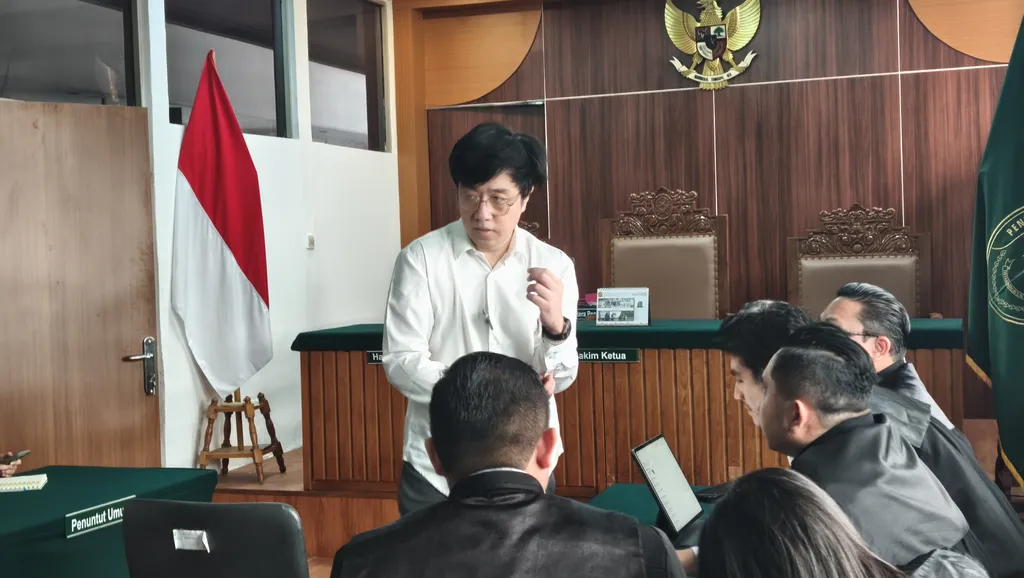
The panel of judges has dismissed the defence arguments of the defendant, Nicko Widjaja, who sought protection under the ‘business judgment rule’ principle, claiming the losses were simply business risks.
The Jakarta High Court has officially upheld the first-instance verdict against the defendant in the TaniHub Group investment corruption case, Nicko Widottaja. The judges rejected the defendant’s defence that the losses were merely part of the business judgment rule or inherent business risks.
This was revealed during the verdict reading for the case involving the management of investment funds at PT Tani Group Indonesia (TaniHub), involving the former President Director of PT BRI Ventura Investama, Nicko Widjaja, at the Jakarta High Court on Thursday (3/9/2026). The session was presided over by Chief Judge Elyta Ras Ginting, accompanied by member judges Pandu Budiono and Agung Iswanto.
The panel of judges upheld the decision of the Corruption Court at the Central Jakarta District Court, which sentenced Nicko to 3 years in prison and a fine of Rp 350 million. The court also ordered that Nicko remain in detention.
“Upholding the Decision of the Corruption Court at the Central Jakarta District Court Number 9/Pid.Sus-TPK/2026/PN Jkt.Pst dated 18 June 2026, which was subject to appeal,” stated Elyta.
In the considerations, Elyta revealed that the flow of investment funds from BRI Ventura Investama to the startup TaniHub was proven to meet the elements of state financial loss. The losses arose from two funding waves: the Series A+ funding in February and March 2020 worth US$ 2 million (equivalent to Rp 28.58 billion), and the purchase of shares in the form of convertible notes in August 2020 worth US$ 3 million (equivalent to Rp 44.72 billion).
“Considering that Article 603 of the Criminal Code is a material offence that is deemed complete if state losses have truly and certainly occurred,” said Elyta.
Based on trial facts citing testimony from a public accounting expert, TaniHub Group was deemed ineligible for investment financing because the startup had recorded losses of up to Rp 37.9 billion in 2019, with a loss trend persisting since 2017.
The deteriorating financial track record of TaniHub, the judge continued, was entirely ignored by the BRI Ventura Investama investment team during the initial screening stage. The due diligence process was proven to be merely a formality for administrative completeness, without any efforts to confirm the accuracy of the data within the company’s data room or pitch deck.
“Considering the fact that the defendant decided to proceed with financing despite knowing the financial statements were invalid because they had not been audited by an independent auditor, there is proven evidence of intent on the part of the defendant in making the business decision to finance TaniHub Group,” the judge stated.
In his capacity as President Director, Chief Executive Officer (CEO), and the sole representative of the investment committee, the defendant should have served as the final bastion of checks and balances to prevent reckless investment decisions.
However, the court assessed that the defendant’s action in disbursing such large funds was not a form of negligence, but rather an intentional act that violated the principles of Good Corporate Governance (GCG).
The judges referred to Article 97, Paragraph (5) of Law Number 40 of 2007 concerning Limited Liability Companies, which requires four cumulative elements, including acting in good faith, prudence, and not being an error or negligence, for a board of directors’ decision to be legally protected by the business judgment rule.
“Activities within the scope of the business judgment rule are not exempt from elements of error or mens rea (criminal intent) intentionally committed by the management of a legal entity that is unlawful. It has been proven that the defendant’s decision was not based on the implementation of GCG,” added the judge.
Consequently, the appellate court concluded that the losses incurred by PT BRI Ventura Investama cannot be excused merely as corporate losses due to business investment risks. The judges also viewed the prison sentence decided by the lower court as appropriate, accurate, and just.
After reading the verdict, Elyta asked the defendant, the defence counsel, and the public prosecutor for their responses to the sentence. The defence team and their client, Nicko, decided to take time to consider whether to accept the verdict or file for cassation. The public prosecutor’s representative expressed a similar sentiment.
Source: jawawa.id (https://jawawa.id/newsitem/business-risk-defence-rejected-as-high-court-upholds-3-year-sentence-for-nicko-widjaja-in-tanihub-case-1788497492)
Originally published by kompas.id (https://www.kompas.id/artikel/dalil-risiko-bisnis-gugur-pengadilan-tinggi-perkuat-vonis-3-tahun-nicko-widjaja-di-kasus-tanihub), translated from Indonesian