
Business Owners Warn Illegal Cigarettes Could Surge in Indonesia Due to This Regulation
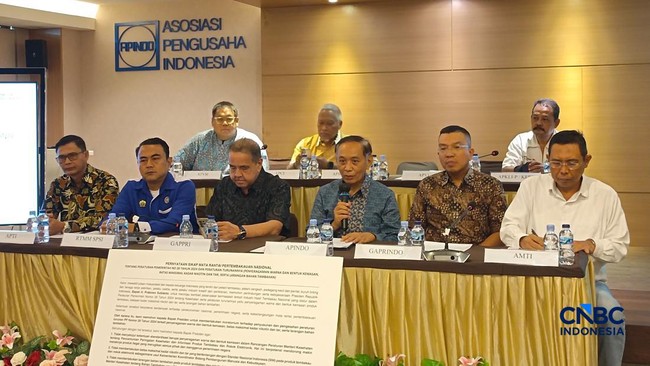
The business community is asking the government not to rush the ratification of several derivative regulations of Government Regulation (PP) Number 28 of 2024 on Health, which governs tobacco products. The Indonesian Employers’ Association (Apindo) has proposed a moratorium on three draft policies deemed risky for hitting the legal cigarette industry and impacting state revenue. The three regulations requested to be postponed are the standardisation of cigarette packaging colour and shape, the limitation of maximum nicotine and tar levels, and the prohibition of additives in tobacco products. Apindo’s Head of Public Policy, Sutrisno Iwantono, stated that these three policies could potentially erode the sustainability of the legal industry. According to him, pressure on the official industry will instead open up greater space for the circulation of illegal cigarettes. “In essence, the standardisation of packaging, tar and nicotine limits, and the ban on additives will de facto shut down the legal industry. The impact will certainly be on the workforce and will actually fertilise the illegal cigarette trade without proven health benefits,” Sutrisno said during a press conference at the Apindo Office in Jakarta on Thursday. He assessed that if the illegal industry grows further, the government will lose one of its sources of state revenue from tobacco excise. “This regulation means the legal, compliant industry has to bear the burden but does not solve the problem because an illegal industry will grow. This means people will still smoke, but the government suffers losses because excise revenue decreases,” he said. A similar sentiment was expressed by the Chairman of the Indonesian Cigarette Manufacturers Association (GAPPRI), Henry Najoan. He stated that the industry officially rejects the three points of the derivative regulation of PP 28/2024 ahead of its enactment deadline. “Ahead of 26 July 2026, which is the deadline for the derivative of PP 28/2024 to be enacted, we must state our position that we reject the government’s plan to standardise cigarette packaging, limit nicotine and tar levels, and ban additives,” Henry said at the same event. Besides the health regulation issue, Henry also responded to the government’s plan to change the tobacco excise tariff structure by adding layers. He said the industry cannot provide further comments before the official regulation is issued. “Regarding adding excise layers, please let the government analyse and provide more detailed protection, as it will certainly involve Customs and what was formerly known as the Fiscal Policy Agency. We are just waiting for the specifics from the government,” he stated. For information, Finance Minister Purbaya Yudhi Sadewa has confirmed that the government has no plans to increase cigarette excise rates. The option being prepared is a restructuring of the tariff structure through the addition of layers. In a joint statement, Apindo and several tobacco industry associations requested that the government not implement the three provisions. They believe standardising packaging could increase the circulation of illegal cigarettes and erode state revenue. Furthermore, the industry also rejects the limitation of nicotine and tar levels, which they consider contrary to the Indonesian National Standard (SNI), as well as the prohibition of additives in tobacco products and electronic cigarettes. Nevertheless, business players stated they continue to support several policies for controlling cigarette consumption. They agree with the prohibition on children buying or using tobacco products through raising the minimum age limit to 21 years, and they support the implementation of pictorial and written health warnings covering 50 percent of the packaging. Apindo also hopes the government will formulate regulations that not only pursue public health objectives but also consider the sustainability of the industry, the protection of workers and tobacco farmers, as well as the national economic growth target of 8 percent, which is part of President Prabowo’s Asta Cita vision.