
Business Owners Urge Government to Shift Tourism Strategy from Chasing Visitor Numbers to Economic Value
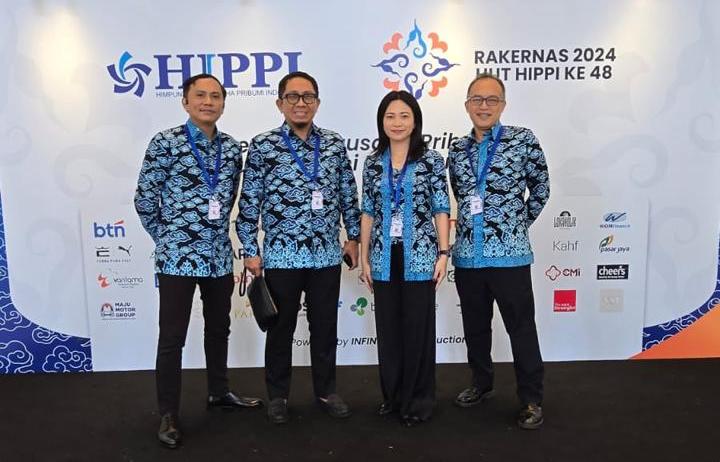
The Indonesian Indigenous Entrepreneurs Association (HIPPI) has reminded the government not to be trapped in the euphoria of recovering tourist arrival figures. Although the national tourism sector is showing strong signs of a post-pandemic revival, the reality on the ground indicates a decline in the purchasing power or spending value of travellers.
HIPPI’s Tourism and Culture Division (Strategic and Research Compartment) executive, Rizanto Binol, revealed a paradoxical phenomenon in Indonesia’s tourism industry today. Tourist destinations appear crowded, yet the circulation of money has not been felt evenly by local business operators at the grassroots level.
‘Visitors are present, but spending is not. Growth without balance will only create pressure at the bottom. This situation illustrates a paradox. Destinations are busy, but not all business operators receive a commensurate economic impact,’ Rizanto said via a written statement in Jakarta on Friday (19/6/2026).
According to Rizanto, tourist consumption patterns have shifted to become more selective due to adaptation to macroeconomic conditions. Current travel trends are dominated by free activities, the selection of cheap destinations, short trip durations, and very limited spending.
Seeing the serious pressure on the income margins of local business operators, HIPPI is urging a fundamental change in perspective from an orientation of visitor numbers (tourism traffic) towards the quality of economic value (tourism value).
Rizanto stressed that the indicator of tourism success should no longer rely solely on statistical reports of foreign or domestic tourist arrivals.
‘Indonesian tourism must not only be statistically busy, but must be strong as an ecosystem. The measure of its success is how much benefit remains in the region, is felt by local business operators, and strengthens the culture and economy of the community,’ he said.
To convert destination popularity into real community income, HIPPI has mapped out five strategic issues that must be immediately addressed by policymakers:
First, a bias towards local players. Massive promotion without strengthening product capacity and local standardisation will only result in the economic pie being enjoyed by large-capital investors.
Second, a strategy to increase spending. The government must begin designing thematic travel packages, curating craft products, and integrating culinary MSMEs so that tourists are willing to stay longer.
Third, inclusive tourism involving small players such as local guides, artists, artisans, and indigenous communities in the destination design supply chain.
Fourth, the digital transformation of MSMEs through mentoring. Digitalisation must not stagnate at social media promotion, but must touch on online reputation management and digital payment systems.
Lastly, culture as the main foundation. Rizanto said leveraging the wealth of traditions, historical narratives, and rituals as the primary differentiator so as not to merely sell natural beauty that is easily replicated by other countries.
‘Healthy tourism is not just tourism that is crowded, but tourism that enlivens small businesses, culture, jobs, and the hopes of the community. Tourism development must increasingly dare to shift from a promotional approach to an ecosystem approach,’ concluded Rizanto.