
Business Owners Sound Alarm as Chinese Goods Flood Indonesia with Rock-Bottom Prices
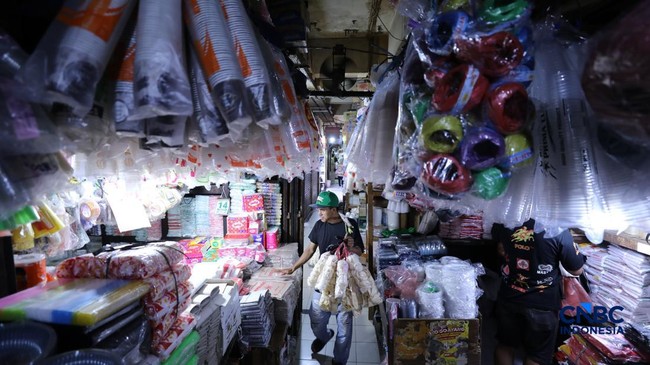
The national petrochemical industry is facing new pressure after imported plastic raw material products from China flooded the domestic market at much cheaper prices. Industry players warn that the situation is beginning to disrupt company performance, forcing reductions in working hours and potentially triggering layoffs if the government does not anticipate it soon. The surge in plastic raw material imports from China has occurred in a number of key commodities such as polyethylene (PE), polypropylene (PP), polyvinyl chloride (PVC), and polyethylene terephthalate (PET). These imported products are suspected of entering through dumping practices, allowing them to be sold far below market prices. Fajar Budiono, Secretary General of the Indonesian Olefin, Aromatic, and Plastic Industry Association (Inaplas), stated that the volume increase for PE, PP, PVC, and PET imports from China is quite high. He noted that they are also slashing prices so their products are cheaper than others. Pressure on the upstream industry is intensifying because companies are not only facing price competition from imported products but are also still burdened by high energy costs, particularly industrial gas prices which are considered uncompetitive. This situation is causing domestic producers’ profit margins to continue shrinking. Fajar explained that if policies are not taken immediately, upstream industry utilisation will drop. For PET and PVC, they are forced to export with very thin margins, continuously eroding company profits. Furthermore, the certainty of the specific natural gas price policy remains unclear, and non-policy gas prices of around US$13 per MMBtu are severely disrupting competitiveness. He noted that Indonesia’s demand for plastic raw materials is actually still very large. However, limited domestic production capacity means the market still depends on imports, making it easier for cheap foreign products to enter and dominate. Fajar detailed that demand for PE in Indonesia is around 2 million tonnes, while domestic supply is only about 1.2 million tonnes, leaving a gap of 800,000 to 900,000 tonnes for imports. For PP, demand is around 2.1 million tonnes, but domestic supply is only about 900,000 tonnes, resulting in imports of around 1.2 million tonnes. The impact of this competition is already being felt. Fajar said a number of companies have reduced factory operational hours to cut production costs. While this step has not yet triggered layoffs in the upstream industry, supporting business activities are beginning to suffer. He clarified that while there have been no layoffs in the upstream industry yet, working hour reductions have started, with systems changing from shifts to daily schedules. If this continues, it could eventually lead to layoffs. Meanwhile, indirect workers such as those in loading and unloading, logistics, and other supporting companies have already experienced reduced activity. He further warned that ongoing dumping practices could hamper new investment in the petrochemical sector. According to him, investors tend to wait until market conditions are conducive again. He concluded that if dumping practices are allowed to continue, investors will postpone new investments until the problem is resolved, by which time existing industries might have already collapsed. Therefore, the government must immediately impose anti-dumping duties so that the domestic industry can survive and the investment climate does not worsen.