
Business Owners Protest High Gas Prices - Compare to Neighbouring Countries
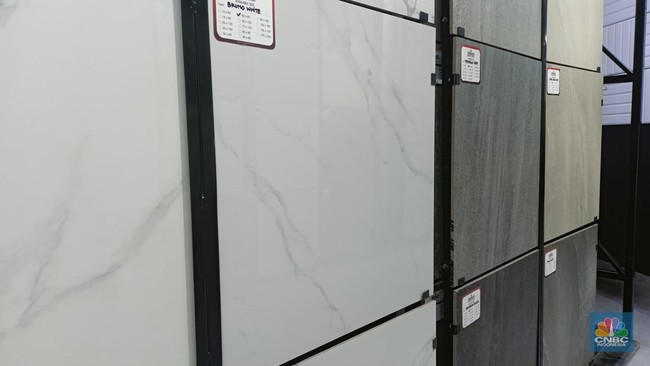
The weakening of the rupiah against the US dollar, reaching nearly Rp17,500, has made business owners increasingly cautious. This is because energy usage, such as gas, is still transacted in dollars, so the rupiah’s depreciation further increases the burden borne by industrial players. According to Refinitiv, the rupiah’s position in trading today, Wednesday (6/5/2026 at 10:54 WIB), stood at Rp17,410 per US dollar. “This price increase is very burdensome because the gas energy component contributes around 35 to 38 percent of total production costs,” said Chairman of the Indonesian Ceramic Various Industries Association (Asaki) Edy Suyanto to CNBC Indonesia on Wednesday (6/5/2026). The current gas price that the ceramics industry must pay is in the range of US$11.5 to US$12 per MMBTU, far above the price in the Specific Natural Gas Price (HGBT) scheme of US$7 per MMBTU. Compared to other countries in the ASEAN region, Indonesia’s position is deemed increasingly uncompetitive. Industrial gas prices in Malaysia and Thailand remain more competitive than those for domestic industrial players. “In neighbouring countries, industrial gas prices are in the range of US$9.5 to US$9.9 per MMBTU. This clearly pressures our competitiveness,” said Edy. The situation is worsened by the deteriorating industrial gas supply, especially after the realisation of the Specific Industrial Gas Allocation (AGIT) in several regions failed to meet targets. This supply decline directly impacts the surge in production costs. “The AGIT realisation in West Java in April 2026 was only around 37.5 percent, the lowest since the HGBT policy was implemented. This condition means the industry no longer receives competitive gas prices,” said Edy. Industrial players are asking the government to immediately take concrete steps to address this issue. They are pushing the Ministry of Energy and Mineral Resources, SKK Migas, and PGN to ensure gas supplies return to stability so that the industry does not face broader operational disruptions. “We hope for a quick solution to guarantee gas supplies, so the industry does not collapse and can avoid potential layoffs,” he emphasised. The gas supply disruptions that have not yet recovered, combined with the rupiah’s weakening against the US dollar, are eroding the competitiveness of business players in this sector. “We are facing layered pressures. On one side, energy costs are rising sharply, on the other, the rupiah’s weakening makes the payment burden even greater,” he said.