
Business Owners Besieged by a Jungle of Overlapping Regulations
JAKARTA, KOMPAS — In addition to facing pressure from declining purchasing power and rising production costs, the manufacturing industry must contend with around 20,000 regulations that must be fulfilled. Some of these regulations overlap and even contradict one another.
Executive Director of the Centre for Strategic and International Studies (CSIS) Yose Rizal Damuri estimates that Indonesia’s manufacturing industry, especially labour-intensive sectors such as footwear, garments, and textiles, will face increasing pressure. One of the causes highlighted by Yose relates to the large number of regulations that potentially overlap. He estimates the number of regulations to be around 20,000.
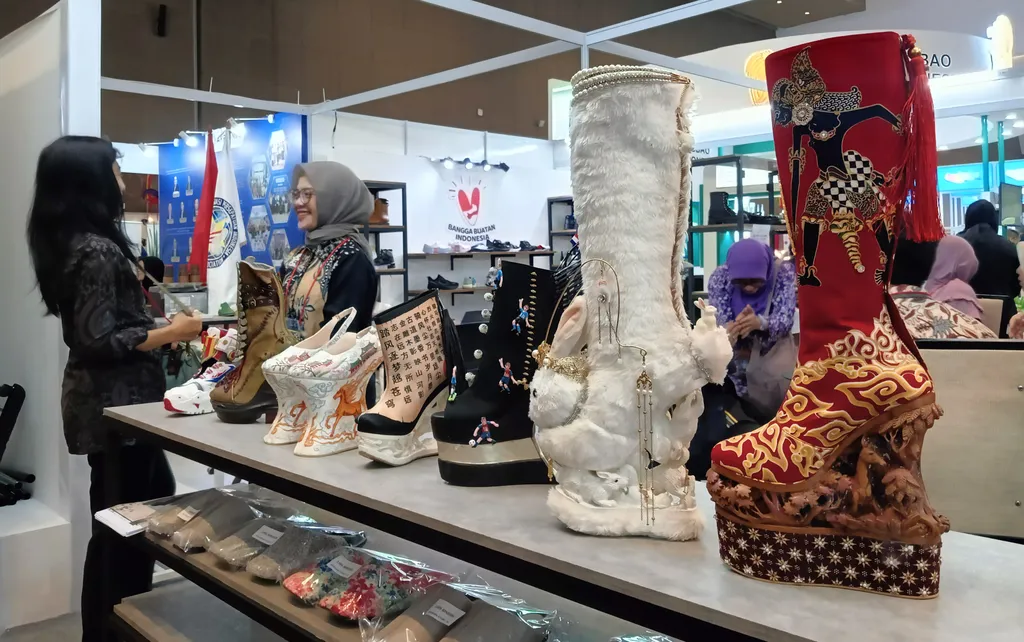
"This causes confusion, higher uncertainty, and overlap," Yose said while opening a discussion themed "Triumph in the Domestic Market, Excel in the Global Market" at Jiexpo Kemayoran, Jakarta, on Tuesday (5/8/2026). The event was part of the Indo Leather & Footwear Expo (ILF) and Indo Garment & Textile Expo.
According to Yose, regulatory reform needs to be continued down to the level of implementing regulations such as ministerial regulations and regulations below them. The reason is that regulatory complexity causes incoming investment to flow more into the extractive sector and capital-intensive industries. Meanwhile, labour-intensive investment is more sensitive to regulatory certainty and thus less developed.
Chairperson of the East Java Regional Executive Board of the Indonesian Footwear Association (Aprisindo) Rany Riniwati stressed that the multitude of regulations hampers the competitiveness of the domestic industry. In addition, there are various administrative requirements that incur large costs and lengthy processes. This heavily burdens small and medium industries, which generally do not have dedicated resources to handle regulatory compliance.
"The cost is not cheap, it is expensive. Large companies may have legal or compliance teams. But medium and small companies do not. We focus on maintaining production and retaining employees, not on managing ever-increasing regulations," she said. Rany proposed deregulation through simplifying the certification process or grouping obligations based on business scale so that the compliance burden is more proportional.
"We are never afraid to compete. What we hope is that the energy of business players is not exhausted just dealing with regulatory uncertainty," Rany said.
In addition to regulatory issues, business players, especially footwear exporters, are complaining about the obstruction of Value Added Tax (VAT) restitution since May 2026. So far, preliminary restitution has been an important source of working capital because most raw material transactions are subject to VAT.
"That restitution is our cash flow to turn over capital. Since May, restitution has been obstructed. The VAT is 11 percent, because our imports are also subject to VAT. Local purchases are subject to VAT. We cannot get restitution now. Whereas previously, we received restitution every month," Rany said. She hopes the Ministry of Finance can provide clarity on the policy because the restitution value reaches 11 percent of the company’s transactions.
Another obstacle arises from the implementation of trade safeguard policies on several imported textile products. According to Rany, the textile materials used by the footwear industry are different from those for garments and therefore should not be subject to the same treatment. She cited an example of an Aprisindo member having to pay an additional import duty of up to Rp 45,000 per metre for textile material, even though the import price was only around Rp 12,000 per metre.
"If the raw materials were available domestically, we would certainly buy local products. The problem is that the materials needed by the footwear industry are not yet produced in Indonesia. We need to strengthen the upstream industrial sector," she said.
Chairwoman of the Indonesian Garment and Textile Association (AGTI) Anne Patricia Sutanto urged the government to accelerate the ratification and simultaneously prepare the implementing regulations for the Indonesia-European Union Comprehensive Economic Partnership Agreement (IEU-CEPA). This is so that business players can immediately take advantage of export opportunities to the European Union market.
According to her, Indonesia has a great opportunity to expand its market share in the EU through the IEU-CEPA. Currently, the value of Indonesia’s garment and textile exports to the EU reached approximately 1.4 billion US dollars in 2025. In addition to accelerating ratification, Anne also asked the government to immediately disclose information regarding the content and benefits of the IEU-CEPA to business players. So far, available information is actually more easily accessible through the official EU website than from the Indonesian government.
Source: jawawa.id (https://jawawa.id/newsitem/business-owners-besieged-by-a-jungle-of-overlapping-regulations-1786053023)
Originally published by kompas.id (https://www.kompas.id/artikel/energi-pengusaha-terkuras-untuk-penuhi-aturan), translated from Indonesian