
Business Matchmaking Sustains Hopes for Kemuning Tea Farmers
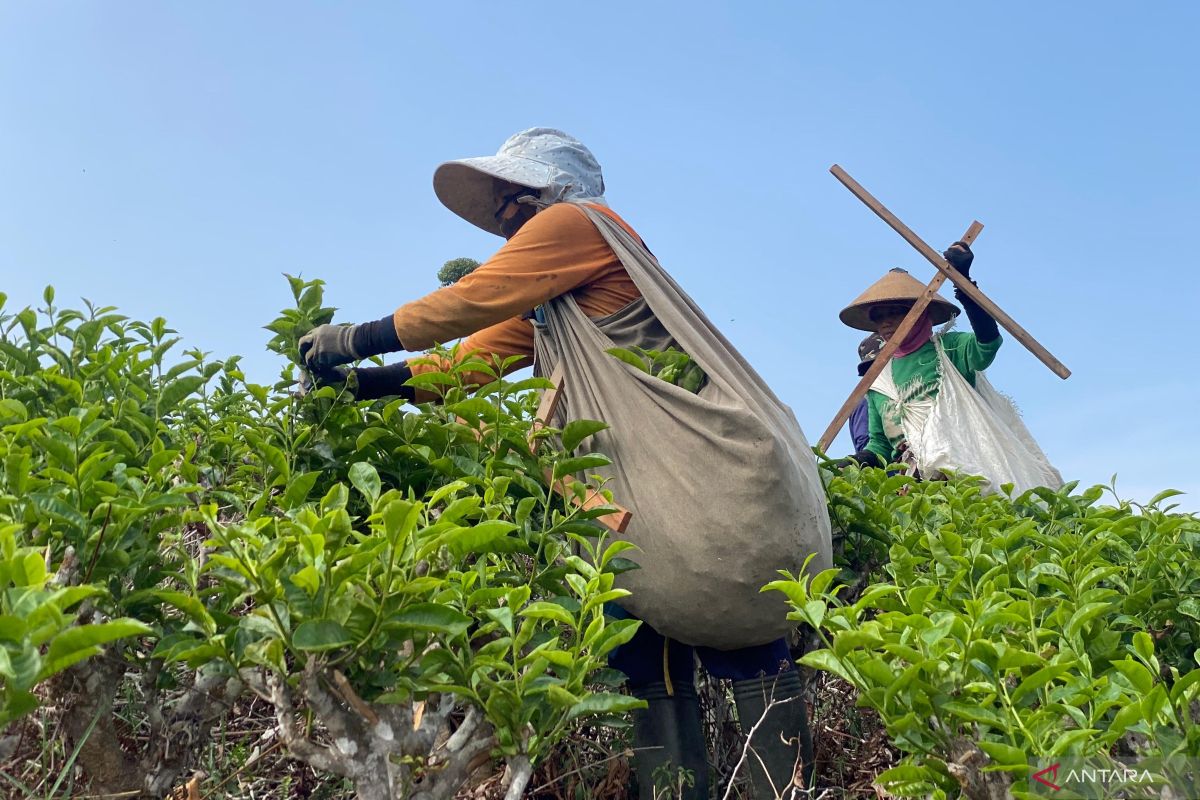
Surabaya (ANTARA) – Thin mist still hangs over the slopes of Mount Lawu as tea buds in Kemuning Village, Ngargoyoso District, Karanganyar Regency, Central Java, are picked one by one and taken to a tea processing facility.
There, the distinctive aroma of freshly processed tea leaves marks the long journey of Eko Wuryanto in building a business that now produces not only beverages but also livelihoods for farmers in the surrounding area.
Among the plantations and the scent of tea, Eko chose a challenging path when he left his job at a company in 2012 to start his own business, after seeing the potential of Kemuning tea, which was still little known to tourists.
“When I first opened, my monthly profit was only around Rp300,000, roughly equivalent to three days’ salary when I was still working for the company,” the tea business owner said, recalling the early days.
His decision followed the arrival of tourists in the Kemuning plantation area from 2010, when there were still few options for them to buy local tea and see how it was processed.
Eko started the business with capital of around Rp8 million and basic equipment, some of which he made himself. At first, the market could not always absorb even its production capacity of about 50 kilogrammes a month. The business later grew with support and mentoring from Bank Indonesia (BI).
More than a decade on, the business, which once partnered with just five or six farmers, can now process around 5–6 tonnes of tea a month, involving 26 farmers cultivating about five hectares.
The change is evident not only in production capacity but also in the economic value circulating around the plantations. Eko chooses to buy fresh tea buds from local farmers for at least Rp5,000 per kilogramme, higher than the prices he says farmers receive in some other tea-producing areas.
“My hope is that the farmers benefit too, because the profits should not be just for me. I want these 26 farmers to be genuinely motivated and empowered,” he said.
A range of tastes
At the processing facility, which serves as the centre of activity for Eko and the farmers, freshly picked tea buds are withered, rolled and dried before being stored as raw material and developed into a variety of products.
Rather than sticking to conventional tea, Eko has sought to respond to consumer tastes by producing green, black, white, jasmine, ginger, lemongrass, fruit and spice teas, as well as matcha, which is gaining interest from cafés and restaurants in Jakarta.
The products also have a distinctive signature: rako tea, which has a taste reminiscent of coffee. Eko says this flavour occurs naturally because of the character of Kemuning’s soil, where coffee plants also once grew.
White tea, meanwhile, is made from unopened leaf buds and dried at a low temperature to preserve the character of the raw material. It is one of the products reflecting Eko’s efforts to increase the added value of a local commodity.
With these innovations, monthly business revenue rose from around Rp85 million in 2023 to approximately Rp250–300 million in 2026, while the number of resellers increased from 235 to about 620.
The expanding market has also brought large orders. After taking part in an exhibition in Surabaya, Eko met a buyer from Boyolali who now orders around 3,000 products a day, with transactions worth about Rp6 million.
The meeting illustrates how exhibitions can go beyond promotion and create new trade links for regional small and medium-sized enterprises (SMEs), connecting products with buyers needing a consistent supply.
Opening up markets
The tea business established by Eko with Kemuning’s farmers is now one of the SMEs supported by Bank Indonesia. Its assistance includes production mentoring, equipment upgrades, promotion and introductions to prospective buyers through various exhibitions.
For Eko, this support has helped address a longstanding constraint: the capacity to scale up production, while also expanding market access as demand grows.
He said one of the most tangible effects of taking part in BI-facilitated activities was the opportunity to meet larger-scale buyers, including those whose orders now reach thousands of products a day.
Source: jawawa.id (https://jawawa.id/newsitem/business-matchmaking-sustains-hopes-for-kemuning-tea-farmers-1791460476)
Originally published by Antara (Indonesian) (https://www.antaranews.com/berita/5777194/fasilitasi-perjumpaan-bisnis-jaga-asa-petani-teh-kemuning), translated from Indonesian