
Business Leaders Express Concern Over Rupiah Depreciation and Urge Coordinated Response
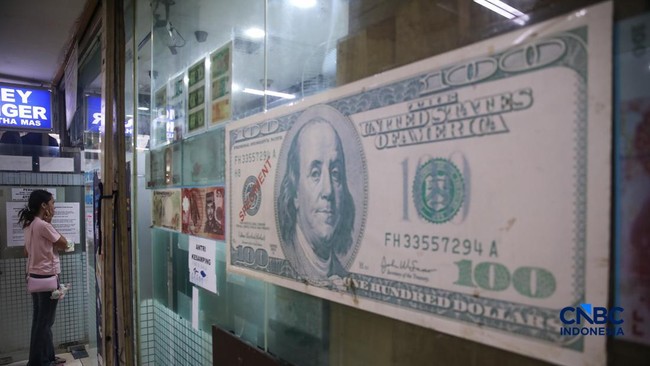
The exchange rate of the Rupiah against the US Dollar faced further pressure during trading on Monday (18/05/2026), with the Indonesian currency weakening to a new psychological level above Rp17,600 per US Dollar. In response to this condition, the business community has collectively voiced concerns regarding the impact of the Rupiah’s depreciation on the business world.
Shinta Widjaja Kamdani, General Chairwoman of the Indonesian Employers Association (Apindo), stated that the current pressure on the Rupiah is not merely a temporary fluctuation but part of larger global dynamics. She noted that the depreciation, which has touched levels above Rp17,500 per US Dollar, requires a serious and coordinated response. According to Kamdani, the pressure on the Rupiah coincides with rising US Treasury yields and escalating geopolitical conflicts, which have driven global capital reallocation towards US Dollar assets.
She assessed that this condition affects almost all developing nations, including Indonesia, through exchange rate pressure and increased capital outflow. From a business perspective, the weakening Rupiah directly hits the cost structures of national industries that remain highly dependent on imported raw materials. Approximately 70% of manufacturing raw materials are still imported, contributing about 55% to the production cost structure. Consequently, every depreciation of the Rupiah is directly reflected in increased input costs.
Sectors most vulnerable to these impacts include industries with high import dependency, such as petrochemicals, plastics, food and beverages, pharmaceuticals, and energy-based manufacturing. For instance, the rise in naphtha prices—a primary raw material for the plastics industry—has significantly driven up resin prices by tens of per cent, creating a chain reaction in the packaging and downstream sectors. This situation indicates cost-push inflation spreading through industrial supply chains.
Beyond production, corporations are also feeling the pressure from a financial perspective. The strengthening US Dollar increases the burden of foreign currency-denominated debt obligations, affecting interest and principal payments, which in turn impacts cash flow management and increases corporate risk profiles. Furthermore, with domestic purchasing power not yet fully recovered, businesses have limited room to raise selling prices, meaning much of the cost pressure must be absorbed by the companies themselves. This absorbs margins and affects decisions regarding expansion and labour absorption.
In response, business players are adopting more prudent and risk-adjusted strategies, focusing on ‘selective growth’. Speculative investments are being delayed, while companies are increasing the use of hedging instruments, restructuring debt to balance Rupiah and foreign currency, and pursuing operational efficiencies. Additionally, companies are attempting to diversify suppliers and substitute imports, although domestic industrial capacity remains limited in many sectors. Apindo maintains that policy synergy between monetary, fiscal, and the real sectors is crucial to maintaining economic stability amidst ongoing global pressures.