
Business Leaders Develop Plans to Tackle Uncertainty and Build Crisis Buffers
Jakarta, CNBC Indonesia – The Indonesian Chamber of Commerce and Industry (Kadin) is preparing three recommendations to strengthen business resilience amid global economic uncertainty. The priorities are building buffers to withstand crises, ensuring the availability of raw materials for domestic production, and providing greater certainty for businesses.
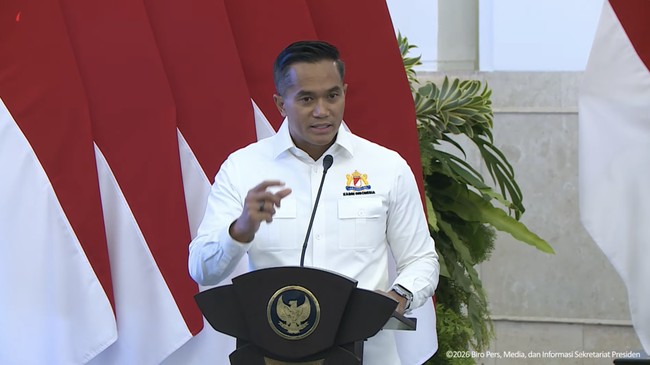
Kadin chairman Anindya Novyan Bakrie said global economic challenges required Indonesia to strengthen its economic fundamentals and improve competitiveness. These issues were among those discussed at Kadin’s 2026 National Leadership Meeting (Rapimnas).
Anindya said the three recommendations would provide a framework for discussions at the meeting and help determine Kadin’s future direction.
“They will be discussed, but broadly the framework for Kadin’s Rapimnas includes three recommendations. The details will, of course, be discussed further. First, how we can build buffers to face a crisis,” Anindya said at the opening of the 2026 meeting on Thursday (29 October 2026).
“Second, we need raw materials for domestic production. Third, we need certainty for businesses so Indonesia can compete globally,” he added.
Anindya said strengthening economic resilience was vital amid global uncertainty. He cited countries preparing emergency reserves for crises, including energy supplies, and making plans for disaster preparedness.
“First of all, perhaps we are already aware that the world is building emergency reserves. And these are not small countries. The United States says it has 90 days’ worth of fuel reserves. The UK has asked people to be self-sufficient for 72 hours and prepared for three days of disaster, with every household keeping supplies. This is the situation we face today,” he said.
In these circumstances, Anindya said Indonesia needed to strengthen food, water and energy security as part of efforts to safeguard national sovereignty.
“At the same time, Indonesia is also building resilience in food, water and energy amid this uncertain world. We understand that resilience in food, water and energy is part of Indonesia’s sovereignty,” he said.
Anindya acknowledged that pressure on capital and financial markets needed to be monitored, but said it should be considered alongside indicators of Indonesia’s economic fundamentals.
He said several indicators pointed to the economy’s resilience, including foreign investment, listed companies’ net profits, foreign exchange reserves and credit growth.
“We see that foreign investment under Minister Rosan is Rp270 trillion, listed companies’ net profits—unlike during the crisis—are up 16%, and foreign exchange reserves stand at US$146 billion. Year-on-year credit growth is, of course, 13.3%,” Anindya said.
He nevertheless stressed that strengthening fundamentals alone was not enough. Indonesia also needed to improve its competitiveness to take advantage of opportunities arising from changes in the global economy.
In addition to the three recommendations, Kadin will establish eight working groups to oversee the implementation of its programmes. Anindya said progress would be reviewed regularly so that the organisation’s agenda did not remain confined to discussion at its annual forum.
“To support all this, at the end of my speech we launched eight working groups. They are intended to ensure that we do not just discuss these programmes once a year; we will monitor progress every three months,” he said.