
Business Leaders Back Single-Window Export Policy, Call for Phased Implementation
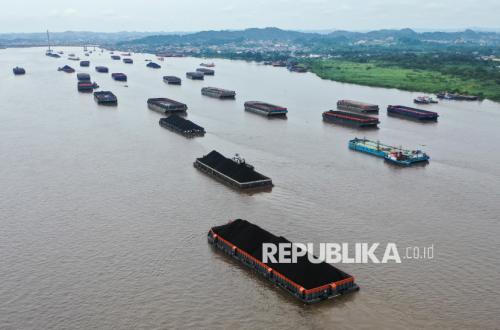
JAKARTA — Indonesia’s business associations have expressed support for the government’s initiative to strengthen the governance of natural resource exports, with the Indonesian Chamber of Commerce and Industry (Apindo) joined by the Indonesian Mining Association (IMA), Coal Mining Association (APBI-ICMA), Nickel Industry Forum (FINI), and Palm Oil Producers Association (Gapki).
Apindo Chairman Shinta Kamdani said the policy aims to enhance trade transparency, prevent under-invoicing and transfer pricing, and ensure optimal contribution of export earnings to the national economy. However, she stressed the need for a phased, transparent, and accountable implementation that considers sector-specific characteristics, given the varying contract structures, supply chains, financing mechanisms, and international buyer profiles across minerals, coal, nickel, ferronickel, ferroalloy, and palm oil sectors.
The associations emphasised the importance of legal certainty for existing contracts, payment terms, shipping regulations, and insurance. They also called for clarity on export earnings obligations (DHE), Domestic Market Obligation (DMO), and international trade schemes to maintain global market confidence.
They urged the government and state-owned enterprise PT Danantara Sumberdaya Indonesia (DSI) to ensure export activities continue during the transition period with enhanced oversight and digital system integration. Kamdani proposed a technical coordination forum involving government, DSI, financial authorities, and business associations to address commodity scope, pricing mechanisms, service level agreements, payment resolution, and transition phases.
The associations also recommended an integrated closed-loop export platform linking upstream-downstream industries and relevant agencies to ensure data transparency, credibility, and confidentiality. They requested government and DSI to communicate the policy to international buyers to ensure global understanding of the new export governance framework.
Kamdani confirmed the associations would support policy outreach to members and oversee the transition to ensure smooth export operations. ‘Through open dialogue and measured implementation, we believe this policy will strengthen natural resource governance, boost export competitiveness, and maximise benefits for the national economy,’ she said.