
Business Leader Urges Indonesia to Learn from Vietnam, Highlights WFH Risks
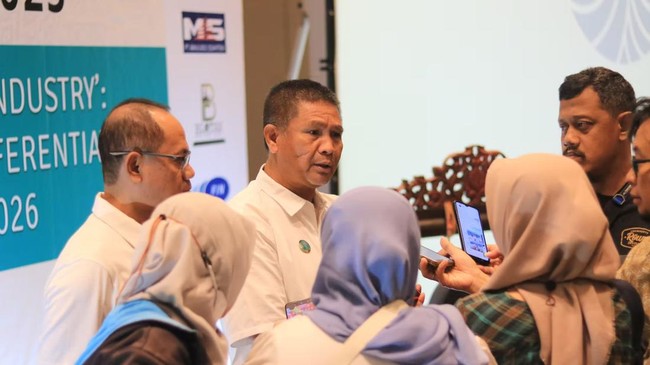
Business actors are reminding that the direction of labour policy should not disrupt the competitiveness of the manufacturing sector amid increasingly tight global competition. The General Chairman of the Indonesian Furniture and Handicraft Industries Association (HIMKI), Abdul Sobur, believes that labour protection remains important but must be balanced with industry needs.
“Labour protection is a principled matter. However, in the context of the manufacturing industry, that protection must go hand in hand with increasing productivity and industrial flexibility. Without such balance, Indonesia risks losing its global competitiveness even further,” said Abdul Sobur in his statement on Thursday (29/4/2026).
Currently, the challenges faced by the industry do not only come from global pressures but also from domestic issues such as regulations deemed rigid, suboptimal labour productivity, and continuously rising production costs.
He emphasised that flexible work policies such as work from home (WFH) cannot be applied uniformly, especially in the labour-intensive manufacturing sector which is highly dependent on the physical presence of workers.
“WFH cannot be applied across the board to all sectors. In the manufacturing industry, particularly labour-intensive ones, work is very much tied to production processes, machines, materials, finishing, quality control, and delivery. If policies are made too generally without considering the characteristics of the sector, the competitiveness of the industry could also be pressured,” he said.
He also touched on competition with other countries like Vietnam, which is seen as more capable of attracting manufacturing investments due to a combination of policies deemed more flexible and consistent.
“We must honestly look at global facts. Vietnam has become an investment magnet not only because of wages, but because they offer a more flexible, productive, and consistent ecosystem. This is an important lesson for Indonesia,” he stated.
Amid these conditions, existing policies cannot become an additional burden for business actors.
“Good intentions to protect workers should not end up making the industry lose its ability to survive, delay expansion, or even reduce the workforce. What we need is a fair and competitive ecosystem,” said Sobur.