
Business Leader Reveals True Condition of Indonesian Shipping Industry
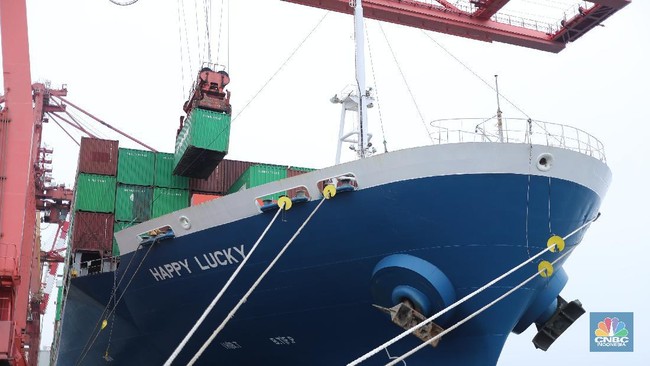
Jakarta, CNBC Indonesia - Indonesia’s economic growth, currently hovering around 5.6%, is not yet fully reflected in the performance of the national shipping industry. Business players report that they are still facing a slowdown in transport demand, particularly within the container segment.
Carmelita Hartoto, Vice Chairperson Coordinator for Infrastructure and Regional Development of the Indonesian Chamber of Commerce and Industry (Kadin Indonesia), stated that the movement of the domestic shipping sector is still heavily influenced by public consumption. Purchasing power is the primary factor determining the level of goods distribution activity across various regions. Consequently, logistics costs must be maintained to prevent further burdens on consumer prices.
“Domestic transport also depends on public purchasing power. That is why I always convey that, if possible, port tariffs and freight rates should not be too high, because ultimately, the public will be affected. The prices of the goods they purchase will also rise,” Carmelund told CNBC Indonesia on Tuesday (2/6/2026).
While increased logistics activity presents opportunities for the shipping sector, business players believe that the sustainability of demand depends on the overall economic condition of the population. As long as purchasing power is maintained and economic activity remains stable, the shipping industry still has room to grow.
“As long as our economy can be controlled and public purchasing power remains, we can continue to operate. This is certainly our challenge,” she said.
Amid relatively high national economic growth data, the shipping industry has not yet felt an even positive impact. Business players are even still attempting to prevent the decline in activity from deepening.
“If asked, there is indeed a decline in transport. We are just trying to ensure that this decline is not drastic. Container transport has also decreased,” said Carmelita.
She explained that the surge in activity seen earlier this year was largely influenced by the momentum of long holiday periods. The proximity of the New Year, Chinese New Year, and Eid al-Fitr led to an increase in distribution needs occurring simultaneously.
“Previously, the growth appeared significant during Eid, New Year, and Chinese New Year because those periods occurred almost at the same time. This resulted in visible impacts, such as congestion. There was also a greater need for more containers and instances of transport halts. Essentially, the impact was due to these major holidays being so close together,” Carmelita noted.