
Business Judgment Rule Deemed Crucial to Support SOE Transformation
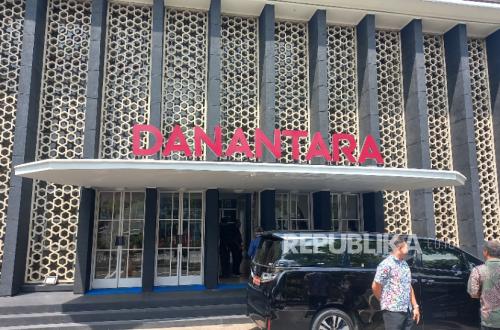
Nagara Institute researcher Satya Arinanto stated that the application of the Business Judgment Rule (BJR) principle is a vital element in strengthening the governance of BPI Danantara. According to him, this legal doctrine provides space for directors to make business decisions professionally while remaining grounded in the principles of prudence and good governance.
“This legal protection rule aims to provide certainty for management when making business decisions that involve entrepreneurial risks,” said Satya during a Round Table Discussion (RTD) hosted by Nagara Institute–Akbar Faizal Uncensored (AFU) in Jakarta on Thursday (25/06/2026).
Satty explained that the regulation is based on three primary legal frameworks: Law Number 16 of 2025 regarding the Fourth Amendment to Law Number 19 of 2003 concerning State-Owned Enterprises (SOEs), Law Number 40 of 2007 regarding Limited Liability Companies (PT), and Law Number 21 of 2021 regarding the Amendment to Law Number 31 of 1999 on the Eradication of Corruption Crimes. He noted that the BJR concept aims to protect directors who make business decisions professionally and in accordance with applicable regulations.
“Directors cannot be held liable as long as their decisions do not involve elements of fraud, conflicts of interest, or unlawful acts,” said Satty.
Satty added that the latest regulation in Law Number 16 of 2025 further clarifies the paradigm of asset management based on the principles of limited liability companies. This provision affirms the position of corporate wealth as assets separated from state finances, yet remaining within the corridor of supervision and accountability.
“Although the wealth is separated, supervision and auditing of the company are still conducted as part of the management of state assets. At the same time, proven legal violations must certainly be processed according to applicable provisions,” said Satty.
Former President Director of PT Merpati Nusantara Airlines, Hotasi Nababan, emphasised the importance of harmonising the various legal regimes governing SOE management. He believes that legal certainty will assist state company managers in performing their business functions more optimally.
“We live within two regimes that have different characteristics. Therefore, clarity and alignment of rules are required so that company management can run effectively and remain accountable,” said Hotasi.
Consequently, Hotasi believes that BPI Danantara needs to be supported by a strong legal framework to support national economic growth targets. Regulatory certainty is considered essential so that professionals can execute various investment strategies and business development optimally.
“What needs to be clarified is the boundary between reasonable business risk and legal violations. In this way, directors will have sufficient space to make strategic decisions that can drive economic growth,” said Hotasi.
Meanwhile, Executive Director of Nagara Institute, Akbar Faizal, stated that the restructuring of SOEs through Danantara is a strategic step that must be supported by strong governance and professional leadership.
He noted that this process serves as a momentum to strengthen the competitiveness of SOEs while simultaneously increasing economic benefits for the public.