
Business Association Reminds Government to Maintain Balance Between Workers' Rights and Investment
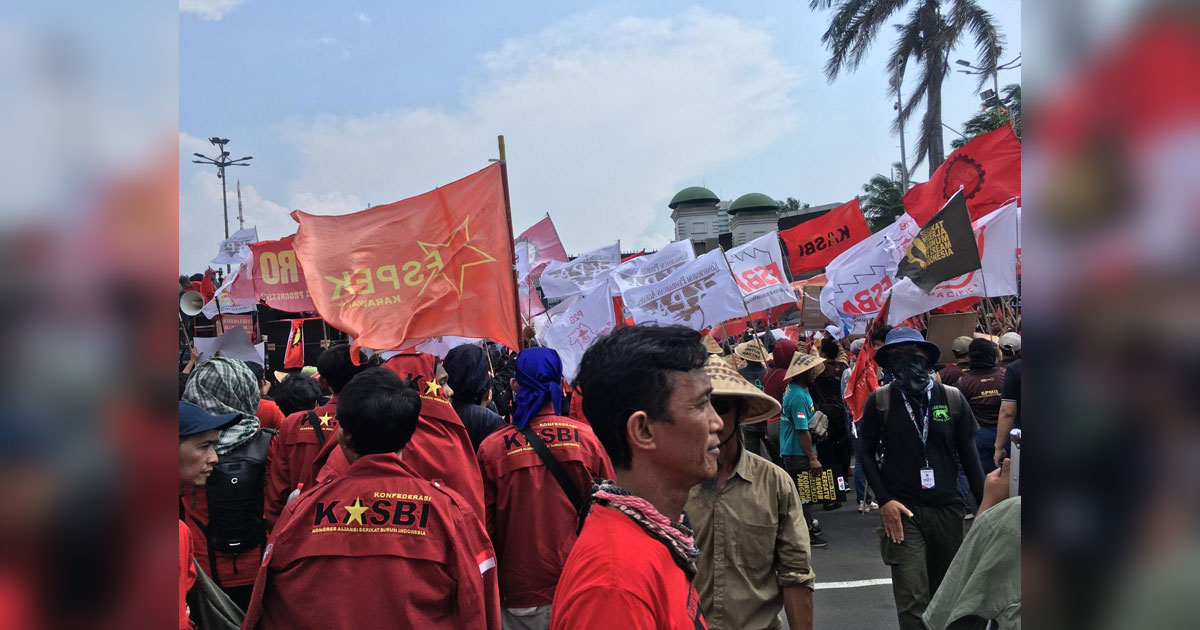
The government is urged to conduct a thorough evaluation of labour regulations on International Labour Day each 1 May, with special emphasis on the effectiveness of protecting workers’ basic rights. “The commemoration of International Labour Day is an important moment for the Government to evaluate the effectiveness of labour protection,” said Vice Chairman General of the Indonesian Business Outsourcing Association, Yoris Rusamsi Rusadi, when confirmed in Jakarta on Saturday (1/5/2026). According to him, weaknesses in labour supervision are the main obstacle in Indonesia, so the effectiveness of rules made by the government remains nil without strengthening that supervisory function. “Considering that in Indonesia the biggest weakness is in labour supervision. Whatever policies the Government issues regarding Labour Regulations, if the supervision is weak, it will be in vain,” said Yoris. In addition, his side emphasised the need for balance in labour policies; the rules made must not only chase popularity in the eyes of workers but must be realistic to Indonesia’s economic conditions to remain competitive. “Government policies should not only be popular in the eyes of workers, but also not consider the aspect of economic sustainability in Indonesia,” explained Yoris. Therefore, it is important to maintain a balance between protecting workers’ rights and the sustainability of investment in Indonesia. Because if labour policies instead hinder economic stability, in the end, the workers themselves will bear the losses. “So it must be balanced between workers’ protection interests and the continuity of companies (Investment) in Indonesia. If the economic continuity is impacted by Government policies in the labour sector, in the end, the workers themselves will lose,” said Yoris. This refers to workers’ demands regarding the elimination of the outsourcing work system, although in practice, it cannot be forced instantly. Because sudden elimination is feared to make investors reluctant to invest, resulting in factory closures and loss of jobs. “In terms of demands, there are things that cannot be forced to be fulfilled, such as the elimination of outsourcing and changing partner status to workers, because that will impact and damage the economic ecosystem in Indonesia,” added Yoris.