
Business and Farmers Warn Proposed Nicotine and Tar Limits Will Devastate Industry and State Revenue
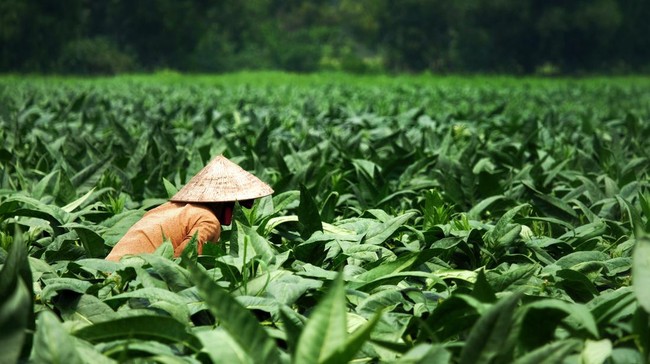
Jakarta, CNBC Indonesia – A plan to issue a regulation from the Coordinating Minister for Human Development and Culture setting a nicotine limit of 1 mg and a tar limit of 10 mg, along with a planned Health Ministerial Regulation tied to the official Macroeconomic Framework and Fiscal Policy Principles (KEM-PPKF) 2027 document, could have a damaging impact on the industry.
Sefdin Alamsyah, Chair of the Standing Committee on Relations Between State Institutions and Government at the East Java Chamber of Commerce and Industry (KADIN Jatim), admitted he was alarmed by the provisions.
According to him, this policy is a tragic one because the government needs state revenue from Tobacco Excise (CHT) whilst simultaneously preparing a regulation that would kill off its own production engine.
“In KEM-PPKF 2027, the President has placed CHT as a priority for optimising state revenue. To secure large excise receipts, cigarette production and sales volumes must be stable, or even increase. No country raises its tax target whilst deliberately killing off its tax base. Yet the planned Health Ministerial Regulation and Coordinating Ministerial Regulation capping nicotine at a maximum of 1 mg is madness in terms of the arithmetic,” he said in an official statement on Friday (17/7/2026).
In fact, 90% of the local tobacco that has long been the backbone of farmers naturally contains 2-8 mg of nicotine. In other words, if this rule is forced through, tonnes of tobacco harvested from fields across East Java, Central Java, Lombok and Sumatra would automatically become illegal to process.
“No legal cigarette factory could use that raw material because it exceeds the limit. The impact would be a collapse in national cigarette production. Factories shut. Farmers lose their buyers. And the culmination: the CHT revenue target in KEM-PPKF 2027 collapses instantly,” he explained.
Extreme limits on nicotine and tar content beyond the capacity of the domestic industry, he continued, would no longer amount to intensification but could instead trigger de-industrialisation. He added that the most worrying aspect is the blowback effect of this policy.
KEM-PPKF 2027 explicitly seeks to tighten supervision so that illicit cigarettes do not proliferate and leak tax revenue. However, if the Coordinating Minister’s regulation and the Health Ministerial Regulation are forced through, cigarette consumers who have for years been accustomed to the characteristics of local tobacco will not stop smoking. They will look for alternatives.
“And when legal factories are banned from producing cigarettes with nicotine content above 1 mg, who will fill the market gap? The answer: illegal cigarette producers without excise stamps. Or consumers will turn to ‘tingwe’ — nglinting dewe (mixing and rolling their own tobacco manually using cigarette paper),” Sefdin explained.
“So the Coordinating Minister’s regulation and the Health Ministerial Regulation could actually create a far more massive black market. Illegal cigarettes will flood corner shops. Authorities will struggle to monitor the situation, and state revenue will not merely fail to rise — it will crash dramatically,” he protested.
Strong rejection has also come from farmers in Temanggung, Central Java. Not long ago they staged a protest at the office of the Coordinating Ministry for Human Development and Culture against the rule on nicotine content limits.
Agus Parmuji, Chairperson of the Central Leadership Council of the Indonesian Tobacco Farmers’ Association, said the protest was attended by community figures and village heads from Central Java, particularly Temanggung, Wonosobo, Magelang and Kendal, as well as figures from East Java. This was done to convey their aspiration for the withdrawal of the draft Coordinating Ministerial Regulation on capping nicotine and tar levels.
According to Agus, the rule could instead be set by taking into account the concrete conditions and characteristics of Indonesian tobacco. He noted that Indonesian tobacco has a minimum nicotine content of 3 mg.
“If the variety does not match local characteristics, the output will not match industry demand, and I ask: is the government willing to buy our harvest? Of course not,” he said.
On the same occasion, Lukman Sutopo, a tobacco farmer, said that tobacco in the Temanggung, Wonosobo, Magelang and Boyolali regions, as well as East Java, has high nicotine content. So when tar and nicotine levels are capped, tobacco farmers will suffer.
“The derivative of Health Law Number 28 of 2024 concerning the restriction of nicotine and tar levels — please review it. Do not let this policy, once rolled out, harm tobacco farmers across Indonesia. Those affected will not only be tobacco farmers, but also tobacco farm labourers and so on. There are many aspects,” he explained.
Meanwhile, Taat Supriadi, Head of Tlogomulyo Village in Temanggung, also demanded the withdrawal of the regulation.
“Because if this legislation goes through, our farmers are finished. Clearly, because our tobacco’s content exceeds the approved tar or nicotine levels,” Taat said.