
Bungaran Saragih: Indonesia must maximise palm oil productivity
Jakarta (ANTARA) - Professor Dr. Bungaran Saragih, a professor at IPB University, stated that Indonesia must maximise palm oil productivity, which has the potential to reach 5-6 tons of Crude Palm Oil (CPO) per hectare per year, to meet domestic needs without reducing export volumes.
According to him, palm oil, a major foreign exchange earner from export levies, faces several productivity challenges. In line with increasing domestic consumption of palm oil and the implementation of the B50 programme in June 2026, the demand for palm oil continues to rise.
“National palm oil needs are projected to reach 41 million tons by 2045, in line with increasing domestic consumption of palm oil,” he said in his statement in Jakarta on Monday.
The former Agriculture Minister, in his presentation at the “Palm Oil Technical (TKS): Exhibition and Field Trip” event organised by the Plantation Fund Management Agency together with the Central Kalimantan (Kalteng) Indonesian Palm Oil Entrepreneurs Association (Gapki), said that palm oil is not only the largest contributor to foreign exchange but also a stabiliser of the national economy.
He stated that during Indonesia’s three major crises—the 1998 monetary crisis, the 2008 global financial crisis, and the 2020-2021 COVID-19 pandemic—there were heavy pressures such as weakening exchange rates, rising unemployment, and a surge in poverty.
“However, there is one sector that consistently serves as a buffer, even a saviour of the national economy during crises, and that is the palm oil sector,” he said at the event in Pangkalan Bun, Kotawaringin Tengah Regency, Central Kalimantan.
Furthermore, Bungaran explained several key factors that make palm oil able to serve as a national economic stabiliser. One of them is the very broad base of the palm oil sector, involving millions of workers.
“The palm oil sector has very broad socio-economic involvement, with more than 16 million workers. In every crisis, when many sectors falter, palm oil stands firm,” he said.
Meanwhile, IPB researcher Gusti A. Gultom added that in terms of increasing productivity, the rejuvenation of smallholder palm oil plantations (PSR) greatly supports national food and energy security in efforts to ensure the availability of edible vegetable oil and biofuel.
Compared to old plants, he continued, productivity after replanting increases by more than 3 tons of CPO per hectare per year.
“CPO needs for food and energy will experience an upward trend; the implementation of B50 requires at least 17-18 million tons of CPO, and food needs will also continue to rise, so replanting must be carried out immediately,” he said.
Deputy Chairman of GAPKI Central Kalimantan, Siswanto, added that globalisation and technology are challenges that must be aligned in increasing productivity in the palm oil industry.
Therefore, his side appreciates the TKS 2026 event because it provides very valuable benefits and input as a reference for increasing palm oil productivity both in companies and especially for smallholder farmers.
TKS 2026 Organising Committee Chairman, Hendra J. Purba, stated that regarding the expansion of 2-5 million hectares of palm oil and intensification to increase productivity, the use of optimal seeds is needed.
“In palm oil production centres like West Kotawaringin, opportunities for extensification are no longer available, so the only way is intensification, with the focus on smallholder gardens,” he said.
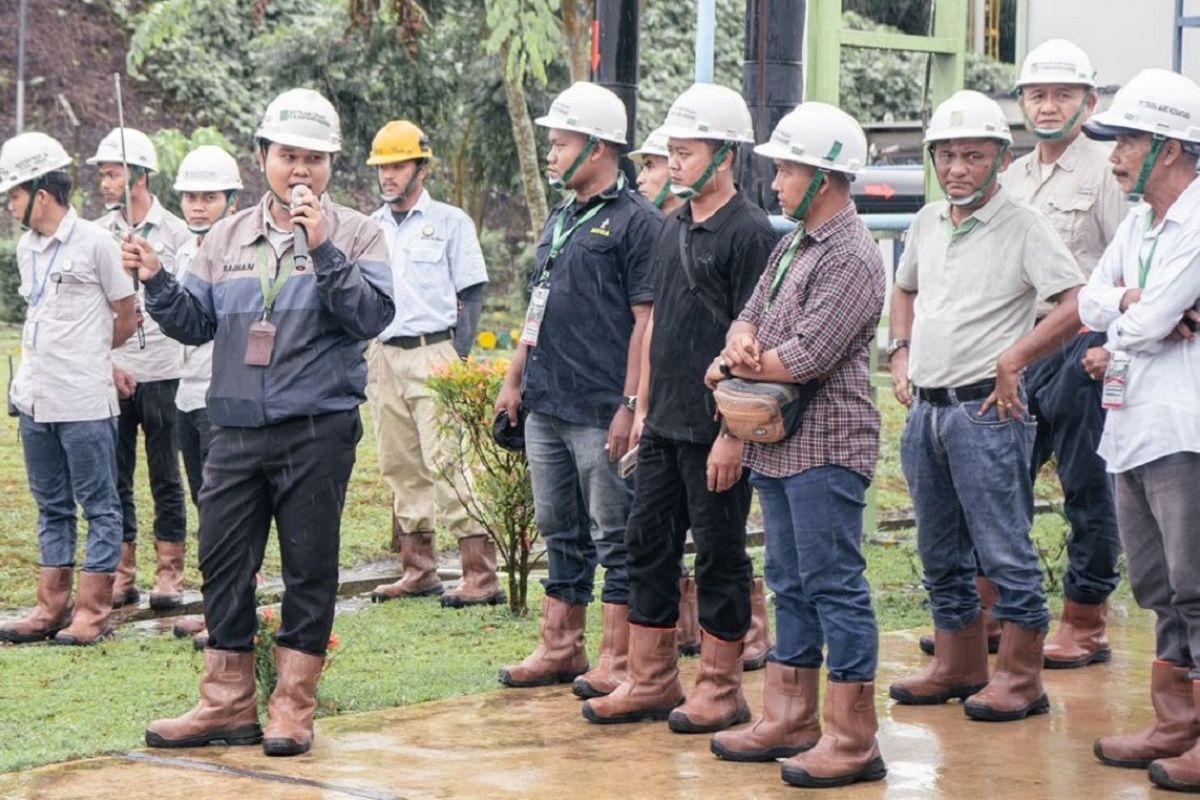
Hendra mentioned that besides seminars and technology exhibitions, TKS 2026 participants also joined a field visit to PT Sukses Karya Mandiri (SKM) to witness the processing of palm kernel into crude palm kernel oil (CPKO) and palm kernel expeller (PKE).
Through this field visit, he added, TKS 2026 participants gained a real picture that the integration of operational efficiency, technological innovation, and sustainability principles is not just a concept but can already be implemented concretely in the field.