
Bung Karno's Book, the Nation's First Pages
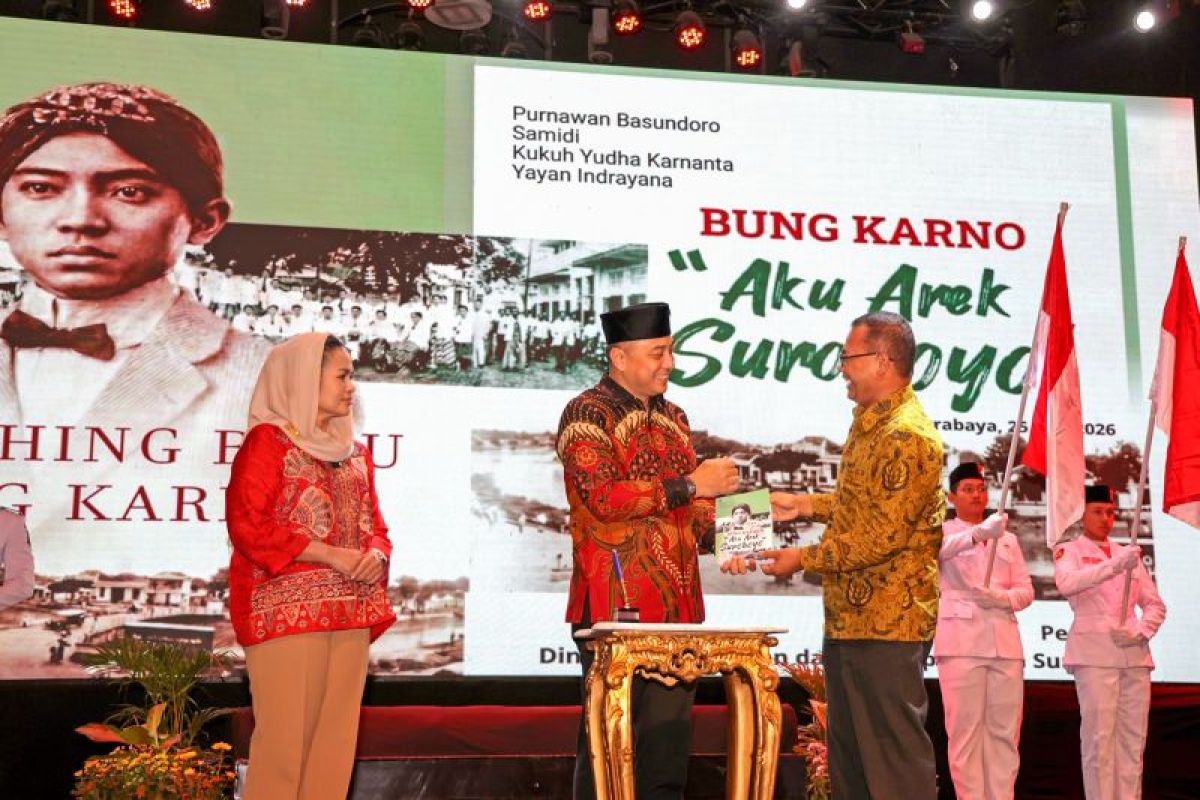
Surabaya - A city is not only built by roads, buildings, and public services. A city also grows from the memory of the people who were shaped within it. That memory becomes important when a generation becomes more familiar with the flow of short videos than with the long story of how their nation was founded.
The launch of the book “Bung Karno: Aku Arek Suroboyo” by the Surabaya City Government recently reopened a historical node that has often been obscured by more popular narratives. Soekarno, the First President of the Republic of Indonesia, was born in Surabaya on 6 June 1901. This city was not merely a point on a birth certificate, but rather the initial space that helped shape his character, social experience, and national imagination.
The book, written by Purnawan Basundoro, Samidi, Yayan Indrayana, and Kukuh Yudha Karnanta, arrives at an opportune moment. It does not stop at correcting knowledge about the birthplace of a proclamator. Further, the book offers Surabaya an opportunity to read itself through the traces of a boy named Koesno Sosrodihardjo, who would later be known as Bung Karno.
All this time, the figure of Soekarno has more often appeared in a very grand form. He is the reader of the proclamation text, the digger of Pancasila, a president, an orator, and a leader of the anti-colonial movement. All of that is true, but a grand figure often feels distant to schoolchildren if they are not brought into contact with the everyday spaces that shaped him.
Therein lies the importance of a local approach. National history does not lose its authority when it is told from the perspective of a city. On the contrary, history becomes easier to understand because children can see that the nation’s great ideas were born from a real environment, from family, school, social circles, village streets, and the social struggles surrounding them.
The “Aku Arek Suroboyo” exhibition, held in the basement of Alun-Alun Surabaya in June 2026, previously also presented photographs, archives, films, and traces of Soekarno’s life in the City of Heroes. This series of events demonstrates that the management of history does not always have to take place in the classroom. History can be present as a public experience that invites citizens to look back at their city with curiosity.
The Surabaya City Government’s plan to make the book a learning resource for primary and junior high school students should be read as both an opportunity and a homework assignment. The opportunity is clear. History lessons can become closer to the experiences of Surabaya’s children. They will not only know Bung Karno as a figure in the pages of a national book, but as a person who has a connection to the city where they live.
However, the success of this policy is not determined by the number of lesson hours or the number of books distributed. The real challenge lies in how history is taught. If the book is merely positioned as new material for memorisation, then its spirit may be lost before it even reaches young readers.