
BULOG Strengthens Campus Collaboration to Support Food Self-Sufficiency
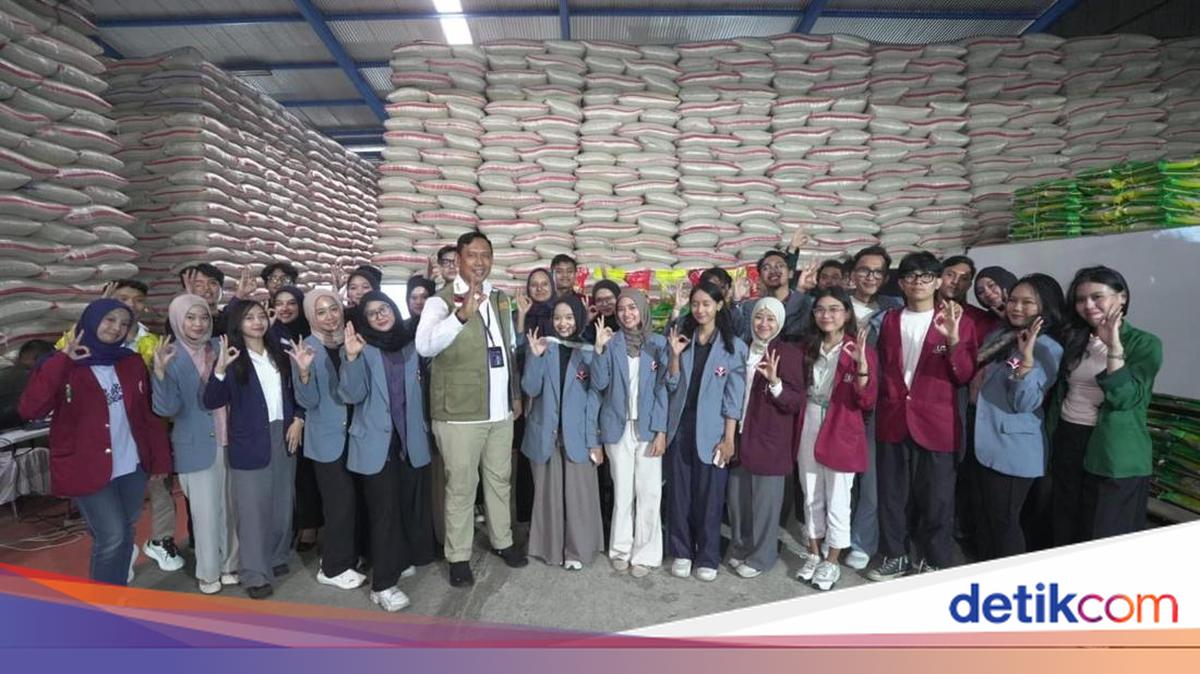
BULOG invited university representatives from across Bandung to participate in a Focus Group Discussion (FGD) entitled “The Role of Campuses in Realising Sustainable Food Self-Sufficiency for Government Food Reserves” held at the BULOG Main Warehouse Complex in Cimahi, West Java.
The event served as an open learning space for students to gain closer insight into how the government, through BULOG, manages Government Food Reserves as a critical component of the national food security system. Through direct warehouse visits, students gained understanding of stock management, rice quality, and the role of food infrastructure in maintaining food availability for the public.
BULOG General Director Lieutenant General (Retired) Dr Ahmad Rizal Ramdhani stated that realising sustainable food self-sufficiency requires cross-sectoral synergy, including active contributions from academic institutions as centres of knowledge, research, innovation, and new ideas.
The achievement of food self-sufficiency, increasingly strengthened since 2024 and continuing into 2025 before being further consolidated in 2026, demonstrates the government’s commitment to building national food security. Students and campuses have an important role in understanding, overseeing, and supporting this major agenda through knowledge, innovation, and concern for food issues.
“Strengthening food self-sufficiency is not only viewed from the production side, but also from the state’s ability to absorb farmers’ harvest yields, maintain food reserves, strengthen post-harvest infrastructure, and ensure food remains available and affordable for the public. At this point, BULOG fulfils its role as a state instrument in maintaining food availability, affordability, and stabilisation,” Ahmad stated.
Important information was also shared regarding significant achievements in the national food sector. According to data from the Food and Agriculture Organisation (FAO), Indonesia ranks second globally in rice production growth, after Brazil and Myanmar.
This achievement signals the strengthening of domestic food production and serves as an important foundation for maintaining the sustainability of national food self-sufficiency.
“Currently, rice stock managed by BULOG reaches approximately 5.36 million tonnes—the highest stock in history—with total storage capacity provided of approximately 6.2 million tonnes. This capacity will continue to be strengthened as national rice production increases, enabling BULOG to operate more optimally in carrying out government assignments, particularly in managing Government Rice Reserves and food stabilisation,” Ahmad said.
From the procurement side, BULOG has absorbed approximately 2.8 million tonnes of rice from a target of 4 million tonnes. This achievement demonstrates BULOG’s active role in supporting farmers whilst strengthening national food stocks. Through absorbing domestic production, BULOG not only maintains rice availability but also helps maintain price balance at producer and consumer levels.
Ahmad added that BULOG possesses facilities and infrastructure spread throughout Indonesia, ranging from warehouses and logistics networks to grain processing and rice milling facilities. This infrastructure serves as an important backbone in ensuring food supply chains remain strong, efficient, and capable of meeting public needs across various regions.
To strengthen this role, BULOG will also add post-harvest infrastructure at 100 locations this year. This step forms part of a long-term strategy in supporting increased production, strengthening quality management of harvest yields, and sustaining food self-sufficiency achievements.
Through this collaborative activity with students, BULOG hopes that campuses can take a more active role in building national food literacy. Students should not only be information recipients but also part of an ecosystem of change capable of generating ideas, research, innovation, and constructive public communication for Indonesia’s food future.
This activity also affirms that sustainable food self-sufficiency is not merely a government agenda but a collective movement requiring support from all national stakeholders. Through collaboration between the state, BULOG, farmers, academics, and young people, the foundation of Indonesia’s food security is expected to grow stronger from upstream to downstream.